Category: Think Sync

Fi Peel: If there’s one thing that I’ve noticed…

Image: Beyond series of waist-high pillars, red concrete stretches towards a large white austere building, tapering at its center into three white spires that rise towards the sky, crested by an Australian flag. This image is viewed through the rear rain-splatted window of a taxi as it passes by on the stretch of road leading towards underground parking and public entry to Parliament House.

Image: Beyond series of waist-high pillars, red concrete stretches towards a large white austere building, tapering at its center into three white spires that rise towards the sky, crested by an Australian flag. This image is viewed through the rear rain-splatted window of a taxi as it passes by on the stretch of road leading towards underground parking and public entry to Parliament House.

The wasted and the loser things, the broken and abused things, all these small things. The treasured and sacred things, the lost and the forsaken things… Small Things The Audreys

I remember when I first encountered the term “impostor syndrome”. I had accepted a role where it was my job to assess the cultural readiness of a community managed organisation as they prepared to embed a peer workforce. A peer worker and mental health advocate, this was the first time I had been recruited to a senior leadership position. In my first week, I was treated like a rock star, which completely shocked me. I was this shiny new thing that everyone was excited about. During one introductory conversation, the senior psychologist on our team, impressed at whatever it was that had just transpired in conversation, looked expectantly at me and asked, “what was the focus of your PhD?”

Embarrassed, I stumbled for half a second and averted my eyes, not wanting to see what might be reflected in his gaze as I delivered my response.

“I’m still trying to complete my undergraduate degree.”

Later that afternoon, I confessed my feelings of being miscast to a colleague on the very small team I had been embedded in. Her response was kind but misguided.

“You’re just struggling with impostor syndrome. We all feel that.”

I had spent the majority of the past 20 years desperately trying to prove on paper what had amounted to almost three degrees worth of accumulated multi-disciplinary academic study. I had almost completely exhausted my government allocated student loan limit. Every time I had come close to subject completion in any given semester, I had ended up in hospital, the legacy of a 15-year battle with chronic suicidal ideation, a lifetime of amassed complex trauma and arising psychosocial disability snapping at my heels. But that I had a head full of knowledge which could not be attested to by any post nominal conferment was only part of the problem.

Arts and leadership had always intertwined throughout my adolescence. A singer first, cultivating a hidden interest in writing before studies in theatre and later voice at university, I had also been involved in student leadership and had dedicated my youth to Girl Guides in my small town on the south coast of NSW. It was almost unavoidable that the confidence I displayed as I mastered the art of crafting my voice would draw the kind of attention that people would look up to in admiration.

I was ridiculed in the school playground, kids vocalising dramatised cadenzas as I passed by, but my music teachers would buoy my confidence and so I persisted. Performing one afternoon at an arts assembly, I left the stage with a sense of crescendo but as the applause began to die down, I could hear the latent booing from students until it was silenced by supervising teacher death stares. I retreated into the wings and fought back tears. As the dance troupe took their places on the stage while the MC tried to redirect the audience’s attention, one of the most popular girls in my year, clad in her black leotard and wispy golden tutu pulled me aside. Julie looked squarely into my widened eyes and whispered fiercely to me:

“You are the bravest person I know. I dance in a troupe, as part of a group where I can hide but you go out there and trust your voice all on your own. Never stop doing what you do. You inspire me.”

These early moments as an emerging artist and young leader collapsed in on themselves in late adolescence not long after my entry into university. My world was suddenly shattered by psychiatric diagnostic criteria and the intervening space of silence was amplified by compound sanist narratives. A life once full of promise was now regarded as futile, less than ordinary, even a source of concern as a shroud of life-limiting narratives were adopted by many, and a deep sense of failure, powerlessness and shame emerged.

“We’re not making any special concessions for you. Even if you are in hospital or dulled down by medications you don’t need due to misdiagnoses no-one will be willing to revisit until you are in your 40s. You are expected to earn your place in this world like everyone else.”

During the first lockdown in 2020, while the world was sleeping, in my own little corner, in my own little world, I dreamed. I wrote. Testing the range of my voice, I began to sing again. The degenerative deafness discovered at 16, had certainly taken a toll, with hearing aids useless to reconcile how I received and created sound. In the silence I determined to rely not on sound, but on resonance. I began to apply for work that aligned with my unarticulated education and aspirations. I began to pitch creative ideas. I didn’t care when rejections dropped into my inbox. I wanted a seat at the table, so I was determined to fashion one unique to my desires for the tables I hoped to pull it up to.

At a storytelling event I was to produce later in that year, our invited guest speaker dropped an Anais Nin quote into his speech that still reverberates through the powerlessness that had pervaded my life for more than 20 years.

“Life shrinks or expands in proportion to one’s courage.”

Deeper wrestling with this truth in relation to lived experience and disability arts leadership led from there into the office of the colleague who introduced me to the concept of impostor syndrome, and further into reflection on what creates limits and silence. In learning to harness this style of tenacity, I continued to find my way to tables that began to repeatedly affirm hope I had dared not believe were possible of exhuming from the rubble. I realised this journey could no longer be dismissed as a fluke, but I still felt unworthy.

In 2022, I was invited to become a contributor to the national mental health reform priorities. I now contribute consumer and lived experienced leadership perspectives in conversations that directly inform parliamentary considerations. I devised and contributed to lived experience-led arts-projects. I became immersed in on-the-job self-taught lessons in disability arts management, holding the line of artistic integrity against unwanted and unbidden external agendas. The journey across the past three years has led to publications, podcasting, acting, singing, editing, producing, directing, project management, advocacy, policy development, supervision, and even consumer academic contributions. The gift of being part of the Sync Australia 2022 cohort was the recognition of tools I already possessed but didn’t know I was allowed to name, claim, or celebrate.

While I had wholeheartedly rejected the notion of impostor syndrome, the soul destroying sanism and ableism accrued from years of being relegated to a mental health system and its wider social narratives that undermined any true hope of recovery was also silencing my ability to accept other’s recognition of what I have always naturally brought to any table I have found myself seated at. And herein lies the intersectional danger of adding the false dichotomy of impostor syndrome to the mix.

The awe and flailing I experienced as my work continued to be recognised as on par with professional actors, writers, theatre-makers, advocates, and leaders in a world still highly governed by “keep up or get out” principles, was a product of not internalized ableism, but rather is due to assumptions of equality over equity. The adaptive nature of our subject matter expertise, our neurodivergence, and our heightened ability to see beyond traditional pathways means that we do pick it up or even work it out for ourselves along the way, which then informs our own unique leadership styles. Cultures that demand productivity over workplace and social cohesion, ultimately silence the inclusivity they would otherwise argue that they champion.

People are still a largely unaware of what it is to navigate the environmental and attitudinal barriers that stand in our way sometimes on a daily or even moment-by-moment basis, to engage fully in our community as disabled and lived experience artists and leaders. If we are going to be serious about the social model of disability in the current Australian sociopolitical landscape, we must desist from activating politically correct practices spruiking statistical representations of diversity and instead focus on dismantling widely adopted cultural myths and outdated theories that continue to silence.

Voices brave enough to highlight discrimination, sometimes even through expressions of distress experienced as threat in the arising frequencies are an opportunity to attune ourselves not to the sound but the resonance.

When is an expression of resistance evidence of an individual failing society and where might it be an invitation to examine further dismantling structural inequity in leadership contexts?

This is a question that hums through my mind and calcifying inner ear bones. I may not have the answers, but I finally understand that the product of sitting with this discomfort has become a calling that I can no longer hide from or push against. I may not hear what others hear but the uniqueness of what I do hear, leads me to pepper my worlds with curious questions. And what I receive in feedback, confirmation and even defensiveness keeps me attentive to the humbling truth that in learning to trust the feeling of the frequencies, we might truly be able find harmonies that modulate dissonance to bliss.

Written on ancestral First Nations lands. I pay my respects to elders past, present and emerging. Sovereignty was never ceded. Always was, always will be Aboriginal land.
Tyson Hopprich: The Spark. The Flame. The Fire. 

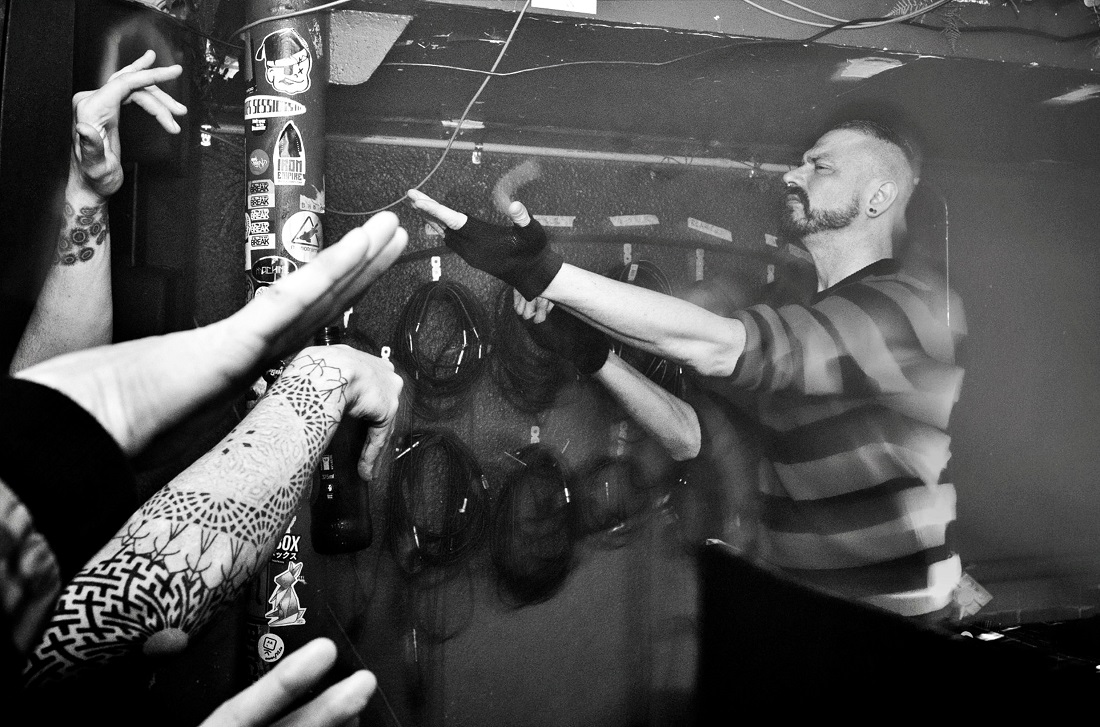
Une photographie en noir et blanc d’un homme dans un haut rayé tourné vers le centre de l’image et tendant les mains vers des bras tatoués agitant au premier plan. Derrière l’homme se trouve un ensemble d’équipements électroniques et d’écouteurs.
a person is seen in a black and white photo taken with flashlight wearing a striped top and fingerless gloves with hands of people visible to the left trying to touch the figure on the right

The Spark.

My disability gave me the ability to find my purpose in life. 

Since a young boy I have always smiled and never complained or felt limited by my disability. However, at birth, I was diagnosed with Talipes Equinovarus (Clubfeet) and at the age of twelve diagnosed with Legg-Calve-Perthes (Perthes) and this disease led to chronic Osteoarthritis in adulthood.

Both ankles fused with no calve muscle development; I looked half-goat, half-man with skinny legs.

My first operation for my Clubfeet was at twelve hours old, freshly Caesarean-sectioned out of the womb onto the chopping block. Each leg is adorned with asymmetrical scars, metal pins and plasters. Both ankles fused with no calve muscle development; I looked half-goat, half-man with skinny legs. I found kindred to the mythical character Pan, a regular guy with goat-like feet who enjoyed music and the company of nymphs. 

This correction and fusion of my ankles occurred in many hospitals locally and interstate. I even stayed in a hospital in Canberra for six months without friends or family. 

Besides having a supportive family, friends and artistic collaborators throughout my life, a big shout goes to my informal guide and mentor Dr Stevenson, a fantastic British Orthopaedic surgeon. Each visit he would kindly say, ‘use your brain, be artistic. These legs aren’t for running or dancing.’ His guidance never created an obstacle to my disability, and my clear limitations made purpose, focus and freedom in my life. My stoicism forced me to pursue my musical purpose of creating a soundtrack for others to move and dance.

The Flame.

My life chapter of Legg-Calve-Perthes Disease and its chronic Osteoarthritis has ended this year with my recent total hip replacement. This surgery has been life-changing as the thirty-two-year chapter of living with pain has ceased. While on the waiting list, I chose to keep a smile similar to my childhood self and create as prolifically as humanly possible in my musical and artistic career, in truth, as a distraction from the constant pain of Osteoarthritis.

I used stoicism as a tool for coping with pain. The famous stoic Marcus Aurelius quote, “Our actions may be impeded… but there can be no impeding our intentions or dispositions. Because we can accommodate and adapt. The mind adapts and converts to its purposes the obstacle to our acting. The impediment to action advances action. What stands in the way becomes the way.”

Post-recovery, I am now pain-free. The lack of consistent gnawing pain has left me more peaceful and open to serving the community with greater clarity. Holding space for people has become easier as my inner self is now calm. This newfound quiet will flow into my coaching style as I support and listen to people, being with them on their terms.

The lack of consistent gnawing pain has left me more peaceful and open to serving the community with greater clarity.

Coinciding with this sea change, I had a profound shift to minimalism. I began to feel the cravings to reclaim physical space and mental bandwidth; in this process, I saw myself selling many things and my identity attached to those items. This process, paired with the want for peace post-op, was of the utmost importance to me. This energy clearing has opened me to new personal and professional growth opportunities.

The Fire.

As I discovered in the recent Sync Leadership experience, I resonated with the mythical Phoenix. This bird of rebirth became my metaphor during our coaching sessions; how I naturally move through different renewal cycles with my body, mind and artistic practice. Over my quarter-of-a-century career in the arts, I have seen myself evolve in this way at least six times, burning up outdated beliefs, practices and identities in pursuing knowledge, stoicism and mastery of my craft further. 

Sync landed in my life at the crux of one of these five-year cycles. I always feel like a work in progress, a wet canvas, an unfinished symphony. By this, I mean that I don’t see my life as complete at any point, outcome independent in many ways. Open to new experiences and learning from the gifts within each cycle. The serendipity of the Sync Leadership program and its learnings and the time to reflect has pivoted me towards my leadership potential, critically invigorating my development to serve better the disability and broader community with greater potency and compassion. 

The Phoenix is now renewed, shedding its old beliefs and limitations, ready to share and coach with empathy and dignity. Thank you, Sync, for this life-changing experience.

Harmonie Downes: Radical acceptance is self-love and the pathway to social change

Une photo de la tête d’une femme regardant directement la caméra avec une superposition semi-transparente d’un iceberg sur son portrait..

I quickly realised that I have been a co-pilot to my own discrimination and this revelation is quite shocking and actually quite sad.

Some two hours after completing Sync and saying our collective ‘goodbyes – but not forgotten,’ a lingering thought prevails. Leadership comes from a place of loving oneself deeply and inviting others in to participate…  is what I wasn’t expecting.

Sync led us through various tasks including leadership styles, approaches, and traits, but for me loving myself in this context makes me feel like I’m stripped bare. It’s raw – and this course makes you sit with these feelings, whether reflections and ponderings, or just the naked truth behind your motivations. You are worth more than you allow yourself to be. 

Sync is about unlocking one’s own process and potential and defining one’s practice, culminating in a personal metaphor symbolising values and process. The program helps participants to identify and sharpen one’s tools, to disrupt and break down internalised ableism and to birth a leadership outcome. 

In terms of uncovering our shadows or limitations, I discovered that I often publicly state I am a person with disability, but I don’t preach it and I certainly have not challenged the status quo enough around me to provide my access needs on my terms. I quickly realised that I have been a co-pilot to my own discrimination and this revelation is quite shocking and actually quite sad. I have denied others to accept me because I haven’t authentically owned my own needs and advocated for them. Wow, just wow. How did I not see the full extent of this until now?

I believe the answer lies in social conditioning and as people with disabilities, we are experts in our own military style self-defence systems, complete with childhood as our training ground. If one hasn’t at least installed a verbal cannon by the onset of school, you could expect the snipers to check in for the stock standard name calling. And if that’s still getting through the force field, then it’s the specialty tools like shock tactics, camouflage and shape shifting just for special effect. The more these tools are used, the more one is forced to blend in through subterfuge because over time, the constant battle of having to fight for one’s own dignity over many years is wearing. However, with more advocates going public about being disabled, the constant exhaustion of emotional labour given freely from many fierce advocates has enabled pockets of light to break through and push for systems of change now that these critical conversations are in the public domain.

Sync Australia is a vehicle for starting these dialogues one person at a time. It’s transformative and it plants the seeds to encourage all of us to openly question each other on what is happening now and what could lie ahead with aspiration and curiosity, the panacea and the zeitgeist. 

These conversations happen in a virtual room and participants dial in from different time zones across the world. Each session is designed to gently dismantle these defence systems and invite you to be your authentic self, to unshackle oneself from the usual normative behaviours, reveal our cultural wounds and share learnings, wins and successes. Small acts of revolution are discovered in moments of kindness. Sync is safe, nourishing and familiar. It beckons you to relax, deeply breathe in and exhale out the stigma and self-deception. 

…as people with disabilities, we are experts in our own military style self-defence systems, complete with childhood as our training ground.

Sync is the perfect program for mid-career creatives to aim and ascend to leadership positions in Australia. There is a distinct lack of disabled representation in public positions and at the helm of arts organisations due to limited or zero opportunities for succession planning and career progression. It’s possibly the product of a background of competition, exclusivity and a long history of disconnection between many of the arts organisations. This is a result of an over stretched arts eco-system being expected to deliver big on small amounts of funding. It’s got to change; the community and disabled arts culture utilises the power of the arts to save lives – why isn’t there more investment for this? My Sync goal is slowly birthing – my vision of wanting to develop my own non-profit was re-ignited again – another surprise.

The door is now open, but where will it lead? We leave the group with the last provocation of “What’s next?” Small gods exist in undiscovered places when we commit to loving ourselves. This affords us the opportunity to develop our skills and tools, to challenge and improve ourselves but to break through our individual constructs and dismantle those of our peers. We then are ready to take a leap of faith and be the change we want to be for ourselves and in the context of a broader, complex cultural landscape. 

You can connect with Harmonie Downes via LinkedIn: https://www.linkedin.com/in/harmonie-downes/

Ice metaphor information:

Why I chose “ice” as a metaphor in the symbol of an iceberg: It is so embedded in our language in terms of what we can see and what we can’t see. The iceberg represents what’s above and what’s below. It is about what, when, why and how we show ourselves. The 20 percent of what’s above, is in the public-facing aspect when delivering an event, performance or creative outcome. Below is the 80 percent that includes all of the tumultuous churning, the thought process, the unseen. Everything that no‑one knows what you have gone through to deliver – it can be resource intensive. What we do ‘back of house’ depends on how we shape our projects. It’s driven by the environment. Can it form; will it disperse? How will we manage to skate on thin ice when things are shifting and shaping? Will the project collapse or will it be delivered? It is a mix of these ingredients to support the sustainability of your work to take form which takes time, careful consideration and problem-solving skills. It can be an incredibly beautiful experience, but painful just as an ice burn can be. It can be refreshing or isolating, but absolutely transformative when it all comes together. Process is key to everything.

The unacknowledged rollercoaster of being disabled-led: Jo Verrent

A black and white photograph of a rollercoaster with winding tracks in the air set agains a clear evening sky.
Picture Credit: Kristin Kokkersvold

It’s not enough for disabled people to make art, the context they make it in matters too. 

I’m the director at an organisation called Unlimited which commissions disabled artists to create exceptional work. At Unlimited, we describe ourselves as ‘disability led’. That means our staff, our board, our core decision making processes are all made by people, groups and teams that are as a minimum 51% disabled people. 

We are proud, delighted and determined to be (and to stay) disabled led – it matters hugely. It’s not enough for disabled people to make art, the context they make it in matters too. 

Any art making by disabled artists can, of course, be brilliant. Historically however there has been distortion, censorship, control and coercion within some contexts where disabled artists have made work – think of all the collections of work that exist from hospitals and asylums that are named after the doctors of patients. Where the artists are unknown, the doctors or institutions own the work, gain the credit and the cash. Think that’s in the past? I can name a large number of directors, choreographers, curators and collectors who are non-disabled and still working from this model – all far more prominently acclaimed (and well paid) than the disabled people they collaborate with or whose work they benefit from.

But this isn’t just about why it matters, it’s about what it costs – not only in cash terms.

But let’s start with the money. We recently calculated that ‘in the last six months alone Unlimited has spent over £20k ensuring meetings and processes are accessible for our 93% disabled-led board and our 83% disabled-led staff’. That’s £20,000 more than an organisation that didn’t involve disabled people would have to spend, and that’s only half the year.

And those access solutions don’t just magically get put in place – there is labour in the determining, contracting, briefing and supporting access providers and organising other access support. The figure above doesn’t include that labour.

And there’s more work internally too – such as ensuring the team all have access riders if they need them and that they have space to adapt to what other team members need, or ensuring everyone who works with us has disability equality training so we share a common base level understanding and terminology.

There’s the work on policy adjustment. Most organisations don’t really look in detail at how policies impact on disabled staff. We do. For example, at how in the UK sickness absence policy terms and conditions are different from disability related absence (which doesn’t have to come from your sick leave allocation). We’ve had to work through and improve our policy and to determine different levels for all our disabled staff. We take one policy a month – our expenses policy, our access policy, our data policy, our flexible working policy… basically all our policies need to be seen through a disability led lens and adjusted. 

All the above is easy to write about – the rest less so.

..It’s not the bruising interactions with external ableist structures, painful though they are, it’s the cumulative impact of those interactions.

Reflecting personally here, the biggest adjustments aren’t the internal ones, they are taking our disabled-led organisation into the world and meeting the ableism of others, which I wrote about recently here. And even then, it’s not the bruising interactions with external ableist structures, painful though they are, it’s the cumulative impact of those interactions.

It gets to me. It makes me doubt myself. The number of times one hits barriers, it would be easy to assume that ‘they’ are right and you are wrong. It starts to nag that surely if barriers should be removed and they aren’t then it’s because somehow, they are needed or necessary? Now intellectually I know that barriers exist because people setting up systems don’t have the knowledge, time, resources or care to make them accessible. They don’t think about it and they take short cuts. Often the damage they create isn’t deliberate. Morally, and often legally (in the UK), I know that I am correct to push for reasonable adjustments, adaptation and change in line with the social model, to make the world more accessible to all. Emotionally, I start to internalise that feeling of being too much, asking for too much, being a burden.

If I’m already exhausted, this can quickly spiral into a ‘I’m not good enough’ or ‘I can’t do this’ narrative which can be damaging. And I’ve never been more exhausted trying to run, let alone develop an organisation whilst the world burns around me.

Austerity, a pandemic, war, a political system (UK and worldwide) in disarray, cost of living increases off the scale, reduced access to healthcare and access, energy crisis and so much more pile on top of each other making everyone scared, unsure and nervous. Add to that a label of ‘clinically extremely vulnerable’ to covid 19 (like myself and a number of my colleagues have), the UK’s decision to forget covid is even here and just carry on ‘as normal’ despite raging numbers of both covid and those experiencing long covid symptoms, and perhaps it’s easy to see where the exhaustion comes from. 

A salvation is finding comradeship within and amongst our disabled led peers and allies –  people who ‘get it’, places where I – and they – can take off the armour we need to work within the world and simply be without apology or excuse. 

We see a mistake and we go for the attack, even with those in our tribe, often publicly calling out rather than privately calling in. 

Although even in those safe places, its sometimes impossible to truly relax and take all our guards down. We are human after all, and everyone is tired and taut. We see a mistake and we go for the attack, even with those in our tribe, often publicly calling out rather than privately calling in. It’s easy to allow feelings of envy or jealousy to bleed into snide comments or backchat, especially when budgets and opportunities are squeezed and panic starts to rise. We set ourselves impossible standards – and we expect them of others too. Life is hard right now.

I have to remind myself often to first be kind. This was something that previously would have been second nature but something the last three years seems to have stripped away, grating a slither more empathy off me with each new challenge to face.

First be kind – as we never know what others are facing. Second be kind – especially to my disabled kin who are as exhausted as I am as we face more barriers now than ever, including the re-emergence of many we thought we’d already removed. And third be kind – because it’s the best, fastest and most positive way to make change in the world. 

It is always a choice. You can water the seeds of fear and anger if you want, but I want to choose to water the seeds of compassion, understanding and kindness where I can.

Fern Di Rossi-Bird: Nest Stop

A nest made up of sticks, dried fern, dried cedar, and moss woven into each other. Around the top of the nest are various duck feathers poking out into different directions. The bits of dried fern and sticks lead away from the nest and extend to the edge of the image. In the centre of the nest is a piece of red satin ribbon. The nest is held by Heather and their white wrist can be seen at the bottom centre of the image. The background is off-white.
Fern Di Rossi-Bird
it’s all coming together now, found object sculpture, 202

How do we turn our collective full-bodied intelligence towards collaboration, if that is the way we will survive?

adrienne maree brown, Emergent Strategy

Accessing my feelings has never been an issue. However, searching for a way to convey expression has always been a struggle. As a neurodiverse kid, I would spend h  o  u  r  s  drawing, creating, and expressing. It wasn’t important how other people perceived the work I made, and their judgements (good or bad) didn’t feel necessary, but rather, vulnerable. For me, creating brings alive an inner world where I’m able to express, make sense of, complicate, and communicate. 

many mixed media symbol-images are organized in the structure of a grid. From left to right there is a light green abstract looped flower, an orange carrot-like shape surrounded by deep blue and purple. The head of a water spray jug that is green and pink with a yellow and black background. Many blue J hooks dance atop an orange background. A red partial circle sits next to a bright mint green. A close-up of a clock’s numbers 12, 1, 2 and 3 in graphite. A mess of pink, cream, and orange blobs connect and crash into each other. The top of an exaggerated yellow question mark with a black scribbled background. An abstract chubby snake that is pink and muted orange with purple, sticks its black tongue out surrounded by bright lime green background. A close-up of a purple, blue, black, and cream doodle-stylised eye with long lashes and reddened white space. A big pink bubble letter H is outlined in black with a yellow background. A close-up of a blue water bottle with cream and purple wings against a black background. From the bottom right corner spreading across and up is red scribbles making their way into each individual image.]
Fern Di Rossi-Bird
what i’m saying is 18” x 24”, mixed media, 2022

Nest is a feeling as much as it is a language and its purpose for me continued to transform as it came to life. 

Fern Di Rossi-Bird

During my time at Sync, we explored metaphor. Metaphor became a tangible way to express experience, skill and passion. As someone who finds communicating needs/experience/feelings verbally especially challenging, talking through metaphor made a lot of sense as an accessible tool to hold conversation. A metaphor, ‘Nest,’ surfaced immediately. Unknowingly, I had been building it for the duration of my life, selecting components meticulously, learning, unlearning, integrating, assessing, always tending. I didn’t know until the second week of the program that the Nest is not only a metaphor to describe my own creative practice, but a way to celebrate the integral fact that creative practice is participatory with community. That the Nest is a place to rest, imagine, dream, heal, grow, regulate with self, and with community. Nest is a feeling as much as it is a language and its purpose for me continued to transform as it came to life. 

In the forest, I walked until I found a mossy clearing with light pouring in between the branches. I sat against a tree and wrote about everything and everything and everything, communicating to, and with, the deepest parts of myself that lay hidden. The metaphor needed to become realised and so I built a physical nest. Weaving in dried fern and branches, tucking in cedar, pine and moss–bits to fill the gaps. As the weather turned, my nest and I were rained on. It didn’t feel finished, but I had to make the trek home. Holding the nest against my chest, I hoped for feathers and when looking down, a scattering of duck feathers was there. A surprising amount of duck feathers. Feathers that made me wonder if the duck was okay. I selected some of the feathers, including one that had a splash of blue-green, and arranged them around the nest. The Nest felt done, but I had to figure out how to activate it. 

A nest made up of sticks, dried fern, dried cedar, and moss woven into each other. Around the top of the nest are various duck feathers poking out into different directions. The bits of dried fern and sticks lead away from the nest and extend to the edge of the image. In the centre of the nest is a piece of red satin ribbon. The nest is held by Heather and their white wrist can be seen at the bottom centre of the image. The background is off-white.
Fern Di Rossi-Bird
it’s all coming together now, found object sculpture, 2022

The Sync program itself felt like a Nest. It centred and prioritised the myriad of access needs…

Fern Di Rossi_Bird

The Sync program itself felt like a Nest. It centred and prioritised the myriad of access needs: there was a captioner, two ASL interpreters, designated breaks, time to blink away from the screen, transcription, recorded sessions, notes and slides provided, encouragement to show up in whatever way felt right, in whatever way we could. This meant removing shame associated with being in bed. Nest as bed became a place to show up sleepily, in pain, or just because. It gave me permission to extend grace to my own needs. In the second week of the program, when I met with a client over Zoom I said, “today I need to be here in my Nest. I’m in a great deal of pain; I have my heating pad, some tea, and art materials, I hope that’s okay” and it was more than okay. It gave her permission to extend the same comfortability to herself. We had the most vulnerable session we had had thus far, uncovering, and exploring needs, the ways we ignore bits of ourselves that ask to be listened to. 

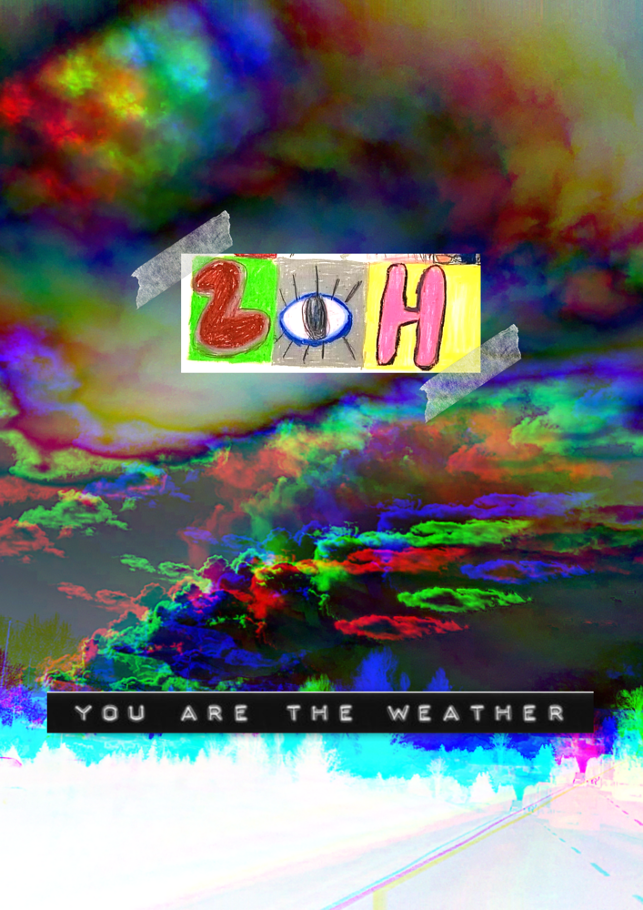
an altered image of the sky with swirls of layered offset primary colours. On the top is a taped sampling of early-stage symbol communication tools. The first symbol image is a deep red snake-like image against a green background, then an eye that is outlined in blue and black against a grey background, and lastly a pink bubble letter H against a yellow background. The bottom of the image is highly exposed, where most of the pigment is removed and is bright white. Where the colour meets the exposed bits there is a black embossed label that says, ‘you are the weather.
Fern Di Rossi-Bird
giving, altered photograph, 8.5” x 11”, 2022

The metaphor of Nest existed in my life long before I started interacting with it. My Mum called my brother and I her chicks, and she reminded us often that in turmoil, disease, agony, you can always come to the nest for respite. During recess in elementary school, I would weave blades of grass and weeds, adding mud for strength, and would leave the tiny nest sculptures throughout the playground for others to stumble upon. Building physical spaces, objects and installations became places to pause. Space to catch breath, come into body, rest, imagine, and dream. During Sync, I was able to uncover my leadership style and discover the ways they weave in with my values. In this way, feelings about how I am in the world now had language that could be accessed to describe the way the work comes to fruition. One of the most exciting parts about the program was the encouragement to look between, merge, and make new. There were many leadership styles I resonated with, and with support from the cohort and the Sync coaches, I found out my leadership style is Nest. Broadly, Nest is collaborative leadership impacted largely by the environment.

The project Nest Stop became an experiential way of tending to self and community. When I would tend to the Nest – sensory experience, regulation, journaling, processing, making art, decorating, moving around furniture, making the space feel depths of comfort. Nest Stop gives permission to reflect on disability experiences, neurodiversity, non-linear time, and celebrate the ways these nuances impact being a leader-learner with others. I found safe housing in October 2021 and since then I’ve been building Nest, learning more about the qualities of leadership that it has, holds, and what is possible. Layers of comfort in every room. Safety, security, and warmth for us, and as an offering to those who come to create in the space. When the home-Nest feels good, space for other creatives to come in, create, and reset.

Outside my apartment, I smoke and am soothed. Inhale: I think about how the Nest came together so easily. Exhale: it was years of preparation. I walk and notice the world. The birds are building a nest in the space within the roof. There is a gap large enough that a block’s worth of starlings coo through the open window. One morning a starling sat on the open window and sang right into my space. Inside there are bits of comfort and the bird neighbours notice my Nest too.

Fern Di Rossi-Bird is a multi-modal artist and writer, expressive arts therapist, grief worker, and reclaiming Tessitore Magico. They operate Fioritura Expressive Arts Therapy, which delivers 1:1 online and in person sliding-scale sessions for queer, trans, disabled, neurodivergent, and chronically ill people as well as community arts-based workshops that support people in establishing connection with their creativity and imagination, to reactive the magic of collective dreaming. With their three cats Burt, Etta, and Babydoll, Fern lives and works on the unceded ancestral lands of the xʷməθkʷəy̓əm (Musqueam), Sḵwx̱wú7mesh (Squamish), and Səl̓ílwətaʔ (Tsleil-Waututh) Nations in so-called Burnaby, BC, Canada. To find out more about Fern’s practice or to inquire about collaboration, please visit www.fioritura.ca or follow @hello.fioritura on Instagram

Alison Paradoxx: Leading into Liminality – Unapologetically Disabled

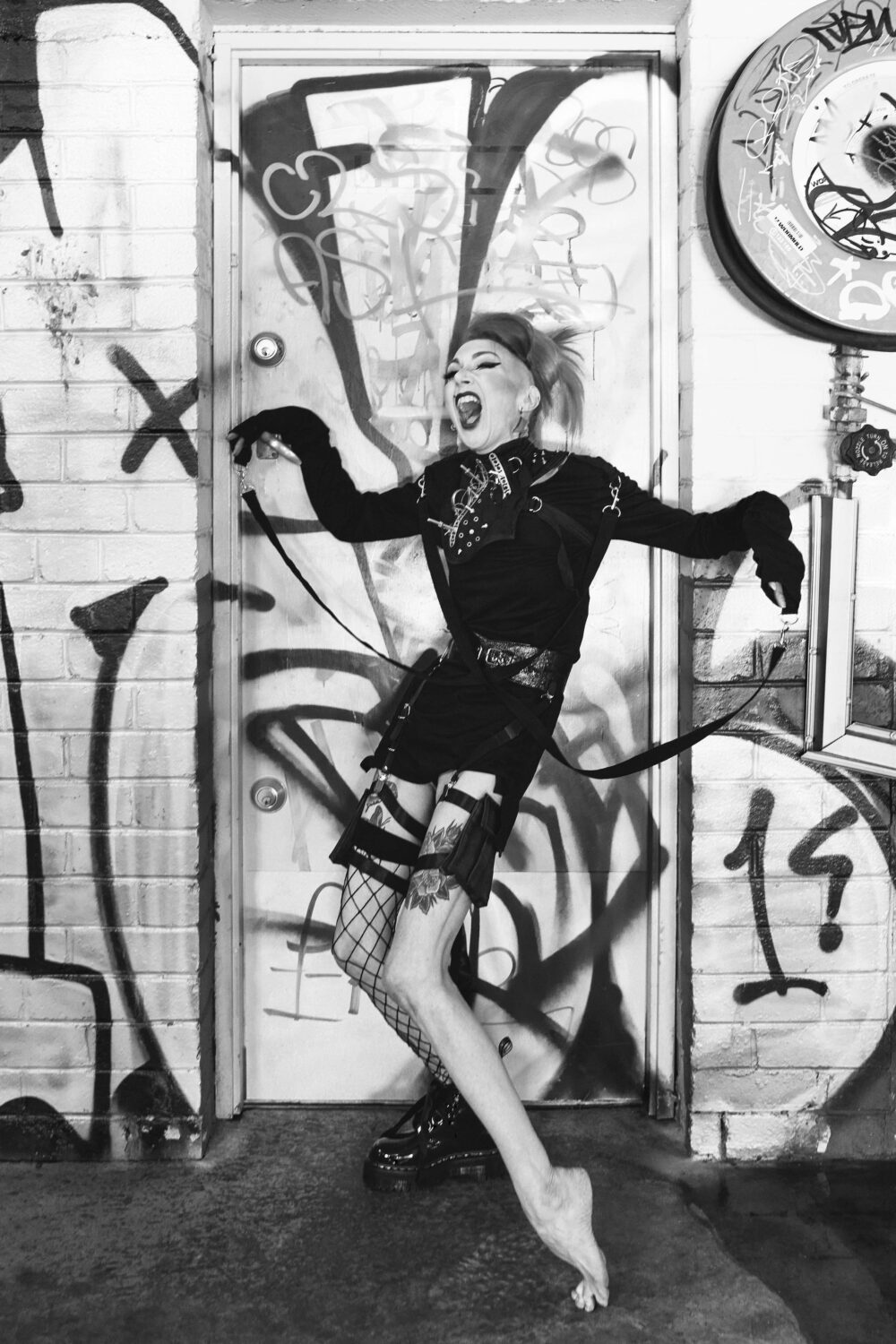
Alison Paradoxx wearing a black close fitting short dress, strikes a pose, her mouth is open wide, her arms outstretched like a bird, one foot wears a thick patent DM and the other foot is bare and pointed. She poses against a graffiti urban background
Alison Paradoxx wearing a black close fitting short dres with ties, chains and straps, strikes a pose, her mouth is open wide, her arms outstretched like a bird, one foot wears a thick patent DM and the other foot is bare and pointed. She poses against a graffiti urban background.
Picture Image: Brent Leideritz

Sometime before commencing the Sync Disability leadership programme, I had begun to think deeply on the concept of liminality, as I navigated the ever-changing landscapes of my disabled body. I had, however, never contemplated this liminality in the context in which I display/exhibit leadership, yet there is no denying that the impermanence of my being, seemingly at odds, juggling the permanent disability of my body, was in fact a key feature in my work, and in how I communicate with the arts world, and the greater disabled community.

As a sufferer of degenerative disease, chronic pain, chronic fatigue, and the multiple comorbidities that exist on this ever-changing plane, my disabilities may not be palatable to the non-disabled community. As a disabled and chronically ill person, I am constantly forced to confront the reality that my body, my physical and oftentimes psychological being, is not designed for this society, nor for this world. My precarious existence does not fit neatly into the search for completeness that others strive for in life- the resolute, the finite, the end result. I know only constant states of flux, uncertainty, unreliable, cautious movement – the liminal spaces between functional incapacity and acceptance of a quarter-time life.

There is an infinite pool of sadness in my heart that will never be filled, a never-ending grief that shall never resolve. My disabled pride comes not from being an exemplar, for this body does not ‘put the ability into disability.’ Condescending euphemisms serve only one purpose; to erase my reality, rendering my pain invisible, dressing my bodily dysfunction up in ribbons, and lace, to appease the palates of the non-disabled.

To truly honour my existence is to see my pain. My truth is not pretty. It is not something to aspire to, nor wish for. My disabled pride comes in my stubborn resilience that has cheated death on far too many occasions; my steadfast resolve to share my truth, despite how unpalatable it may be for the digestion of the non-disabled community. My ugly shall not be erased, for it is my reality to face each day, and is a life that is equally valuable, as any other.

And it is this experience; the embodiment of pain, within disability, that has largely shaped my greater body of work as an artist, and advocate. Although reluctant to be typecast into the boundaries of only ever creating art that contextualizes my personal disabled experience, I also value, and recognize, the immense empowerment that comes from utilising this voice.

With the nurturing guidance of Sarah Pickthall’s coaching sessions through Sync Australia, I came to appreciate the many forms of true leadership in action. Coming to the realisation that leadership in advocacy does not necessarily need to be played out through the trope of ‘passionately aggressive protestor’, empowered me further, to see where my work in this realm fits. My artistic activism does not come in the form of rebellious anarchy, violence, nor public outcry. Paint-bombing parliament, burning effigies, and chaining our bodies to buses are all wonderfully fervent acts to initiate change, but sometimes, the most subtle of statements can be the most compelling, and persuasive.

My gravitation towards performance poetry using metaphors and allusion to illustrate my stories has given me the skill to relinquish the need to exhaustively spell my pains out to the world in layman’s terms. Is it not the work of the artist to illustrate their experience in the way that best represents them creatively? During the group sessions within the programme, as individuals we were able to explore our unique leadership styles, and build on this knowledge in ways that fit our uniquely disabled ways of existing within the arts world. And so, with these valuable learnings reinforced into my leadership style, I bring my ever-evolving, uncertainly liminal, unapologetically ill, passionately exhausted, poetically empathic voice to my art, and greater arts practice into the future.

… What a truly valuable programme this is!

Actively / Liminal

1.
I exist in the liminal spaces
between
inertia and existence

functioning only amidst the static
an over-heating hard-drive

2.
Orientation meets no
acquaintance in the time
and spaces
of each moment
for each time and space
has…

long

altered

… before I reach its destination

3.
I am impermanence squared

=
the cumulative effect of

impermanence

upon

impermanence

the never-ending equation of a body coiled
into endless question

spine straightened with
a foreign language –

someone else’s grammar
far too rigid
for my fluidity

4.
An inconvenience you
will graciously
accommodate

superior or
inferior, but rarely
on eye level.

apologising for my existence, once again.

5.
I am uncertainty
cautious movement
a constant state of flux – unreliable
in heterogeneity

6.
Crossing too many borders
during fevered sleep to know
specifically
which space I inhabit upon waking
– forever transient

7.
Entangled in false yesterdays
unable to touch
this moment

sea sick from my ever-swaying compass point

8.
Is it wrong to wage war with your own
body
when it has thrown
the first grenade?

encountering my many selves, I
relinquish all semblance of control

my permanent state

of impermanence

Morwenna Collett: A Leadership Evolution

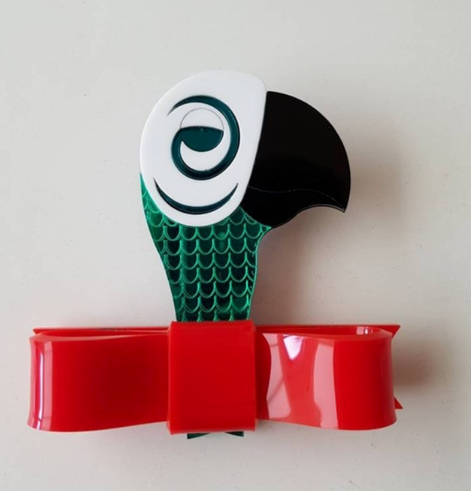
a plastic motif red brooch showing the green flamingo head of a Mary Poppins style umbrella handle.

A signature Mary Poppins green and black flamingo umbrella handle red tie brooch.
Mary Poppins Style Leadership

I recently had the pleasure of dipping my toe back in the glorious waters of the Sync Leadership program, after a hiatus of seven years.

Originally part of the first Australian cohort of the program back in 2014, this time round I joined Sarah Pickthall as part of the facilitation team to work with the third Australian iteration of the program, held online at the end of 2021. 

I additionally trained as a facilitator on the Sync Twilight program in 2022.

What a difference 7 years makes! Since that beautiful time spent at our residential in northern Sydney in October 2014, I have left my job of nearly a decade, given birth to and am now raising a beautiful young child and have undertaken a round-the-world research trip of a lifetime thanks to a Churchill Fellowship. I’ve also worked professionally with a lot of my colleagues from that initial Sync cohort and maintained firm friendships. 

At the moment, feel that I am much more effective as a ‘Mary Poppins’ style leader – as a consultant, I get to come in and work with organisations to help make things better and then set off into the sunset and let them carry on with it all themselves. 

Morwenna Collett

And while I knew I wasn’t the same person now as I was then, I was surprised at just how much I have changed as a leader in that time. I think I initially had this idea that once I’d worked out my leadership style through Sync, that that was it – great, tick, done! But actually for me, while at the time I may have felt like a butterfly emerging from a concoon with my newfound leadership knowledge, my understanding of myself as a leader has grown and deepened over time. Having the necessity to go back and do some deep thinking about leadership again after such a gap was a bit exposing but deliciously nourishing and fulfilling in amidst a jam-packed professional and personal life. And what a gift to myself it was – so thanks Sarah for the invitation!

Having the necessity to go back and do some deep thinking about leadership again after such a gap was a bit exposing but deliciously nourishing and fulfilling in amidst a jam-packed professional and personal life.

Morwenna Collett

For me, the things that changed most noticeably were my leadership metaphor, leadership styles and even my leadership matrix. I remember initially struggling to find my metaphor back in 2014 and eventually settling on a ‘bee’ and the concept of being a cross-pollinator of ideas. And while I still like to think of myself as an ideas germinator, my current metaphor hit me almost immediately – looking out to a clear horizon over a calm blue ocean. While my feet might often be madly paddling to stay afloat beneath the water, I now have a conscious sense of leading from a place of calmness – I do honestly believe that there is rarely such a thing as a life or death ‘arts emergency’ and I try and keep things in perspective now in a way that I couldn’t have done 7 years ago – thanks to a whole of life experience.

I was pleased to see a new leadership style of ‘inclusive leadership’ emerge over recent years, as this wasn’t something on offer as concept when we did the course back in 2014. That really spoke to me and aligns with my previously identified styles of charismatic and collaborative leadership, which I still identify with as well. And getting my head round the leadership matrix and repeating the associated questionnaire – well, the big discovery there was that I am now much more open and comfortable with receiving feedback than younger me was, and that can only be a good thing – I’ve definitely learnt some important lessons because of this over recent years!

So my ‘ah ha’ moment during Sync 2021 was that leadership is not a destination that one arrives at, nor something that is set in stone. It can ebb and flow and has really been more of a continuum for me, and I hope it continues in this way. 

Morwenna Collett

Reflecting back on this, I’ve seen this play out in my career choices and aspirations over the last few years. I’m more comfortable in my own skin and no longer feel the need to chase the big shiny job with the fancy title. At the moment, feel that I am much more effective as a ‘Mary Poppins’ style leader – as a consultant, I get to come in and work with organisations to help make things better and then set off into the sunset and let them carry on with it all themselves. 2014 Morwenna would never have had the courage to take a risk and try and support herself and her family by running her own small business – but 2022 Morwenna is very glad that her leadership style has developed to a point where she’s now comfortable to do this, because it is so great!

Leadership evolves and traits, styles and preferences can change over time. To me, leadership skills can be learned, developed and improved on over time – and I can’t wait to see the type of leader I will be in another 7 years!

Calling Disabled and deaf leaders in Canada. Apply for SyncLeadership, don’t miss the opportunity to evolve your leadership today!

Morwenna Collett | Consultant – arts, diversity, access and inclusion. Copyright © Morwenna Collett February 2022. Morwenna Collett is an accomplished leader, consultant and facilitator with 15 years’ experience in government, the arts, not-for-profit and university sectors, Morwenna has worn the hats of CEO, Board Director, senior leadership team member, project manager, lecturer, researcher, trainer and advisor. She is currently working as an arts consultant specialising in diversity, access and inclusion, and is a member of advisory committees with the City of Sydney, Sydney Festival, Perth Festival and Sydney Fringe. 

Liz Cooper: In Love with Disabled Leadership

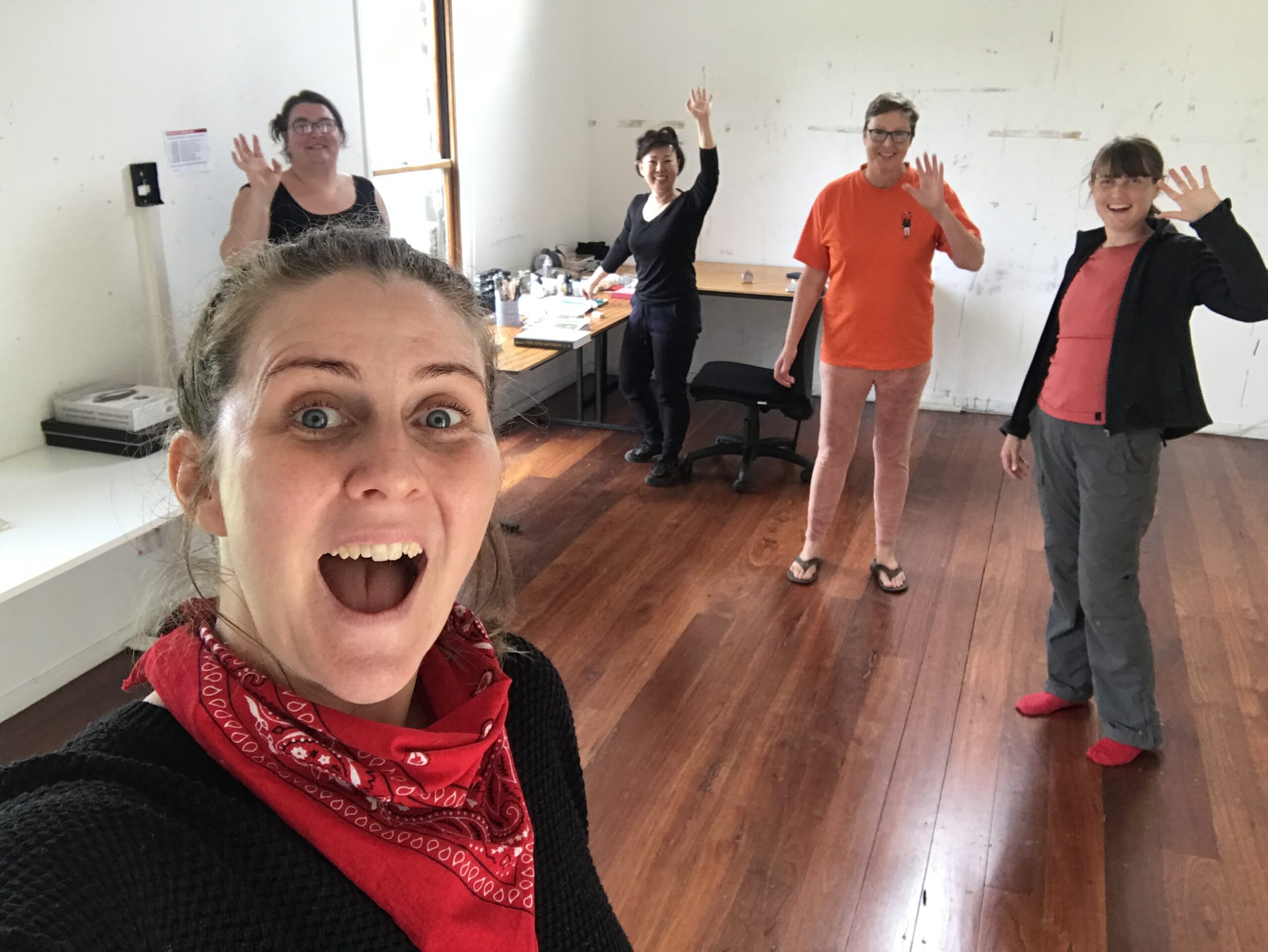
Liz Cooper with a smiling face alongside fellow Disabled Artists in a pace with a wooden floor
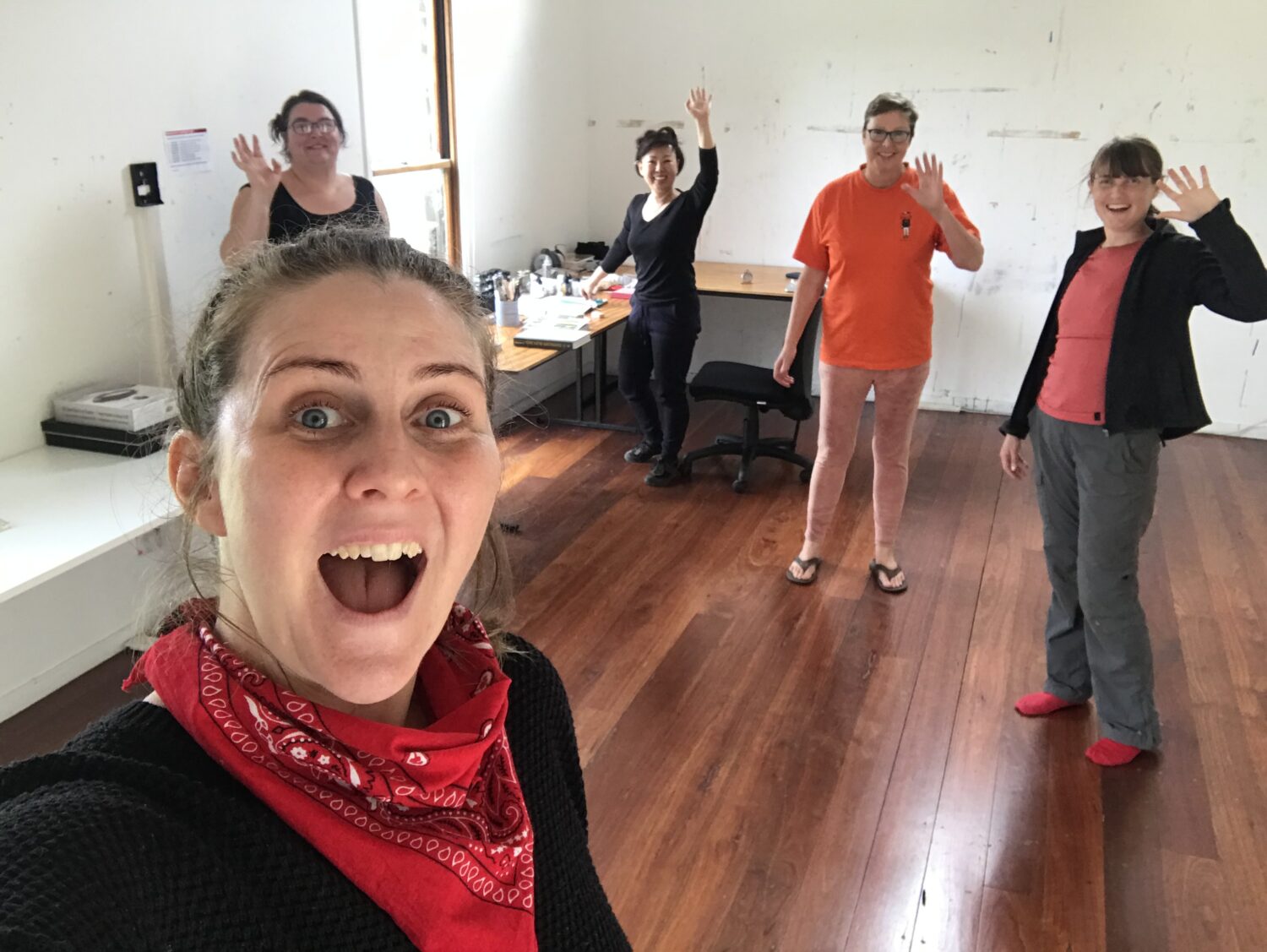
Liz smiles at the camera taking a picture of herself and 4 disabled women smiling behind her in a studio space on a wooden floor.
Liz Cooper & fellow Disabled Artists & Arts Leaders

Give me these moments back. Give them back to me. Give me that little kiss. I know you have a little life in you yet, I know you have a lot of strength left. I know you have a little life in you yet, I know you have a lot of strength left.

This Woman’s Work, Kate Bush

I always wanted to be some kind of artist since I was a child, abounding with enthusiasm and adventurous spirit, and I was restless unless I was doing, making, performing, creating or on a wild goose chase with other adventurers. 

My physical disability appeared inexplicably at 12 years old and progressed at a steady but life-altering pace so by the time I left school I was living in a world which was extremely different to my non-disabled peers. Endless doctors, clinics, hospitals, operations, physical therapies, infections, rehabilitations, failed surgeries, pain, and extensive medical intervention gave me the feeling at times I was living in a discombobulating gory horror film and other times a psychological thriller trying to guess the ending to this twisted tale. 

I had thought my calling was to be an actor but that dream died a cruel death when all the acting schools I applied to told me actors needed to be physically able-bodied and I would never have a career. At the time I did not even question this. Of course, it made sense. I didn’t have a disabled community or a disabled identity so I didn’t even question this level of ableism. To be honest, I did not even know a disabled community or identity existed. As a disabled person in the world I was pretty isolated. The way I dealt with it all was to mentally compartmentalise my life from my disability. I loved storytelling so an old acting teacher suggested I look at directing and writing which made so much sense. So I started my filmmaking journey by making films with friends; it was fun and accessible. But as I tried to move into the larger film industry I experienced roadblocks again as no one would hire me because of my disability.

So I decided to study film, but there are such strong ideas about what bodies are ‘allowed’ to make work; and being a woman I didn’t need another cross against my name. So I just told people I had an injury rather than a disability – which was really disturbing. I mean, people were happy to make things accessible for an injury, but towards disability, attitudes were very different, even though technically the accessibility requirements would have been the same.  

It became clear the only way I could do this was if I made my own work and worked with people who knew me and continued to largely hide and compartmentalise myself. So, I started making work and in some ways it was an act of resistance, but after a while it was just tiring. Having to work out all my own accessibility needs and perform like a non-disabled person – it just didn’t work after a while. My resilience had really worn thin. 

Liz Cooper

Then, miraculously just when I thought I couldn’t go any further, all these incredible disabled filmmakers, actors and artist started to show up in my life. I discovered a disabled arts community and everything changed. I felt so lucky to come to know these disabled artists, and I felt understood in a way that words cannot describe.  

In more recent years, diversity and inclusion have become buzz words on applications for funding, and funding bodies love to bang on about lived experience. My experience is, and maybe I am cynical, that often this ends up being more part of a box ticking exercise; about metrics, and an optical illusion of diversity and inclusion, especially around emerging sectors, but no real changes are made in attitudes around disability or the way things are done at higher levels. Leadership is crucial to change but we really have to question the way we do everything.  

Doing the Sync Leadership programme was life changing for me. Being a part of a group that centred disabled leadership changed how I saw myself. Just being in a place where we are heard and seen – and held in a gentle open space for us as disabled people with all our trauma and intersections – this was life changing. I always feel so restless, anxious to being exposed – but suddenly I felt like I could be still and be seen. It was unlike any experience I had ever had. 

Liz Cooper

Non-disabled people undervalue the amount of emotional labour disabled people do daily in all our relationships, work, personal, family and the world at large and it can require a lot of mental gymnastics for us to navigate a largely ableist world. But during Sync I felt like the walls of the mental compartments I had created in my mind started to melt away and I became whole. I could comfortably centre my disability and be a disabled person without an explanation or being someone’s afterthought. It wasn’t an “oh I forgot”, it was a ‘front and centre’ and the experience of not having to deal even the small fragment of ableism was life-changing for me.

The Sync coaching asked us to reflect upon our journeys of leadership so far; what strengths we had built, and the people and resources we had in our corner supporting us. The coaching allowed me to look at myself and my journey as valid and see how far I really had come.

Liz Cooper

Having disabled leadership centred in such a way really helped reflect back to me how much energy I spent comparing myself to others and how much stress I felt relying on non-disabled people for access and their leadership and how this was not very conducive for art making. I felt like I had been waiting for someone’s permission. My coach reflected back to me the longing I had for creating stories and the joy and purpose I found in doing that. I began to really see there was a place for me and the practice of the coaching also allowed me to begin to champion the way I had been doing things, the validity of that, and how I had been leading and creating work from an authentic place all along. 

It wasn’t just the individual coaching in Sync that shifted me, it was being together with this incredible group of people, the way Sarah and Jo approached the group. It was conversation which centred on disabled artistic leadership – and the way it was modelled showed us, through the workshop, in the way they inhabited the space, just how easily it can be done. 

Being in a space where you are seen and valued as you is life changing. Disabled artist leadership is as sexy as fuck, I am completely in love with it. It is not just a box to be ticked – it is truly a completely achievable, precious and wonderful way of life and now I realised I actually have a lot of strength left. 

Copyright © Liz Cooper February 2022

Bec Hogan: Inclusion is daggy but that’s ok.

a watercolour sketch of a disgruntled woman. behind her are stereotypical images of diversity and inclusion, people holding hands, multicoloured hands and the words daggy, lame and naff!
An original artwork by Bec Hogan

Inclusion by definition means including people, to provide equal access to opportunities and resources for people who might otherwise be excluded. 

“Inclusion moves us beyond access, beyond universal design. Inclusion — the act of including everyone — is a deeper shift towards welcoming and valuing people exactly as they are.”

https://www.cahoots.org.au/diversity-and-inclusion/inclusive-meaning/[SP1]

Inclusion and inclusivity are – of course – good things, yet how can such fundamentally good things often feel, kinda daggy, naff or even lame?

Inclusivity, diversity, and accessibility are unfortunately victims of corruption – basically good things that have been warped. Inclusion in the modern world conjures images of ethnically diverse people holding hands across the world, possibly singing whilst all humanities’ ailments simply disappear.  

It’s also become a buzzword amongst lazy industrialists and HR managers who want to be seen to do ‘good’ without really contributing to change. These are the disappointing realities of the term, inclusion, and something I’ve witnessed in my corporate work and even in the [supposedly more diverse] artistic world. I had to repress the slight rolling of my eyes and silence my own scepticism when listening to people saying the right thing about inclusion, only to let it slip off the table or be pushed to one side when something more pressing or less taxing or time-consuming takes precedent. 

So, when I was selected for the Sync Leadership program I knew that inclusivity and being inclusive were good things but I was unsure as to how they related to my leadership, and how that could make a difference to me being a better leader.

When Sarah, and the 2021 Australian Sync cohort, began to talk about inclusive leadership, and how we – as people with disability – are in a unique and natural position to inspire and explore inclusive leadership, I was intrigued. Personally, I have always gravitated towards the traditional iterations of leadership styles that centre on charisma and verbal communication. My disability directly effects my ability to write, so I learned to communicate verbally well and fast. I know how to spin a yarn to inspire my vision of the future and why those around me should be invested in a better way. But inclusiveness always seemed like a benefit of leadership rather than a crucial element of it. 

I never saw myself as particularly inclusive in my leadership style – it didn’t occur to me that diversity and inclusiveness in leadership were crucial to real access moving forward, and that being curious and courageous as a leader and cognisant of my own bias were critical factors. It seems, with hindsight, like it should have been obvious to me, but that is the biggest hurdle with internalised prejudice – it’s about realising it’s there. 

This has been a massive mental shift for me. Personally, inclusive leadership is not only about having more diversity at the heads of our systems; women in government, people of colour in boardrooms, people with disability on television, etc. It’s also about leadership behaviours; being curious and tenacious about who is not in the room and challenging that at every turn. 

With this new insight, and almost without realising, I began to notice and question differently about who wasn’t at the table. I became more verbal, more distracting in meetings and I wasn’t afraid to speak up when I noticed a room full of people discussing accessibility features and being the only person with a disability. Again, I found myself speaking up when others were discussing new positions in large organisations directly relating to disability – and no one considering hiring a person with disability. I pushed aside my unconstructive annoyance and started speaking up from within an inclusive leadership context. People noticed – and the beginnings of real change felt more possible in collaboration.

It’s funny how an idea can spark change; how moving inclusion and leadership into inclusive leadership as a practice has revealed so much more potential for me on my leadership journey. While many aspects of the Sync Leadership Program were beneficial to me; discussing motivations, meeting other leaders with disability and complex debates around interesting issues – all fun and all useful, the conversation on different leadership styles provided actionable steps for me personally. 

So while inclusion may still be a little daggy – it is still good and is worth leading for.

Bec Hogan took part in the recent Sync Intensive program in Australia in late 2021. She is the creative director of Gem Rock Media, that specializes in digital access, social media inclusion and consults for Accessible Arts and the ABC.  As an emerging artist, working in paints, photography and video art, Bec has been a part of several art exhibitions and spoken publicly on her arts practice and short films. 

Instagram: @bechogan__  
Facebook: https://www.facebook.com/gemrockmedia/

Richard Bell: Revolution within myself

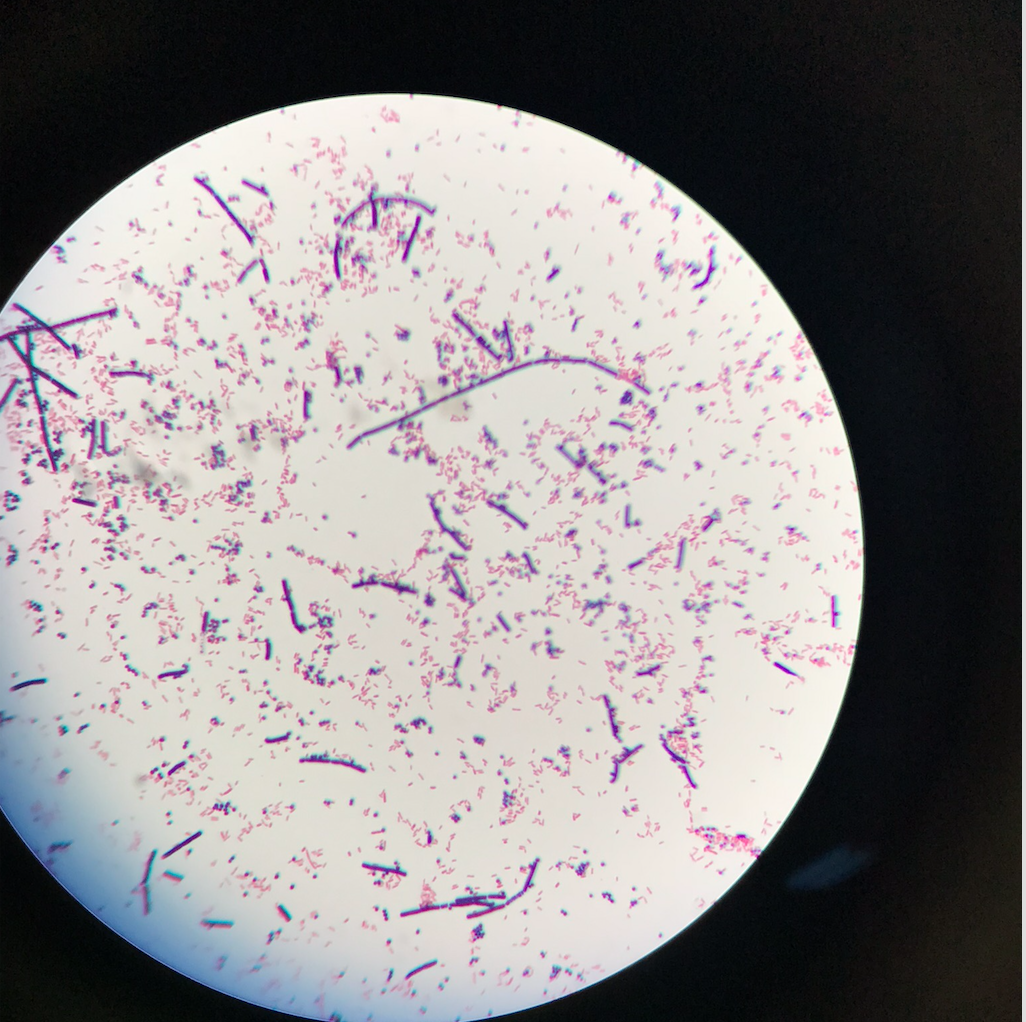
A mixed bacteria culture the stain used was called gram stain. Where certain bacteria are stained pink and certain bacteria are stained purple during the process for identification purposes.
Truth that Underlies Identity @Richard Bell

In the ultimate revolution of me, I sat in the SYNC leadership program to learn about the awakening of myself. Constantly in conflict of the battle within my mind of career choices, it was time to explore and create something new.

Rebuilding out of the rubble of my relapse, which occurred in 2008, I immersed myself in poetry and art. In the aftermath of the relapse, hallucinations would escape my lips involuntarily in unbroken dialogue, and artistic creativity was the only way to silence the symptoms of psychosis.

For years my ink-filled footprints, marching to the beat of social advocacy. Then throughout the years, the rebellion of fighting as injustice brought me to find I was spending too much time focused on being sick and on my mental illness. So, I transitioned from illness to wellness and started focusing on myself and who I was as an individual. The beat of my drum turned me to Polynesian heritage, focusing on my Tongan background, through superimposing cultural symbols over original photography. 

But constantly conflicted in the warzone of my mind, were thoughts of, Is this who I am? Echoing off the inside of my head, Is this who I originally set out to be? Standing within the SYNC Australia leadership program was like a crucible burning away everything leaving only what was necessary. 

Standing within the SYNC Australia leadership program was like a crucible burning away everything leaving only what was necessary.

Richard Bell

The leadership drivers that we learned helped me figure out where I was coming from. In a revolutionary moment, I realised that two of the things that were driving me were stability and commerce. In the moment of truth and honesty, art was giving me none of that.

Then as the program continued, I discovered in a moment of personal power, that I was really enjoying the coaching element to the sessions. In the smoke from the rebellion through social injustice. I witnessed, through my questioning, people reacting to light bulb moments igniting the darkness of their problems. I felt good to see the changes in people on a face-to-face level.

I discovered in a moment of personal power, that I was really enjoying the coaching element… I witnessed through my questioning, people reacting to light bulb moments igniting the darkness of their problems.

Richard Bell

In amongst the leadership program, I came to the ultimate realisation that art was not really my authentic self, may have just been a tool in this revolution against the illness to become stable in my mental health. 

Poetry that fought injustices, was to process the hurt and pain of my relapse. Recognising that people who talk to themselves from the point they wake until they slept, go into homes for the mentally ill and never come out again. 

Eyes awaken to art as a recovery tool, and what was always in the back of my mind was science, it was the first certificate I completed from coming out of high school was science.

Now in the revolution of an authentic self, I have found myself a job to provide stability and commerce, and I am endeavouring to study science using art and poetry achievements as a recovery tool. In the midst of fighting injustices, I now have recovered the conflict within and revolutionised myself to find what is my true self. 

Richard J Bell calls himself a Contemporary Creative Soul and multiform artist, who delves into genres such as creative memoirs, contemporary poetry, lived experience opinion pieces, sculpture, photography and kupesi drawings.  Starting off writing about his lived experience of schizophrenia with the hopes other who have similar experiences will read and relate to it on an emotional level, he is currently transitioning from illness to wellness and rather than fighting the hurt, pain and injustice, he is working on exploring his own culture and heritage through different Polynesian kupesi designs superimposed over original photos of Tonga. Now juggling the aspects of a real job, study and artistic achievements to build a healthier self-image within, he continues live a relatively normal lifestyle in conjunction with his disability. 

Richard J Bell – Contemporary Creative Soul https://www.facebook.com/richardjbell84

Polynesian Contemporary Tribe https://www.facebook.com/polynesiantribe

Unheard Poets Society https://www.facebook.com/unheardpoetssociety

Unheard Tribes https://www.facebook.com/unheardtribes

Copyright © Richard J Bell 21st December 2021