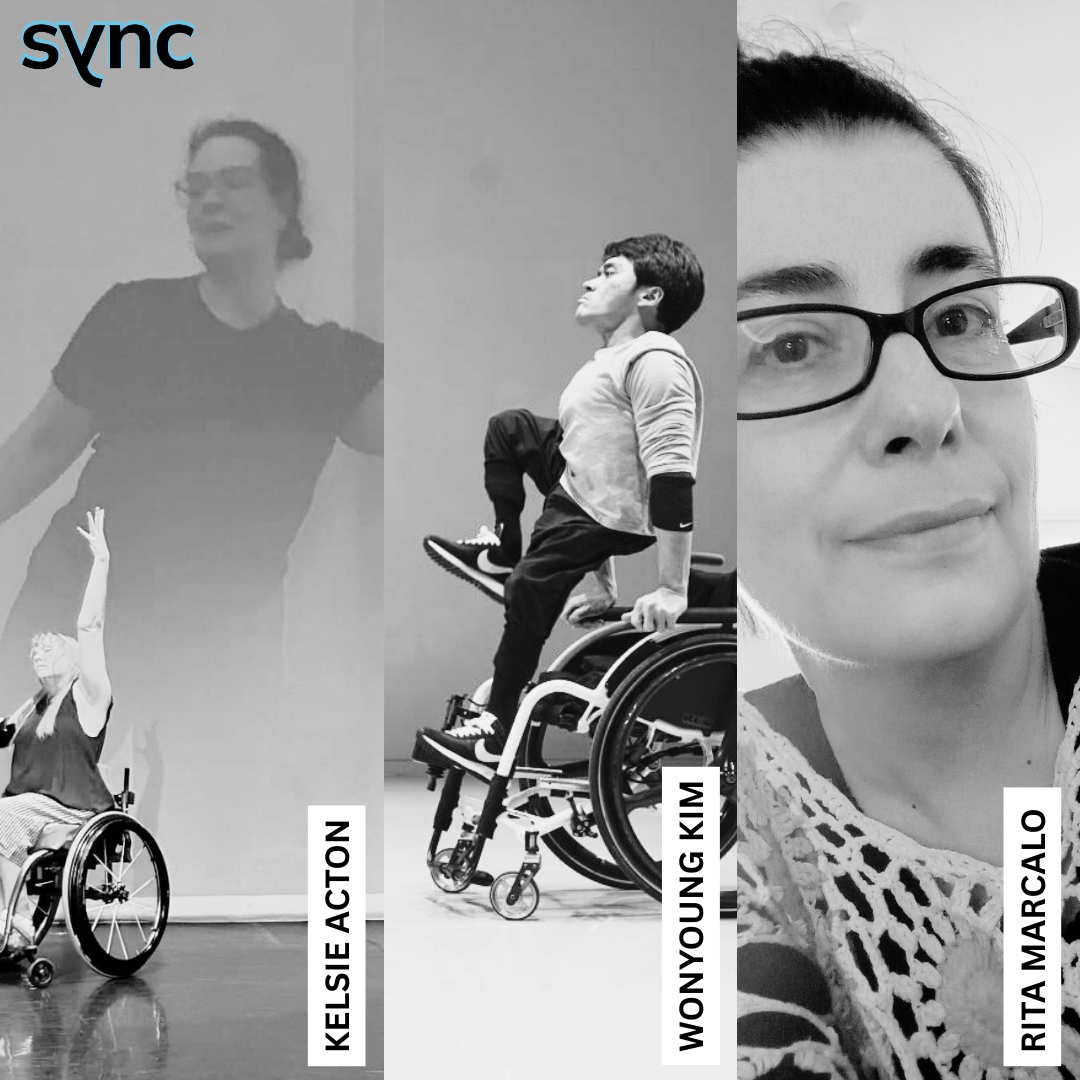
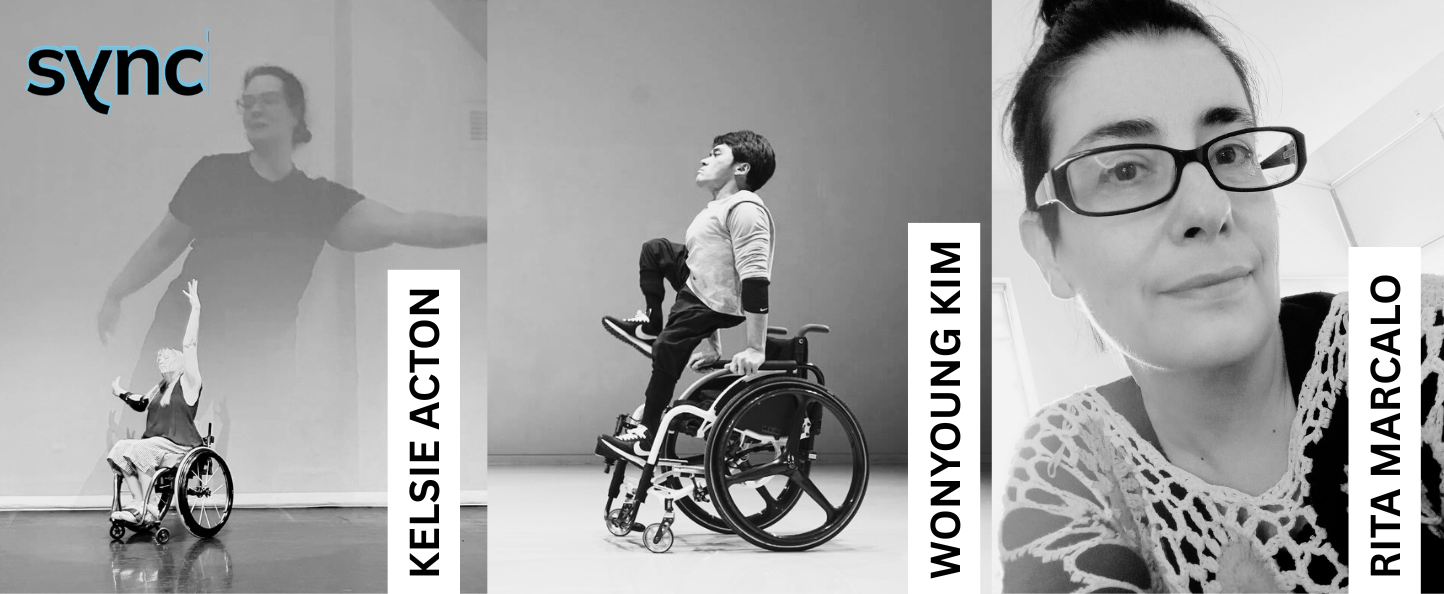
Kelsie Acton, Wonyoung Kim and Rita Marcalo, in conversation with Sarah Pickthall, 2026
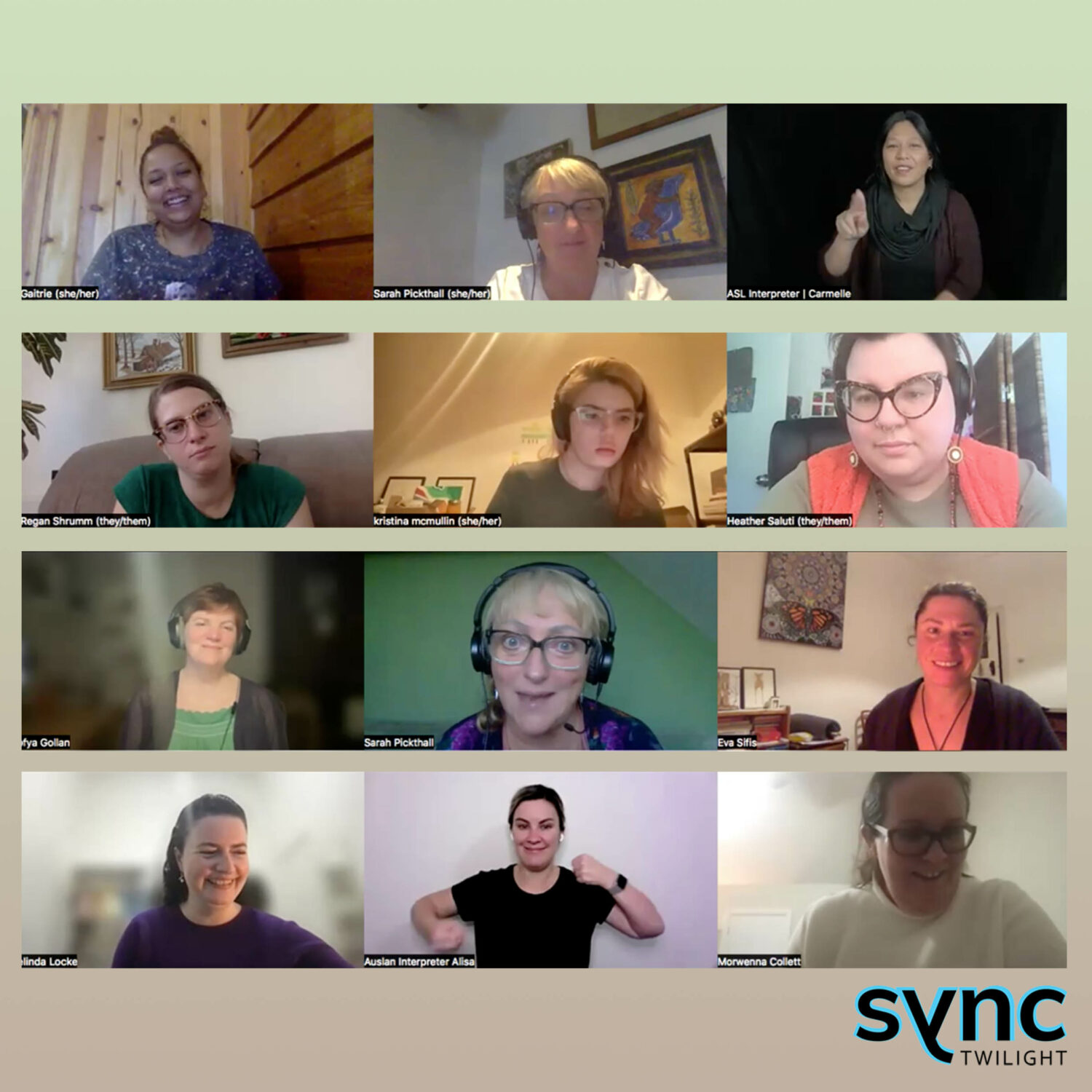
In a recent meet up hosted by Sarah Pickthall (Sync’s co-founder), three dancer choreographers from former Sync programmes in the Canada, South Korea and the UK – Kelsie Acton, Wonyoung Kim and Rita Marcalo – met to discuss where the programme left them/left off, and to share what they’ve been up to since.
Sarah set out to name and nurture the ongoing body and mind fatigue that the group was feeling for different reasons. Talking about her own injury, she reflected on the weariness that comes from us being and doing our professional lives with so much impedance in the world generally.
What emerged in conversation wasn’t tidy travails but tangled and touching tales of disabled dance artists honing leadership in uncertain ground, practicing in various ways, and exploring the ecology of the body and making moves in the burning, fragile environments where our lives play out.
Together they explored the strange and varied ways that leadership lives in movement and dance. Despite scarcity of funding and minimal support, often living off air and the love of the form, all three of these brilliant humans have forged a path for themselves, finding support in and from others with a few strategic fights along the way. In their stories of self advocacy, there is experience here relevant to us all as we strive to uphold and live our values in our respective societies.
SYNCING
Wonyoung (Won) shared his earlier life growing up in rural South Korea, his work in the legal profession and the transition that started around the time he first took part in a Sync programme back in 2018 in Seoul. At that time, Won questioned whether to continue to ‘fulfil his role’ as a disability rights lawyer for social change, or should he pursue a dance career? Or both? Could his desire for social change speak through dance, finding ways of being acknowledged beyond the ‘other’? That choice demanded refreshed patience and different sorts of persuasion to his legal training, challenging scepticism and a pervasive lack of physical and attitudinal access to dance spaces. Now Won is almost exclusively a dancer/choreographer/teacher, taking up space without apology and acknowledging that something about the disabled body cannot be explained through all the social theories and laws.
Rita, originally from Portugal, came to dance already carrying a long history of being managed by medical opinion and assumption. Ballet, said Rita, was initially prescribed as physiotherapy, and the process awakened the dancer within, igniting for her a way forward. When she first encountered an early Sync programme whilst in the UK, she was turning her medical history and her other lived experiences into dance by explicitly reframing her epilepsy as “involuntary dance” and staging the possibility of her own seizures publicly. Through dance, Rita was finding a way of refuting and replacing the medical model’s account of her own body. She has worked with others to do the same through her company Instant Dissidence.
Rita joined our conversation having battled the blazes and wild fires in France this summer as she travelled from Portugal to her home in Ireland. Her own commitment to positive action against climate catastrophe includes choosing not to use air travel. Choosing trains, Rita reframed the physical discomfort she can experience by rail as a good reminder of the planet’s pain.
Kelsie joined Sync online from the UK at the start of the pandemic in 2020 as part of Sync Ontario. Kelsie is originally from Canada where she was co-artistic director of Cripsie, in Edmonton, Alberta. Her dual nationality enabled her to secure a place, having taken up residency at BAC as their inclusive practice manager. Sync was the catalyst for changing her thinking and letting her break out of the pre-existing mould: the one that implied that leadership in disability arts culture in Canada was all ‘in the service of’; she was able to realise that there are many different leadership styles and manifestations available to as leaders – nothing is fixed or limited.
CURRENT MOVES
Now a Post Doctoral researcher and lecturer at The Royal Central School of Speech and Drama, Kelsie is moving more fluidly between leadership styles, shaping ideas for others, and pushing the field’s thinking on access itself. She pointed to Aislinn Thomas’s Quiet Parade– a work built specifically for sensory-sensitive audiences — as evidence that “universal design” can quietly flatten real differences in need. She described her current leadership style as being less about finding the ‘one right structure’ and more about building rooms where access is a shared and ongoing responsibility, rather than a checklist of things that folks are required to put in place (and can then tick off as ‘done’.)
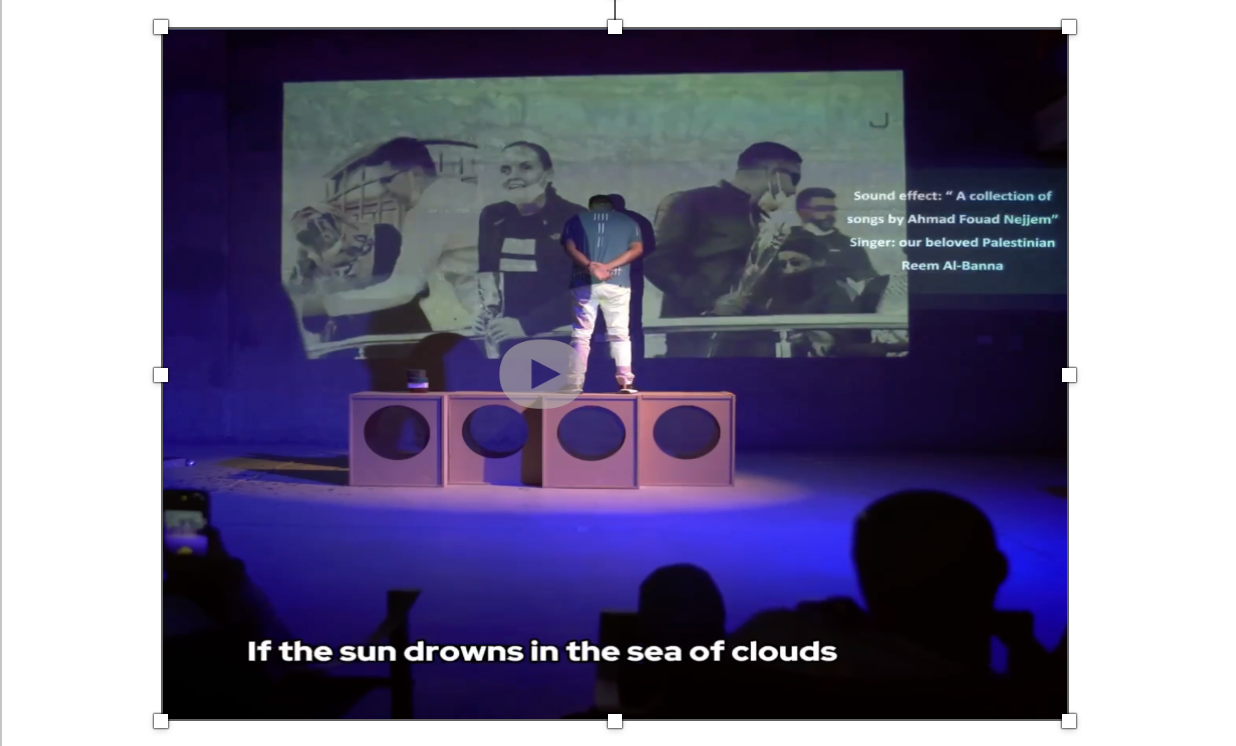
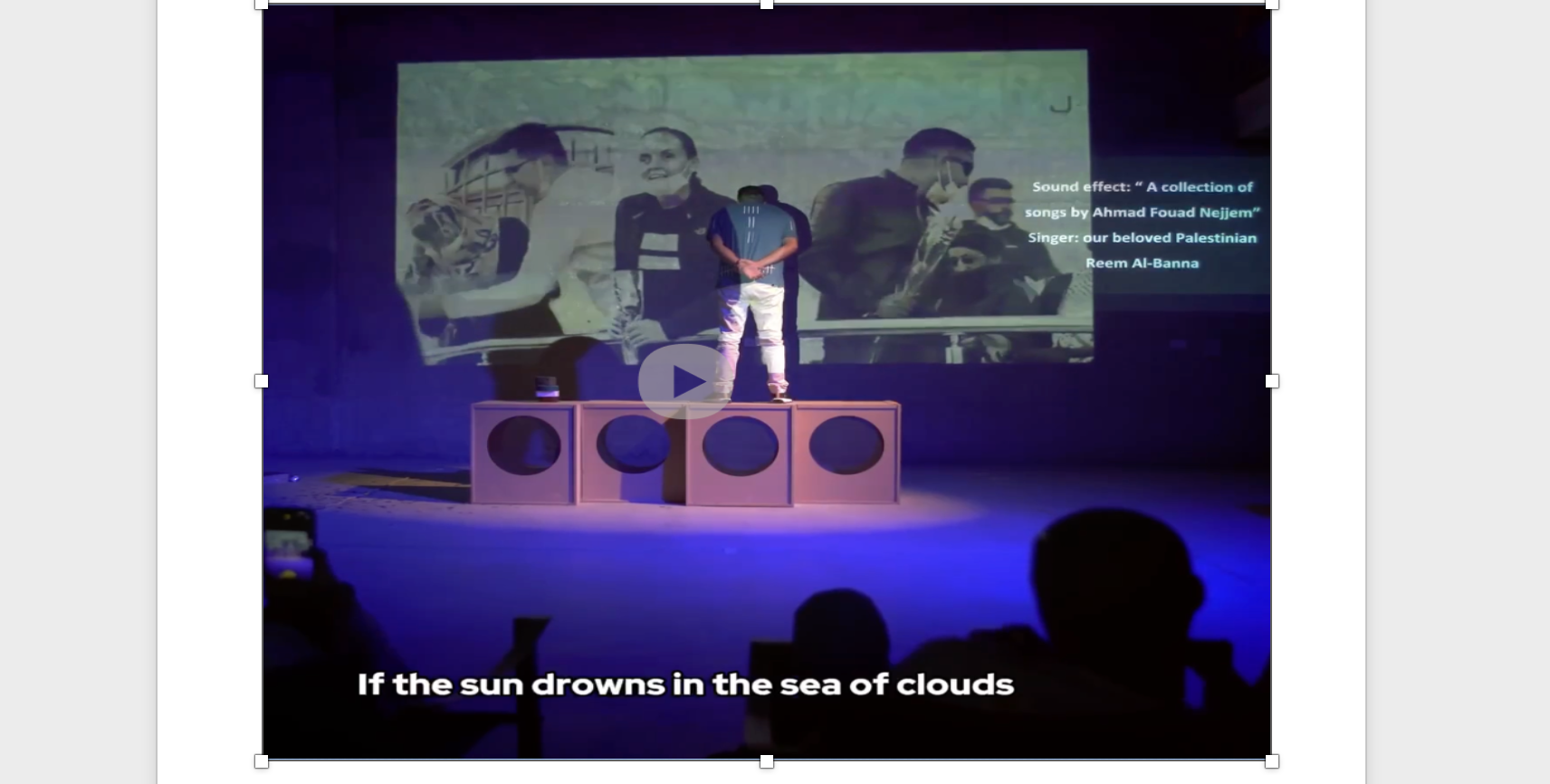
Won doesn’t reach for the word “leader” easily but quietly creates new works and now teaches in institutional spaces often ‘feeling like a guest’. Additionally he continues to make an impact through writing, research and performance. His gentle refusal to centre himself and to laud other disabled dancers’ contributions is touching. As he speaks, insistence on the inclusion of the disabled body, not just as audience, but as choreographer and even professor is striking and award winning: of particular note is his work Act on the Prohibition of Discrimination and Relief of Rights in Love and Friendship, in which he filled the stage with a solo dance without his wheelchair.
Rita has scaled up and is now running an international project spanning Portugal, Ireland, and the UK, gathering dancers around the idea of a “dance revolution” in an open call to rethink how dance is funded, how artists relate to each other, and how the field relates to the environmental crisis. She doesn’t know exactly where the project will land, and she’s treating that not-knowing and exploration as the method, not as a gap in the plan. Leadership, in her current practice, looks like holding space for collective uncertainty instead of resolving it prematurely, and we all basked in this beautiful approach.
She also reminded us of the excitement in encountering and potentially working with dance artists who strive and inspire us to do things in dance and disability that feel ‘perilous and dangerous’ similar to Won, and she shared Diana Niepce with us all as someone who is practicing with fierce intention.
HARSH REALITY
None of this is happening in a settled context, and nobody in the conversation pretended otherwise. Won spoke directly about fear — both the erosion of human rights and ethical norms globally, and his real doubt about what artists can do that can make a difference in the face of that. It wasn’t a rhetorical flourish; it sat alongside everything else that was said as the backdrop the rest of the conversation was happening against, and it echoed in his own account of still having to justify his presence in rooms that he’s more than qualified to lead.
Kelsie’s response to that same instability has been to lower the stakes of what “staying in dance” has to look like. Long-term planning has gotten harder, and large-stage performance has, for now, given way to smaller, remote collaborations. Rather than treating that as decline, she’s trying to hold onto the joy available within the disorder — a deliberately unheroic, sustainable way of staying present in the work.
Rita’s answer has been to go bigger rather than smaller — building a cross-border collective explicitly organised around systemic change, on the theory that if funding structures, environmental relationships, and social models are all under strain at once, the response has to be collaborative and international rather than individual.
What ties all three together isn’t a shared conclusion. It’s a shared refusal to let resilience mean going quiet. We were connected by a deep Sync solidarity, appreciating each other’s values and experiences, and acknowledging the potency of Sync.
Sync’s co-founder, Sarah, closed the conversation with an eye towards carrying these threads — the body, leadership, access, and uncertainty — into future Sync gatherings. Sync gave these artists language and community at a formative moment; what they’ve built since is proof that the work doesn’t stop at the end of a programme — it just changes shape, sometimes gets harder, and, if this conversation is any indication, stays worth doing.
‘