
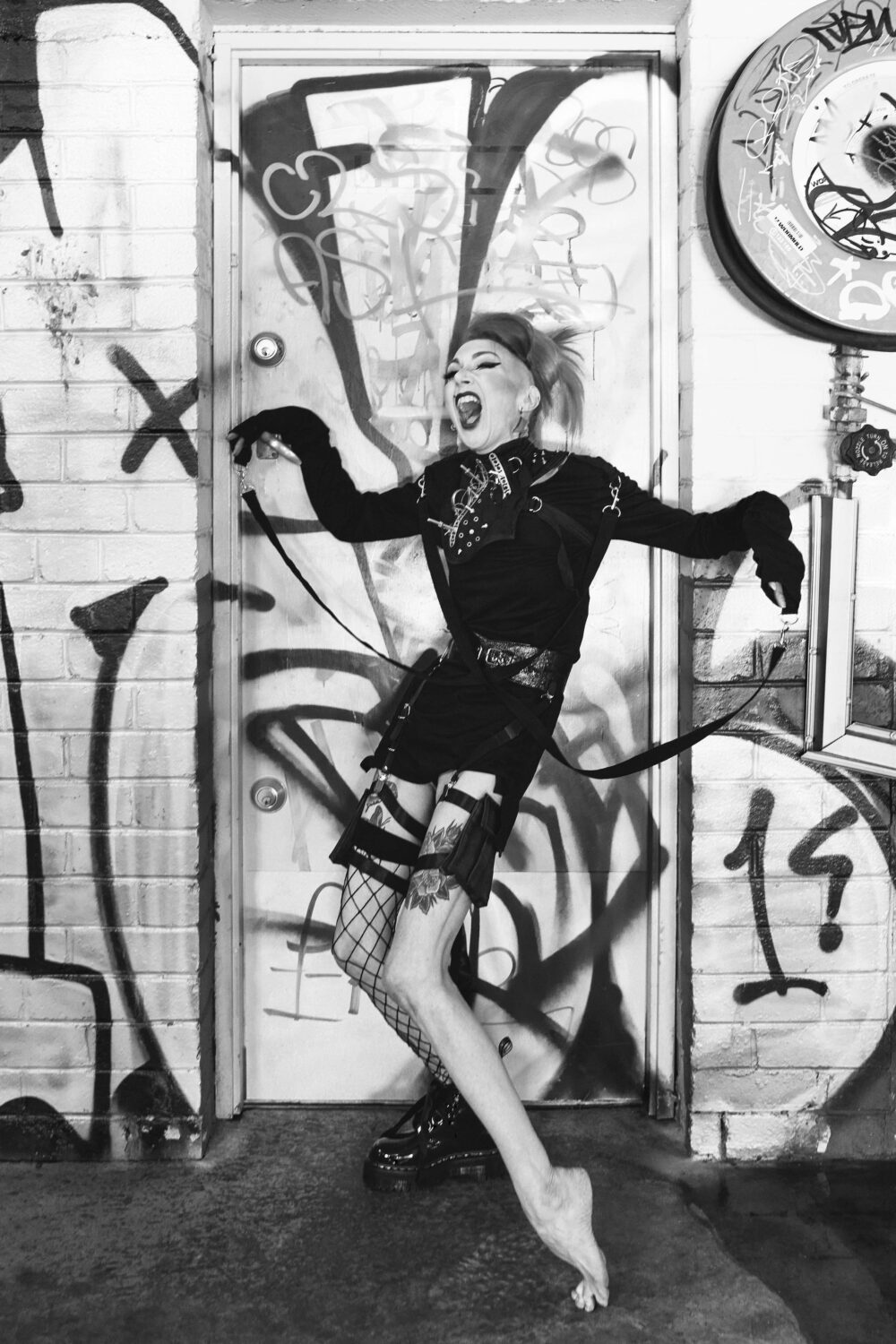
Sometime before commencing the Sync Disability leadership programme, I had begun to think deeply on the concept of liminality, as I navigated the ever-changing landscapes of my disabled body. I had, however, never contemplated this liminality in the context in which I display/exhibit leadership, yet there is no denying that the impermanence of my being, seemingly at odds, juggling the permanent disability of my body, was in fact a key feature in my work, and in how I communicate with the arts world, and the greater disabled community.
As a sufferer of degenerative disease, chronic pain, chronic fatigue, and the multiple comorbidities that exist on this ever-changing plane, my disabilities may not be palatable to the non-disabled community. As a disabled and chronically ill person, I am constantly forced to confront the reality that my body, my physical and oftentimes psychological being, is not designed for this society, nor for this world. My precarious existence does not fit neatly into the search for completeness that others strive for in life- the resolute, the finite, the end result. I know only constant states of flux, uncertainty, unreliable, cautious movement – the liminal spaces between functional incapacity and acceptance of a quarter-time life.
There is an infinite pool of sadness in my heart that will never be filled, a never-ending grief that shall never resolve. My disabled pride comes not from being an exemplar, for this body does not ‘put the ability into disability.’ Condescending euphemisms serve only one purpose; to erase my reality, rendering my pain invisible, dressing my bodily dysfunction up in ribbons, and lace, to appease the palates of the non-disabled.
To truly honour my existence is to see my pain. My truth is not pretty. It is not something to aspire to, nor wish for. My disabled pride comes in my stubborn resilience that has cheated death on far too many occasions; my steadfast resolve to share my truth, despite how unpalatable it may be for the digestion of the non-disabled community. My ugly shall not be erased, for it is my reality to face each day, and is a life that is equally valuable, as any other.
And it is this experience; the embodiment of pain, within disability, that has largely shaped my greater body of work as an artist, and advocate. Although reluctant to be typecast into the boundaries of only ever creating art that contextualizes my personal disabled experience, I also value, and recognize, the immense empowerment that comes from utilising this voice.
With the nurturing guidance of Sarah Pickthall’s coaching sessions through Sync Australia, I came to appreciate the many forms of true leadership in action. Coming to the realisation that leadership in advocacy does not necessarily need to be played out through the trope of ‘passionately aggressive protestor’, empowered me further, to see where my work in this realm fits. My artistic activism does not come in the form of rebellious anarchy, violence, nor public outcry. Paint-bombing parliament, burning effigies, and chaining our bodies to buses are all wonderfully fervent acts to initiate change, but sometimes, the most subtle of statements can be the most compelling, and persuasive.
My gravitation towards performance poetry using metaphors and allusion to illustrate my stories has given me the skill to relinquish the need to exhaustively spell my pains out to the world in layman’s terms. Is it not the work of the artist to illustrate their experience in the way that best represents them creatively? During the group sessions within the programme, as individuals we were able to explore our unique leadership styles, and build on this knowledge in ways that fit our uniquely disabled ways of existing within the arts world. And so, with these valuable learnings reinforced into my leadership style, I bring my ever-evolving, uncertainly liminal, unapologetically ill, passionately exhausted, poetically empathic voice to my art, and greater arts practice into the future.
… What a truly valuable programme this is!
Actively / Liminal
1.
I exist in the liminal spaces
between
inertia and existence
functioning only amidst the static
an over-heating hard-drive
2.
Orientation meets no
acquaintance in the time
and spaces
of each moment
for each time and space
has…
long
altered
… before I reach its destination
3.
I am impermanence squared
=
the cumulative effect of
impermanence
upon
impermanence
the never-ending equation of a body coiled
into endless question
spine straightened with
a foreign language –
someone else’s grammar
far too rigid
for my fluidity
4.
An inconvenience you
will graciously
accommodate
superior or
inferior, but rarely
on eye level.
apologising for my existence, once again.
5.
I am uncertainty
cautious movement
a constant state of flux – unreliable
in heterogeneity
6.
Crossing too many borders
during fevered sleep to know
specifically
which space I inhabit upon waking
– forever transient
7.
Entangled in false yesterdays
unable to touch
this moment
sea sick from my ever-swaying compass point
8.
Is it wrong to wage war with your own
body
when it has thrown
the first grenade?
encountering my many selves, I
relinquish all semblance of control
my permanent state
of impermanence