Sean Lee is a curator, programmer and artist. His current role is Programming Director at Tangled Arts + Disability in Toronto and took part in Sync Ontario in 2020. He works as a facilitator with Sync running Sync Canada Intensive programmes.
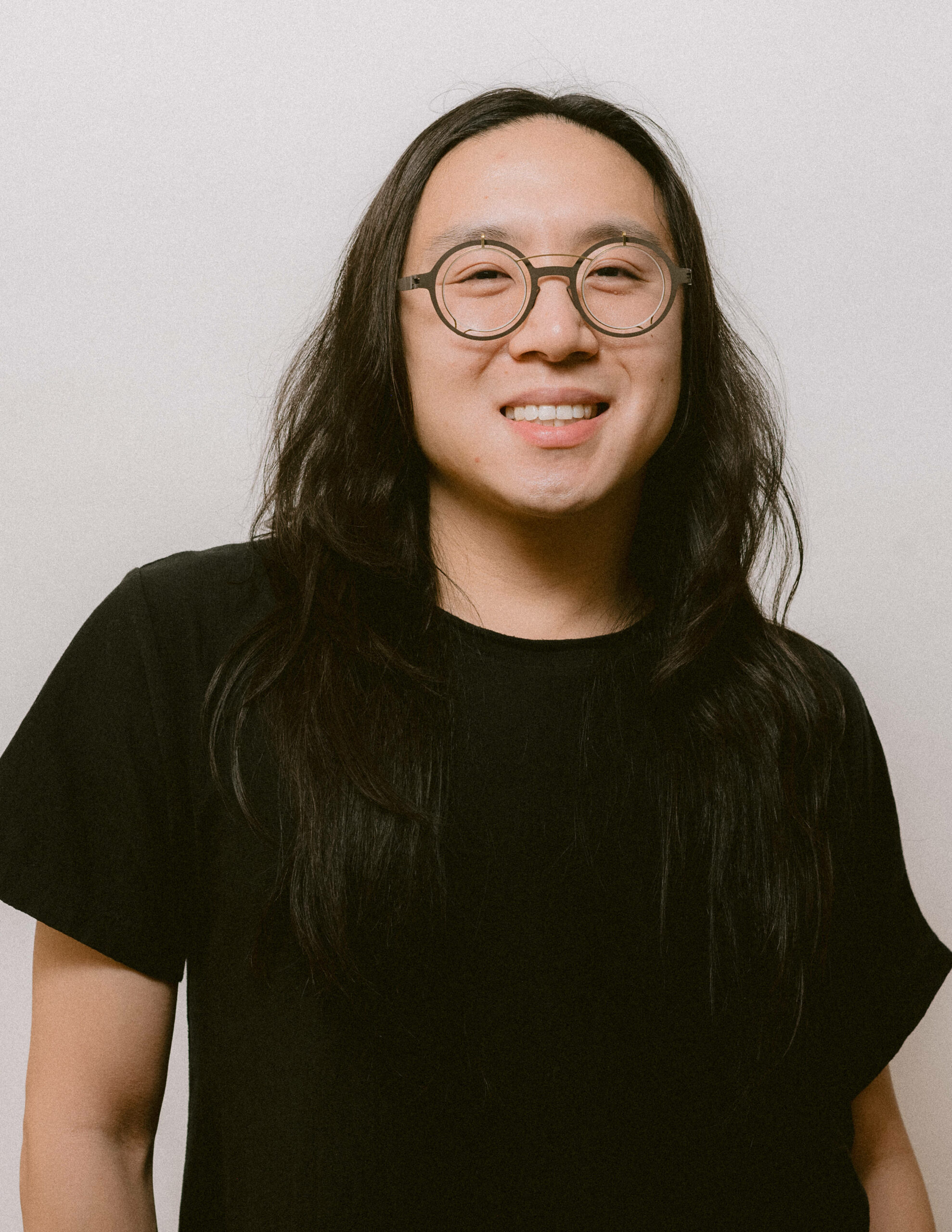
My journey into disability culture was about seeking—often without knowing exactly what it was that I was seeking for. Growing up, I was visibly disabled, but isolated from any real understanding of disability as culture. Disability was framed as an unfortunate personal circumstance, a medical fact, or—at best—a physical quirk. So, for much of my early life, I didn’t see myself as part of a disability community—mostly because I didn’t know there was such a thing.
I had never been invited to think of disability as a shared political or cultural experience. It wasn’t until I met Eliza Chandler at a feminist unconference at the Art Gallery of Ontario that something shifted. Through that encounter, I found disability arts and began to understand disability not as an aesthetic idiosyncrasy or a purely biological fact, but as a cultural practice and a way of being, knowing, and building worlds.
This is the lens through which I now understand crip curation: as a deeply political practice rooted in lived experience, relational care, and a refusal to replicate the extractive systems that define so much of the art world. But crip curation is not just a methodology or an approach — it has been, for me, a personal journey of dwelling with disability. It’s a process of unlearning the compulsion society creates to distance itself from disability and instead learning to share in access as cultural gestures and rituals of kinship.
Access isn’t necessarily always something you install—it’s something you live. It’s an ethic, not a product. And it doesn’t always look like a ramp or a sign—it can look like slow timelines, shared language, refusal, and care. It’s relational, improvisational, and collective. This shift in thinking reframed my curatorial practice entirely and has allowed me to see curation not as a project of perfecting access, but of holding space for access to emerge through relationship.
I’ve started using the phrase Crip Horizon to describe what disability culture makes possible. Building on José Esteban Muñoz’s queer utopianism and Alison Kafer’s politics of crip futurity, the Crip Horizon is not a distant utopia that lies beyond reach. It’s a conceptual space—a shimmering elsewhere and elsewhen—where our access work becomes world-building. It’s not one fixed destination, but a constellation of potential futures where disability is not just accommodated, but fundamental to how we organize, create, and dwell together.
The Crip Horizon asks: what if access isn’t just about the here and now, but about imagining otherwise? What if our practices of access aren’t just tools for compliance, but portals into cultural transformation? It’s a space where access is cultural, not clinical. Where our communities don’t just survive ableism—they reimagine what culture can be.
This orientation has reshaped how I approach curatorial work. My curatorial practice has grown to center access aesthetics—not just accessibility as a tool or add-on, but as form, concept, and feeling. At Tangled, we’ve developed practices like putting a care clause in artist contracts, access riders, and remote exhibition tours—not to tick accessibility boxes, but to change how we relate to one another as people. These are not administrative procedures; they are cultural practices that shift the very infrastructure of how we gather, create, and share art.
Exhibitions like Undeliverable, curated by fellow SYNC alumni Carmen Papalia, pushed this thinking even further. In 2021 when this exhibition took place, it refused audience-centered norms and re-centered the needs of disabled artists in the context of exhibition making. We practiced Crip Time, built care into contracts, and let go of the assumption that shows must be “complete” to be successful. Undeliverable demonstrated that exhibitions could exist in a state of flux, where access is continually negotiated, and the work of curating becomes a shared act of care and refusal.
That’s the kind of curating I want to keep doing—curating that feels like organizing. Curating that builds relationships, holds contradictions, and expands our collective capacity to imagine disability otherwise. Curating that understands access as a creative medium.
Looking ahead, I’m particularly excited to be co-leading SYNC Re-Ignite alongside Sarah. For me, this isn’t just about facilitation—it’s about mentorship, capacity-building, and expanding the political imagination of what disability leadership can look like. My journey through SYNC, Tangled, and crip curation has taught me that leadership in disability arts is not about authority or expertise—it’s about holding space for collective inquiry and nurturing the conditions for others to lead in ways that align with their own politics of care.
I’ll be drawing on my experiences at Tangled and my curatorial practice to support the cohort in thinking about access not just as a logistics tool, but as a cultural and aesthetic strategy. I’m interested in holding space for complex, sometimes uncomfortable questions: What do we owe one another as disabled leaders? How do we lead without replicating the same harm we’ve experienced? How do we work in sustainable ways that centre our bodies and minds?
These are not questions with easy answers. But they are the questions that will define the future of disability arts leadership. I’m honoured to help shape a space that holds possibility, tension, care, and futures—all in equal measure.
In many ways, this is the work of gleaning and claiming that disability activist Catherine Frazee speaks of in her book Dispatches from Disabled Country. We are constantly gathering—gleaning—practices, relationships, and histories that can sustain us. Disability community is not something we inherit; it is something we build and rebuild, together, through acts of care, refusal, and imagination. As we move toward the Crip Horizon, we are not simply demanding access to existing cultural spaces—we are transforming the very architecture of culture itself. This is the invitation that disability arts extends to the world—not just to include us, but to imagine with us. To build, together, a more just and tender future.
Access isn’t necessarily always something you install—it’s something you live.
Sean Lee
Other Leaders
-
Salima Punjani
My work is soft and sweet and tender. I would say it is strategically…
-
Dawn-joy Leong
I will always remember SYNC for providing me with the Clement Space — a…
-
Shivanya Ra
As creators, changemakers, and “crippers” of spaces and language, it is imperative to treat…