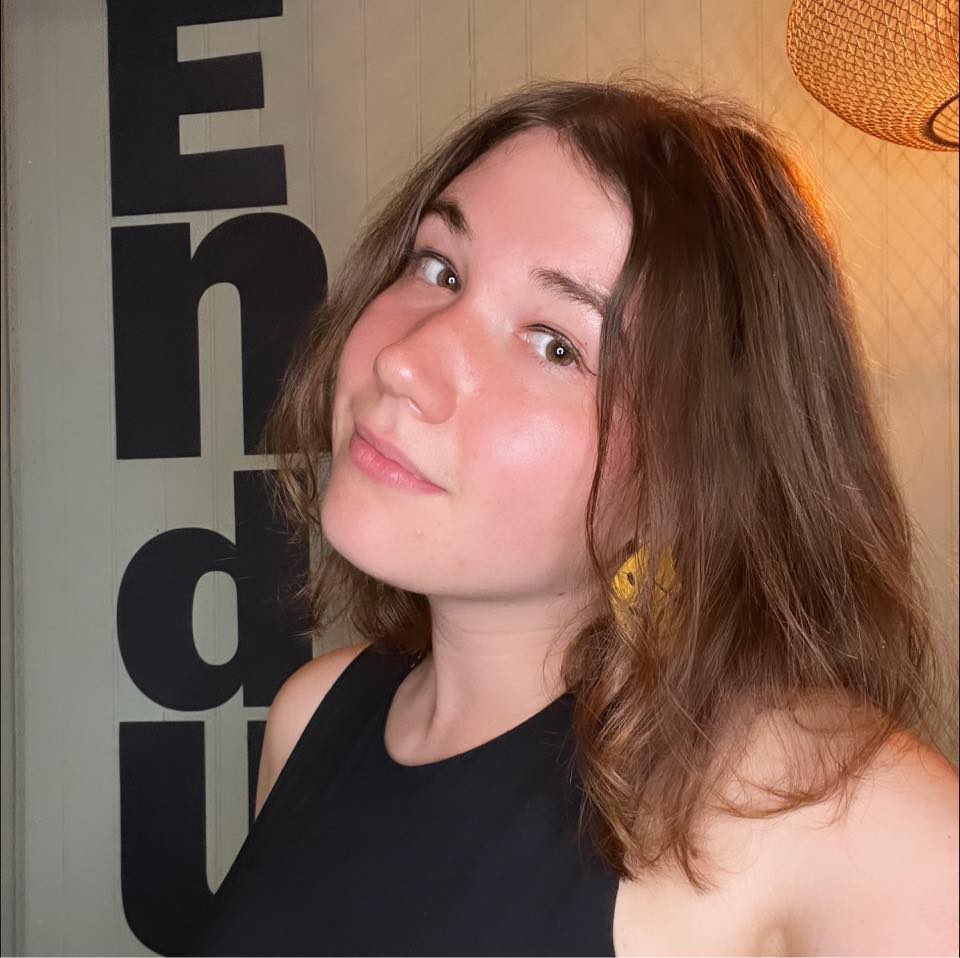
Shivanya Ra (she/they) is an Autistic-disabled emerging multidisciplinary artist, curator, and disability advocate.
It’s hard to convey to others what I’m experiencing—or how it shifts. It often feels like a message lost in transmission. I am just me, yet that “me” is layered, reactive, constantly in motion—while others seem to perceive only still snapshots in their frames.
How can I understand myself when my experience is fluid, yet others interpret it as limitation or incapability, simply because they cannot live inside what I live in?
Maybe the issue isn’t the experience at all, but the lens used to interpret it: a lens that prioritizes clarity, stability, and singularity.
What if I used a different tool?
A kaleidoscope, maybe.
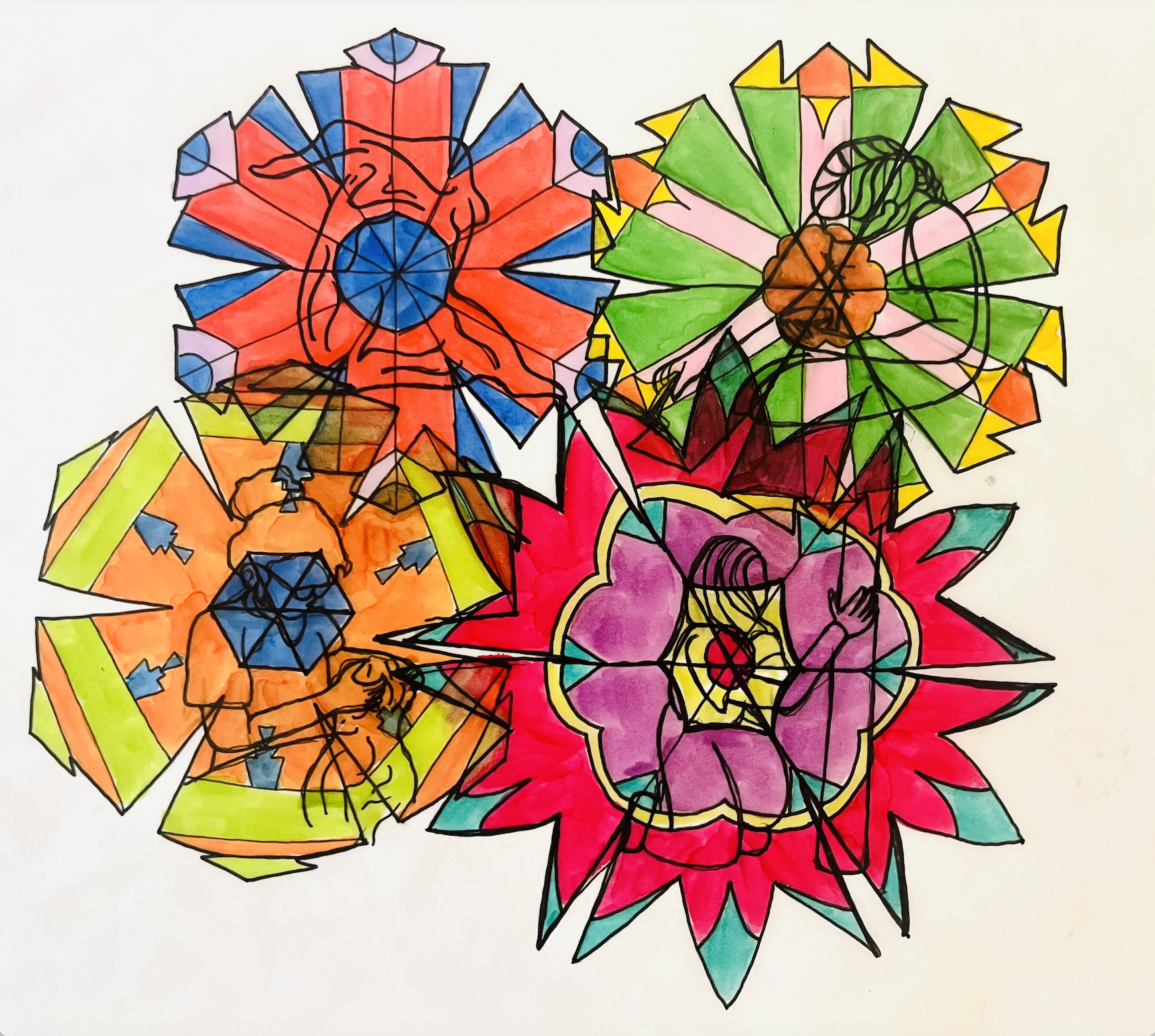
Instead of one fixed image, I see colours, shapes, rotations, and layers unfolding all at once. It’s not broken; it’s patterned. Not scattered, but complex, alive, and deeply fulfilling. Each shift reveals catalysts and divergences circulating through the patterned world. From the outside, some may see stillness or a single image—but there is always movement, circulation and reactivity.
Considering the two main lenses of disability—the medical model (a microscope, focused inward) and the social model (a telescope, focused outward)—we are prompted to consider where these two worlds—macro and micro, distant and intimate—might converge, overlap, and metamorphose into a third mode of observation: one that is not only analytical but also transformative, generative, and reactive.
Enter the kaleidoscope or rather “Criposcope”—a tool for shifting reconfiguration. Unlike the microscope or telescope, it does not seek singular truth or fixed clarity. Instead, it fragments, refracts, and reveals. It generates patterns through movement, not stability—through disruption, not diagnosis. Embracing contradiction, fluidity, and ambiguity, the kaleidoscope echoes disability as relational, temporal, and ever-transforming—amplified, overturned, and deeply embodied.
The Criposcope invites this kind of vision: playful, shifting, embodied. A metaphor that resists flattening. Rooted in multiplicity. Responsive to other patterns. A lens of distortion, rotation, and constant change—beads and fragments reflecting in mirrors, creating something that cannot exist without distortion. A different kind of sight: expansive, unpredictable, never the same twice.
It doesn’t reduce disability or pretend it away. It holds disability—within and throughout—but it is not the whole picture. There are more elements, more beads, more reflections forming patterns that are true, complex, and authentic.
And what begins as metaphor becomes a way of being that we can translate and mobilize. Communication that is reciprocal, transformative, sustainable, and embracing becomes our access, agency, and affirmations of our embodiments and worldviews.
A Criposcopic Practice: Sensory-Friendly Making
During my maker-in-residence at the ideaMILL Maker Lab in Winnipeg, Manitoba, I curated and facilitated a sensory-friendly version of open-studio programming. This was a time and space where I shifted the assumed “neutral” setup—a neutrality that often masks oversights barriers that create overwhelming/underwhelming sensory effects.
Instead of a wide-open space, I used an enclosed room.
Instead of library echoes and traveling noise, I introduced continuous, repetitive rhythms and soft abundance to hold minds and bodies.
Lighting was lower.
Stimulating/de-stimulating elements were optional and open,
Small imperative changes, ignited by “atypical” rhetoric, created shifts that revealed kaleidoscopic patterns—places where people could exist, align, or drift as they needed/or just be.
One participant, well into adulthood, shared that she had never experienced a sensory-friendly space before. She was fascinated and calm. She said she felt held, almost floating. As we talked, she realized that despite her unfamiliarity with the term, she had been creating her own sensory-friendly practices all along.
Because of her experiences—discomfort, anxiety, and the intergenerational trauma that overlays so many disabled lives—she filled her home with flowers: their smells, textures, colours, and grounding, medicinal and spiritual presence. She wondered why “open studio” felt familiar, and why it reminded her of her flower-filled home.
I explained that what she was doing was sensory friendliness—trauma-informed, patterned, and rooted in her own knowledge of how she navigates and senses the world. Her rhetoric and her ritual of space-making were expressions of her agency. Her flowers and their arrangement were a form of medicine-making: a practice and livelihood that lifted weight from her body and mind, creating an environment aligned with her embodied knowledge and her kaleidoscopic shifts in space, sensation, and ways of navigating and processing information – flowers were her momentum and grounding.
In the sensory-friendly open studio, our patterns overlapped and ignited each other. She moved more freely. The weight of “maintaining” herself eased. We made art. We connected. She left while taking photos from the day and one of the communication sheets I had created—choosing the colour sheet that resonated with her practices and the new skills and knowledge she could employ and incorporate. She carried it home to fold into her own rituals of grounding and creating—her own Criposcopic space and expression.
Throughout my residency, by centering disability in my body, my space-making, and my programming—not as an afterthought or forced hyper fixation, but through organic curiosity and invited perspective shifts—participants responded with:
- “I never thought of that.”
- “Finally!”
- “I’ve wanted to ask about this but never had the opportunity.”
- “Really? Wow.”
- “You should teach this.”
These responses, from disabled and non-disabled participants alike, emerged not from urgency or assumed need, but from shared creativity, co-presence, and care. People learned and unlearned through their own actions, languages, and patterns—together. Disability became both a connector and a disconnector. Art became a tool to activate, translate, and bridge experiences. Art is access—to diverse worlds, ways of being, kinship, and reimagined possibilities that cultivate belonging.
During one open-studio session, a participant gifted the communal space a print reading, “Art is Access.” The phrase emerged from our conversation about what access means, how it differs for everyone, and how art holds and adapts to that divergence and diversity. Art is Access not because it performs access in institutional terms, but because it has always carried multidimensional forms of access—sensory, emotional, communal, cultural, embodied, narrative, imaginative—beyond streamlined comprehension. Our access does exist, and thrive, when we create it together; when communal care is engaged and alive; when reciprocities spark kaleidoscopic patterns that connect, expand, and fluctuate rather than isolate or “cut out”, in making us stand out more without.
Affirming Disability
What is it about affirming disability? Most of the time, “disability” is framed in relation almost a “marriage” likeness to brokenness because of non-disabled narratives that simplify or deny the existence of disabled joy, desire, and creativity. As creators, changemakers, and “crippers” of spaces and language, it is imperative to treat Art and Curation as Disabled Evidence. Our language, our signals, our mark-making, and our direct calls are not “too much”—they are evidential in themselves.
The Criposcopic lens expands beyond rhetoric into spatial practice, or “cripping” space: transforming environments into sites of disabled curiosity, complexity, and dynamic movement. For example, in my work Lost and Found, the “spider chair” falls and “needs fixing” from one perspective—but directly framing it as “not broken” invites play, interaction, and recirculation of perspectives. Our art and curation—how we mobilize, care, and create—is evidence in motion and alive. It ignites diverse engagements with audience patterns and shifts. Our affirmations generate agency, access, and transformation through translation, transition, engaging movement, and stimuli.
Recent Observations: Canadian Museum of Human Rights
Recently, while assessing disabled and neurodivergent experiences at the Canadian Museum of Human Rights, I encountered a programmatic problem. Our representation, already limited, had disappeared. Inquiries led to assurances that updates were forthcoming, but there was no support, substitute, or dialogue reflecting our divergent bodies/minds, histories, experiences, cultures, oppression, or celebration. Art and Curation as Disabled Evidence had been stripped away. This is “disabling”—but it is not the end.
Disabled creators and changemakers are here and growing, turning “no’s” and “I don’t know” into opportunities for action.
Not Resolution but Continuation
As “Art is Access,” it becomes a call to affirmative action: to create, discuss, and generate evidence through patterns, disjunctions, curation, intimacy, creation, and community. The Criposcope is not meant to offer resolution but to serve as a tool for playing with multiplicity and complexity, for exploring catalytic, visceral, and unpredictable exchanges. Everyone has a pattern and ignition—undertows and fragments that generate possibilities and unknowns that we make, cultivate, and reciprocate.
For me, I create to connect. I am jovial in my vulnerability for inviting people to see themselves reflected in the work, to imagine how they might reconfigure space through care, curiosity, and disabled joy—whether through shared experience or by engaging differently through a Criposcopic lens of kaleidoscopic play. Everyone carries their own Criposcopic patterns and perspectives; these do not limit but expand, holding us not in stillness but in circulation and momentum—catapulting, connecting, breaking down walls of words and rigid rules of who, why, or how people belong, while revealing the unique and authentic patterns and marks we each bring.
Artworks
Image 1 Criposcope drawings from a video.
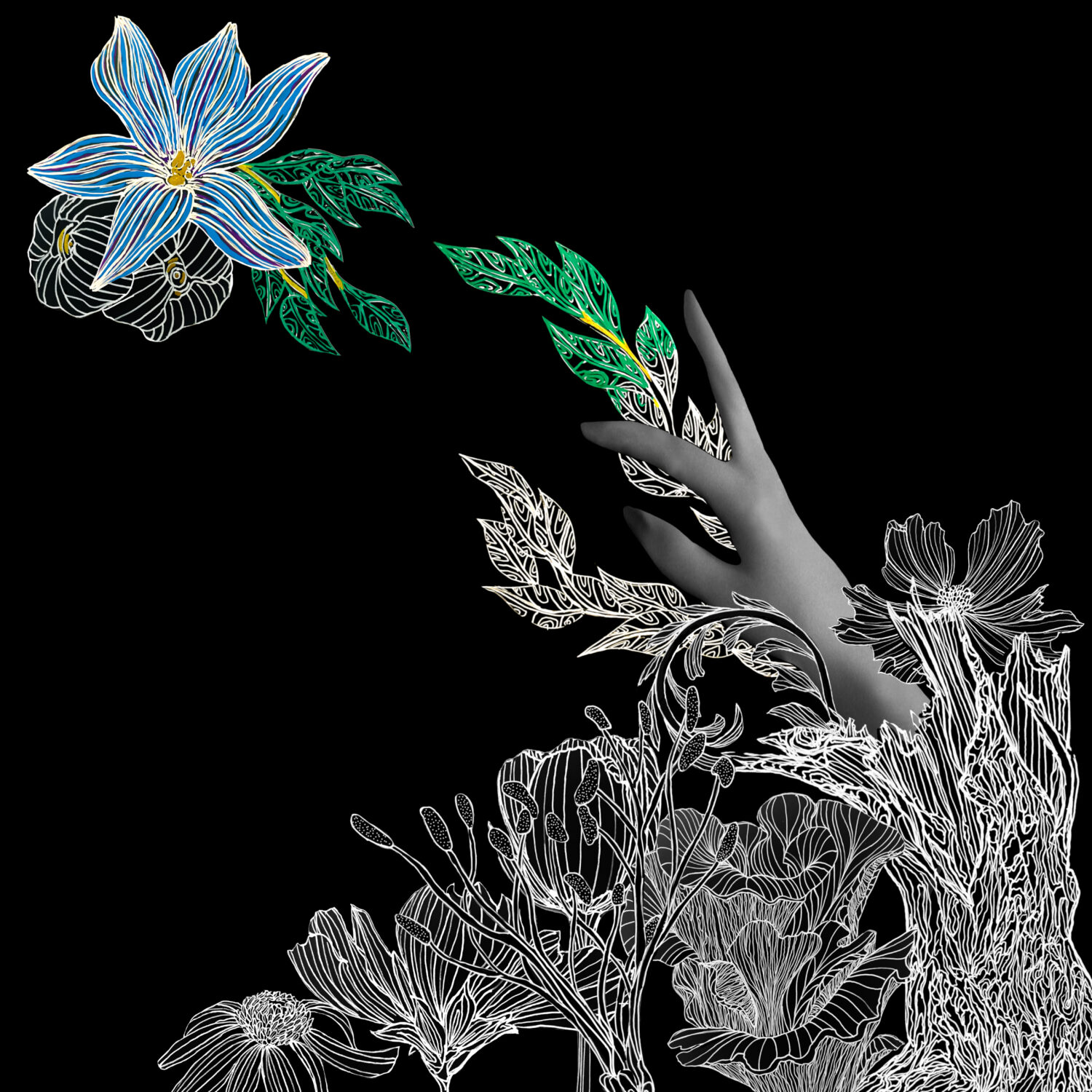
Image 2 – New Artworks from start of the series Becoming from Beyond Reach.
Other Leaders
-
Salima Punjani
My work is soft and sweet and tender. I would say it is strategically…
-
Dawn-joy Leong
I will always remember SYNC for providing me with the Clement Space — a…
-
Shivanya Ra
As creators, changemakers, and “crippers” of spaces and language, it is imperative to treat…