Dawn-joy Leong is an autistic researcher (now semi-retired) and multi-artist, TedX speaker and co-founder.
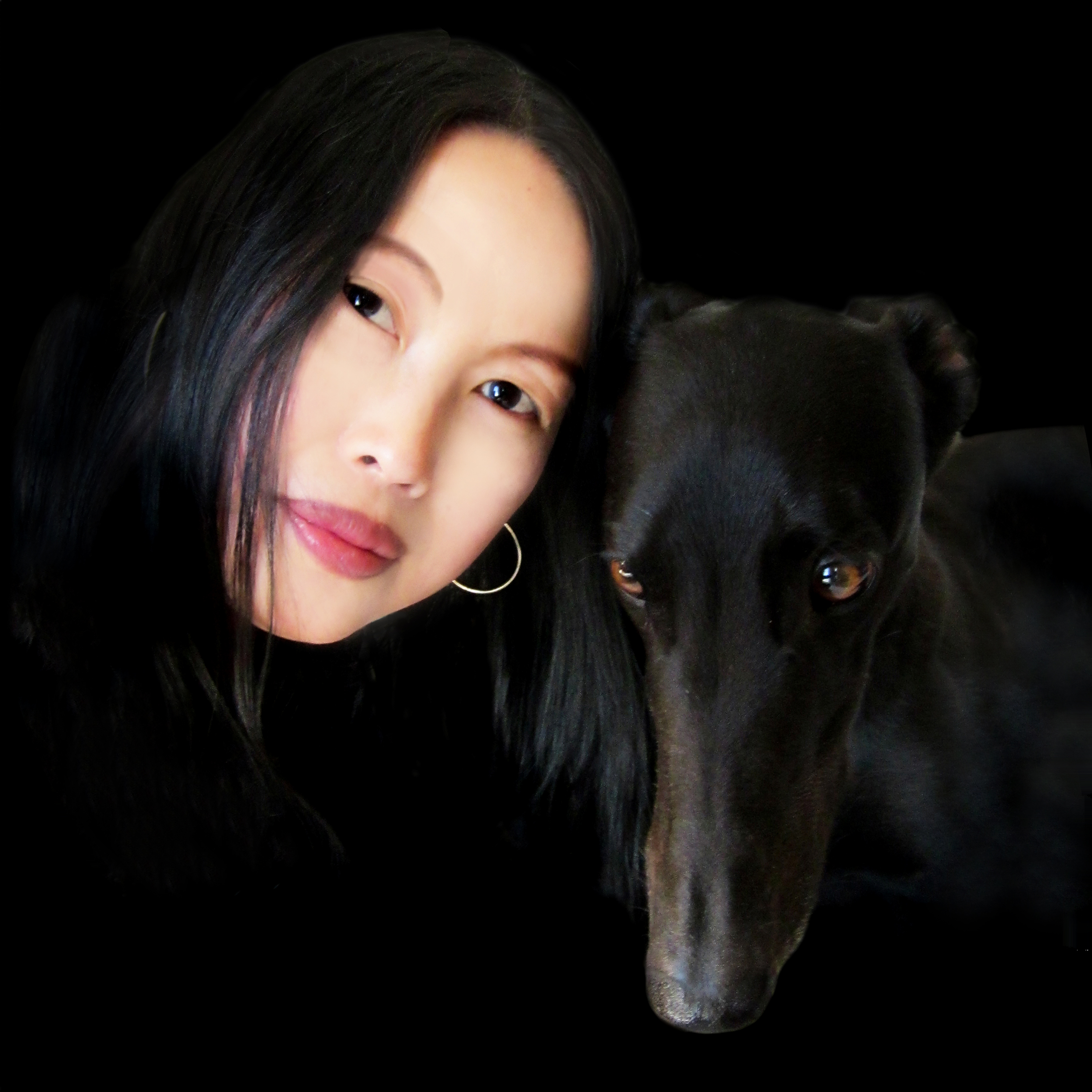
“飲水思源,缘木思本.” A beautiful, ancient Chinese saying, part of which originates from a poem from the Northern Zhou dynasty (557-581 AD) about depth of spirit and gratitude. Loosely translated, it means, “When drinking water, contemplate its source; when climbing a tree, remember its roots.”
Every living being on this earth requires water. The human body is made up of 60-70% of water. We need water, clean water, to live. But when we drink, do we usually give thought to its origins? People living in countries where water is scarce, where contamination is a problem, understand this well. Those of us who are able to turn on the tap and expect potable water to emerge, tend to forget.
This post is dedicated to Lucy Like-a-Charm, and the SYNC Leadership Programme.
Burn-out.
Advocacy Fatigue is a very real and insidious phenomenon. For the Autistic and neurodivergent navigating alien social territory, it can be all the more crushing.
Some years ago, I was suffering from severe Autistic burn out, after giving my all to support an event, where I was subjected to subtle bullying by a non-autistic ‘autism expert’. The problem with such forms of passive aggression is that nobody else feels it but the victim, and if nobody else is bothered by it, then it does not exist. This is the way neuronormative society operates. As an Autistic person navigating the churning seas of neuronormativity, I understand this well, but I remain intrinsically vulnerable to it nevertheless, because this form of antagonism directly impacts my strong sense of justice. Everything should be out in the open. A fight should be a fair fight, should it not? Reality check: it should, but it most often is not. Especially not in the neuronormative realm. I use the term “neuronormative” because this is a neurological hard-wiring issue, not about disability in general. If you make a wheelchair-user crawl up the stairs in full view of others, the abuse is obvious to everyone. If you forcefully take away the blind person’s cane, or steal their guide dog, everyone who can see knows that what you are doing is evil. However, social abuse of Autistic persons is surreptitious and covert, and it hurts nobody else but the victim. The less sensitive majority would not pick up on its subtleties. In fact, more often than not, even if and when the Autistic victim protests, the neuronormative world would further victimise the Autistic person by shutting them down with officious gaslighting, and the usual personal admonishments, “Stop overreacting!”, or better yet, “Don’t wash dirty linen in public.” In other words, “No drama please, let’s just take this privately and cover up the wrongdoing and cracks in the system, shall we?”
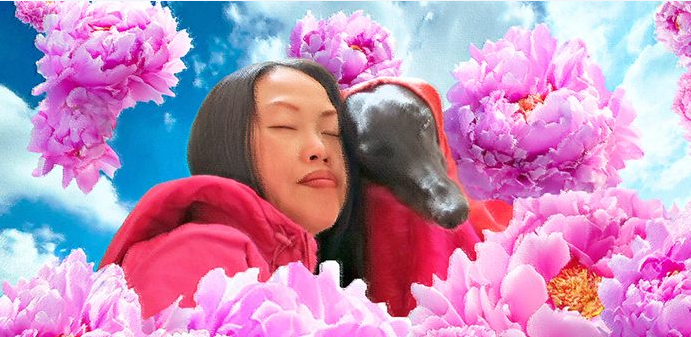
‘Whistle blowers’ are usually viewed with jaundiced eyes by neuronormative society. Because open truth threatens the tenets of subterfuge and subjugation that much of neuronormative society is built on. Autistic people are usually guilty of whistle blowing. Their strong sense of justice combined with attention to detail, and ignorance of or inability to dance according to the neuronormative social choreography is considered a severe clinical flaw. In my own experience, I always give people time to make things right, before blowing on my little ‘whistle’. But it is not Autistic people who are oblivious to ‘gentle hints’, in this case, it is the neuronormative. Or, perhaps, they are actually fully cognisant but simply refuse to right any wrongs? I may never fully understand this predilection for secrecy, especially where it comes to truth-telling and justice.
This happens to Autistic persons even within the disabilities community. I attest to it from my decades of voluntary advocacy work. One would think that those who have been oppressed and discriminated against would not do the same to others, especially not to their loyal supporters, but this is not automatically the case. Human-devised strategies of “solidarity” are severely flawed. I am constantly reminded of the phrase from George Orwell’s Animal Farm: “All animals are equal, but some are more equal than others.” Unfortunately, it applies mostly to the human animal. Bullying is a prominent human trait. Even Autistic people do so, but their way of doing it is not as cleverly veiled in ‘social righteousness,’ and there is a ‘gauche-ness’ to Autistics attempting to bully that is easily apparent to fellow Autistics and almost everyone else, hence, society likes to call it out quite loudly. (Perhaps only an extremely wealthy Autistic person could get away with it?)
In my own experience, I always give people time to make things right, before blowing on my little ‘whistle’.
Dawn-joy Leong
Well, what happened to me after that experience of burn-out?
I was persuaded to join the SYNC leadership programme of 2019 by someone who did not know about my burn-out. Although initially reluctant because I was utterly exhausted and did not want to be mired in yet another intensive human-centric activity, I am very glad I complied.
My week at the SYNC programme, held in the beautiful grounds of the Enabling Village, was restorative and affirming, the direct opposite of my experience serving at the other event.
I do not remember very much in detail, my brain was too exhausted, and the programme itself did not offer me technical knowledge that I did not already have, albeit scattered willy nilly in my brain-space. SYNC put it all neatly together, but more valuable than that, SYNC offered me a space to heal. A Clement Space.
Leadership. What is it, really? What is your leadership style?
How would you develop your own leadership, internally and externally? The SYNC programme encourages honest introspection without judgment, specifically designed for persons with disabilities. And that was what I needed at that point of time in 2019. Of course, it was wonderful to listen to the sensory-pleasing gentle voices of Sarah Pickthall and Jo Verrent too. And during breaks, Lucy and I enjoyed the serene, greenery at the Enabling Village, which provided a crucially conducive sensorial environment for this hyper sensitive Autistic to repair and thrive.
I never thought of myself as a “leader” in the conventional, worldly sense. I did not ever aspire to be one, and I still recoil from that label, especially after all the horrendous experiences I have had with so-called leaders, disabled or not. But I do recognise that it is a role I have often been made to take on, through force of circumstances. And the SYNC programme helped bring clarity and assurance to my personal reflections on leadership.
Regardless of whether one is a reluctant leader, or if being a leader is part of one’s ambition, whatever your ‘style’ may be, true leadership comes with awareness of grave responsibility.
Gratitude and humility.
Gratitude and humility are more than just saying a perfunctory “Thank You,” before moving on to the next item on your agenda. True gratitude is a posture of humility and empowerment. A precious truth among many other life-giving gems that Lucy Like-a-Charm bestowed upon me.
I am deeply grateful to SYNC Singapore 2019 for providing me space for restoration and revelation. Thus, in the spirit of gratitude and humility, when SYNC returned to Singapore this year in April, 2025, I gladly consented to co-facilitate the sessions, led by Sarah Pickthall, even though I was not in very robust physical and mental health at the time. Lucy is no longer with me in person, but she was there in spirit, bringing me back to our SYNC 2019 experience each time I felt tired during the physically gruelling sessions. I was also very glad that a well-loved and familiar face, Alvan Yap, Deaf advocate and my favourite writer/blogger in Singapore, was co-facilitating with me. Once again, at SYNC 2025, I was reminded of my inevitable role as a leader, and the fundamental importance of gratitude and humility, that Lucy has taught me to hold close, dynamically and consciously at all times.
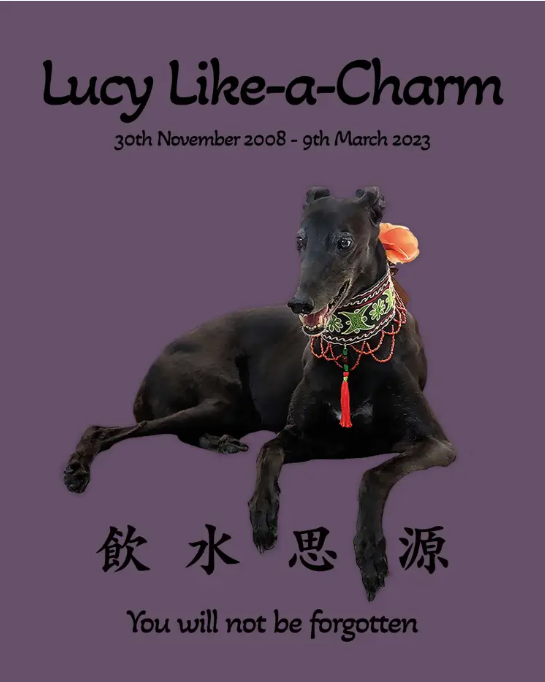
I have seen many good leaders fall morally, especially when their projects began to grow in worldly power and might. I have sat on boards of charity organisations, even co-founded one very unique charity in Singapore, in honour of Lucy. I have myself led many initiatives, and won a number of awards for my ‘contributions’ and ‘achievements’ to human society. And I have been subject to abuse and ‘erasure’ by a number of the organisations that I had served with much vigour, self-sacrifice and loyalty.
My most recent brush with disabled neurnormativity was at a meeting where I was excoriated by a disabled advocate, bearing down on me like an out-of-control bulldozer, in a jarring loud voice like a school principal chastising an errant student, not allowing me to offer up any kind of intelligent, logical communication. Why? Simply because I had openly challenged what I felt was an inaccuracy and injustice. This person was someone I had respected as a leader in the field of disability advocacy. It was so tragically ridiculous that, as an artist, my imagination decided to escape the horror of the attack and take off in the direction of an Antonin Artaud play, a kind of multisensory cruelty. My calm requests that they speak to me in a more even-tempered tone only fired them onwards into frenzied stretto crescendo, becoming more and more pompous, huffing and puffing, such that I thought they were about to burst. It wasn’t until I proposed that since this was a disability-focused organisation, shouldn’t my Autistic access needs for accurate, clear and straightforward communication be considered with equal respect, that they quietened down a little. Another disabled advocate, whom I also greatly respected as a leader, and openly supported throughout the ups and downs of their ‘career,’ then told me that considering my Autistic access needs was “So hard.” Nobody else in the room spoke up for the truth I was trying to bring to the table. All of them ‘leaders,’ they were only concerned about ‘damage control,’ i.e. what to do with me, and how to prevent another such ‘incident.’ This filled me with myriad mixed emotions. I had campaigned passionately alongside these people for their access needs, I had worked hard for what I thought was a common cause. To be treated this way, after years of dedication and hard work, by the very people who I thought were my compatriots? Indescribable. Yet, I knew it was a sign from Lucy to leave this organisation. Forgive, and move on. I had another vision and mission to attend to.
A prominent disability advocate and figure of authority once said about me to someone else:
“Be careful what you say to that Dr. Dawn, because she will write about it, and the whole world would know. Don’t tell her anything that will tarnish (our) reputation!”
Of course the recipient of this snippet of advice, also Autistic, carried this back to me in typically Autistic, blunt, truthful manner. I am not offended at all. It is the truth. And I embrace truth, no matter how it was meant, whether compliment or insult. Indeed, I often speak truth that nobody else dares or cares to. I have nothing to lose, and nothing to gain. I have no social political aspirations, no institution to answer to. I am content in myself, thanks to Lucy. To me, being associated with truth and justice is one of the highest accolades a human can receive. So much of humanity seems to be mired in half-truths, subterfuge, and honey-coated toxicity.
When I protest erasure, it is on behalf of all those who suffer in silence because they either dare not speak out, cannot make a ‘coherent’ enough stand, or the cost may be too great for them. It is not to re-establish my own prominence.
Personally, I’d rather live in a cosy cave in the midst of nature and animals, creating my own music and art which humans may never hear or see. I would rather find validation in the beyond-human realm. But I cannot be anything other than human. Flaws and all. And I cannot afford to buy my own isolated island, anyway. So I speak out as a human living in the human realm. Because justice means a lot to me. Yet, I have to always remind myself of Lucy’s higher ground: gratitude and humility. Else I too become like the ones I am calling out. And even if it may not be evident to the people against whom I am speaking, Lucy is always there. A conscious effort on the part of this fragile human who’d prefer to escape the entire theatre altogether.
“飲水思源,缘木思本.” Leaders who forget the origins of living water, who stop thinking about the roots of the strong trees that they have climbed, will lose what, to me, is the most precious thing in leadership: the memory of the army of loyal generals and soldiers, and the wise elders, who shared that initial vision for a better world, and helped the leader to achieve their ambition.
This is not to say that such leaders will immediately fail, the moment they rid themselves of their loyal comrades. In fact, I hope and pray that some of those who have used and abused me will not fail in their endeavours because I still believe in the good work that they can do. Many such leaders continue to succeed, and it is not such a very bad thing, if their causes still serve the greater good. But that arena of aggression and manipulation is not for me. If at all I am to be a leader, I choose Lucy’s way.
I will always remember SYNC for providing me with the Clement Space — a forgiving, compassionate, sympathetic interstice — in which to repair and restore. And, please, if I have forgotten your valiant contribution to my survival and existence, I appeal to you to remind me. Because this matters to me more than all the glory that the world may place upon me: gratitude and humility.
I will always remember SYNC for providing me with the Clement Space — a forgiving, compassionate, sympathetic interstice — in which to repair and restore.
Lucy-joy Leong
Lucy Like-a-Charm is my symbol of true leadership.
There is no human figure that has displayed her kind of leadership with such impeccable humble dignity and dedicated compassion as Lucy showed to me. From her ‘lowly’ position as a rescued former racing Greyhound in a terribly abusive human-designed industry, slave to ‘superior’ human dictates, she led and supported me with such gentle strength and confidence as I have never encountered before in anyone else, human or non-human.
When Lucy died in 2023, I was so devastated, I wanted to follow after her. But her indomitable spirit was resolute, reminding me even after her corporeal body was no more, of her legacy of purpose: my promise to her to live on, complete our memoir and share our story of love and grace as far and wide as our songs may travel. Lucy, my Leader, nonpareil, is the reason I am alive today.
And now, I am finally well on the way to completing this magnum opus, “Lucy Like-a-Charm” – a multi-access, multimedia memoir-fantasy about an Autistic woman and a Greyhound dog on a magical journey towards Becoming.
As I work towards this final goal, I am supported and surrounded by wonderful people, all leaders in their own spheres. Gratitude and humility are living entities, not merely philosophical ideals. And I am constantly reminded of their tangible presence. I cannot think of a life worth living without these precious life-giving forces. Thank you, Lucy Like-a-Charm for showing me the way. And thank you, SYNC Leadership, and Sarah Pickthall, for offering your unique brand of Clement Space, within which I was able to find restoration and continue to thrive.
Other Leaders
-

Salima Punjani
My work is soft and sweet and tender. I would say it is strategically…
-

Dawn-joy Leong
I will always remember SYNC for providing me with the Clement Space — a…
-
Shivanya Ra
As creators, changemakers, and “crippers” of spaces and language, it is imperative to treat…