Catégorie : Think Sync

HOW WOULD YOU LOVE IT TO BE? Ruminations on Disabled Coaching 

A graphic illustration of people in a line with their arms around each other.

Kristina McMullin

Recently, Sync hosted a conversation with a group of Disabled and Neurodivergent coaches in Canada and the UK to explore the nuances and singularities of Disabled coaching, what brings us to coaching, and, and what we harness for ourselves and our communities in coaching relationships. Coaching practices are, inherently, distinct from mentoring, facilitating, training, or therapy, Disabled led coaching, even more distinct. Disabled coaching creates and environment rooted in a conviction of holding time and space for disabled bodies and minds to be supported, maintain their own agency, and create a deeper knowing of the self. When disabled coaches provide this time, space, agency, and self knowing to their communities, they are, in turn, provided with time, space, and agency to become and to know ourselves on a deeper level. Disabled coaching offers a sense of collective liberation from the barriers and difficulties we are faced in an ableist culture. 

SPACE AND TIME 

Disabled coaching gives us permission to take space, to take time, to take our time. It is a relationship and process that creates generative and even regenerative space for folks to think, to think about their lives, their options, their possibilities, their futures. 

For disabled folks, we often refer to things as having or taking “Crip time”; Kelly Frisch defines Crip as “opening up with desire for the ways that disability disrupts.” Crip time welcomes the way that disabled bodies and minds disrupt normative understandings of time. How long it takes to communicate a thought, how much space it takes to make a decision, the returning we do to a previous time in our lives, the way we cherish opportunities to carve out space for our coaching journeys. 

Disabled coaching welcomes it all. Disabled coaching offers a framework to hold space and disrupt time to honour each individual, their needs, their wants, their desires. At the same time, disabled coaching holds time and space for the coach themselves. John Kelly shares “My coaching practice gives me permission to create space.” 

The taking, the giving, the permission to take and give, and the receiving of space and time is inherent to Disabled coaching and an integral aspect to its power. 

SUPPORT

Disabled folks are entitled to and worthy of support, coaching is one way for folks to receive it. Disabled coaching does not assume the coach has the sole responsibility of offering support, but has the opportunity to create a container of support for the individual to both be supported and build a practice of and capacity for supporting oneself. 

Coaches who are dedicated to disabled coaching speak of deep listening, attention, kindness, compassion, calmness, and open, inquisitive, questions, as ways to build and form a container of support for folks to look inward and grow out. 

Many disabled coaches offering this support, know first hand what it feels like to not be support and create a practice that resists this norm. By centring the support of disabled folks, disabled coaching becomes a type of activism that makes the world more inclusive, safer, and more joyful, for disabled folks. 

AGENCY

A key component of disabled coaching is centering agency, agency of the individual receiving the coaching, and the coach themselves. Coaching continually affirms agency by remaining open and flexible to the pathways and choices that are made, by centring 

The goal of disabled coaching is to support people as they discover what they are called for and as they create a life that can maintain and sustain that. Disabled coaching does not enter into a relationship with a set goal or objective, or definition of success, it welcomes the agency of each person to define success for themselves. 

The coaching container gives permission for the mind to think and feel, and for the body to express. The thinking, feeling, and expression, build a practice of connecting with our agency. 

Coaching also requires the coach to be in touch with their own agency, Alia notes that asking yourself as a coach, what is my motivation for this, by knowing a motivation, coaches can guide folks to finding that for themselves. The coach becomes empowered to step into their own agency, Alia asks,  “What kind of coach would I be if I don’t go and follow my dreams?”

SELF

Disabled coaching is, at all times, a process and relationship that honours our authentic selves. A coaches goal is to use their skills to allow the coached individual to tap into the truest self. To go away with the barriers and oppressions we experience in society, to move away from outdated lessons we have been taught, about ourselves and the world, and 

Coaching requires us to be fully present, fully curious, and open to contentment in the answers and directions that we are drawn to. 

For a lot of disabled folks, coaching is a form of accessible work, it’s something that can be done with our access needs being met, in a community that won’t 

When coaches work with intentionality and curiosity for their community, they build the skills and capacity to be intentional and curious about them selves and their motivations. By creating space for community to become themselves, we find truer versions of ourselves. 

For disabled coaches, the goal is not to get to an externally defined end result or goal, but to support the work and transformation that occurs when we go through the layers of ourself to discover our dreams.
Sync Leadership – IN DANCE

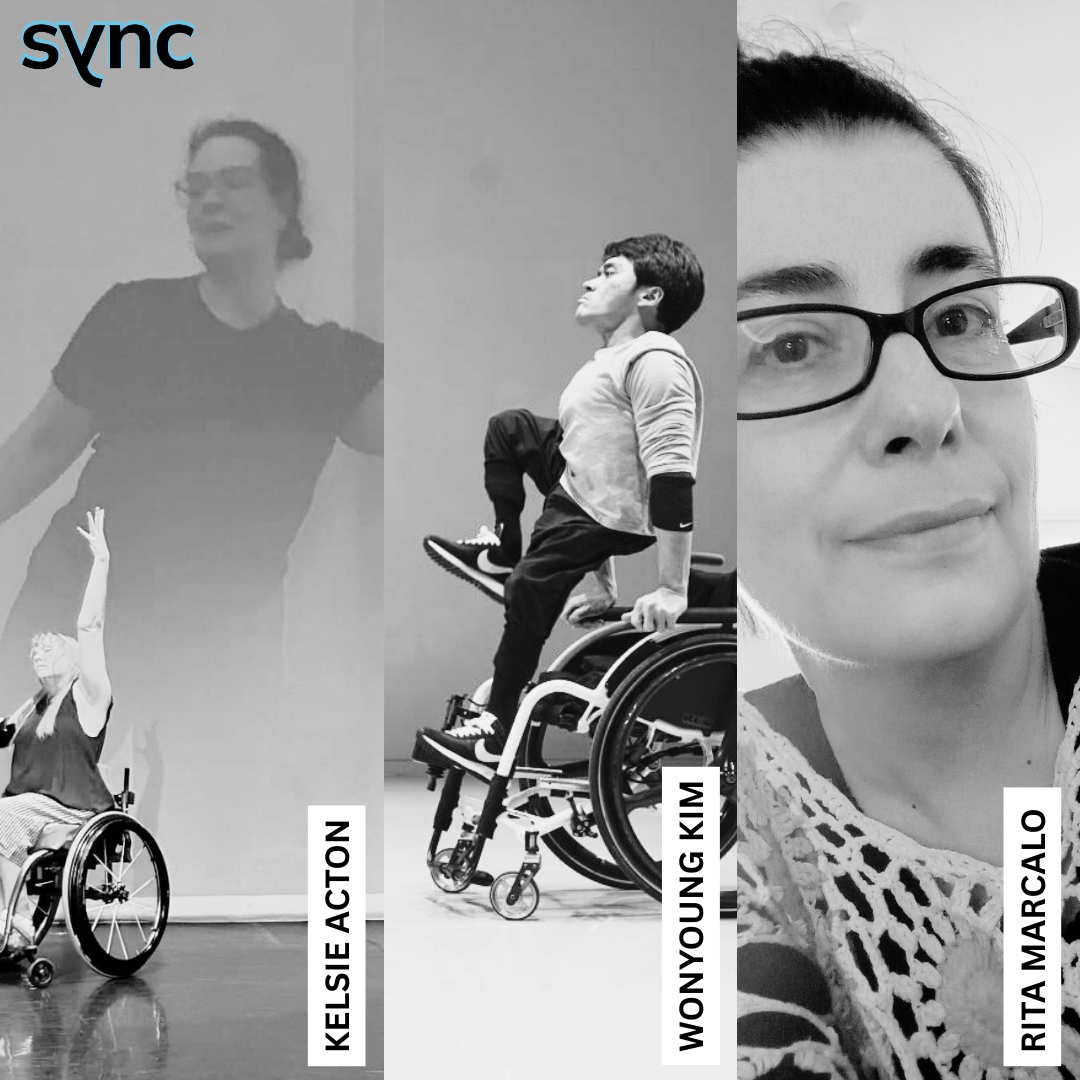
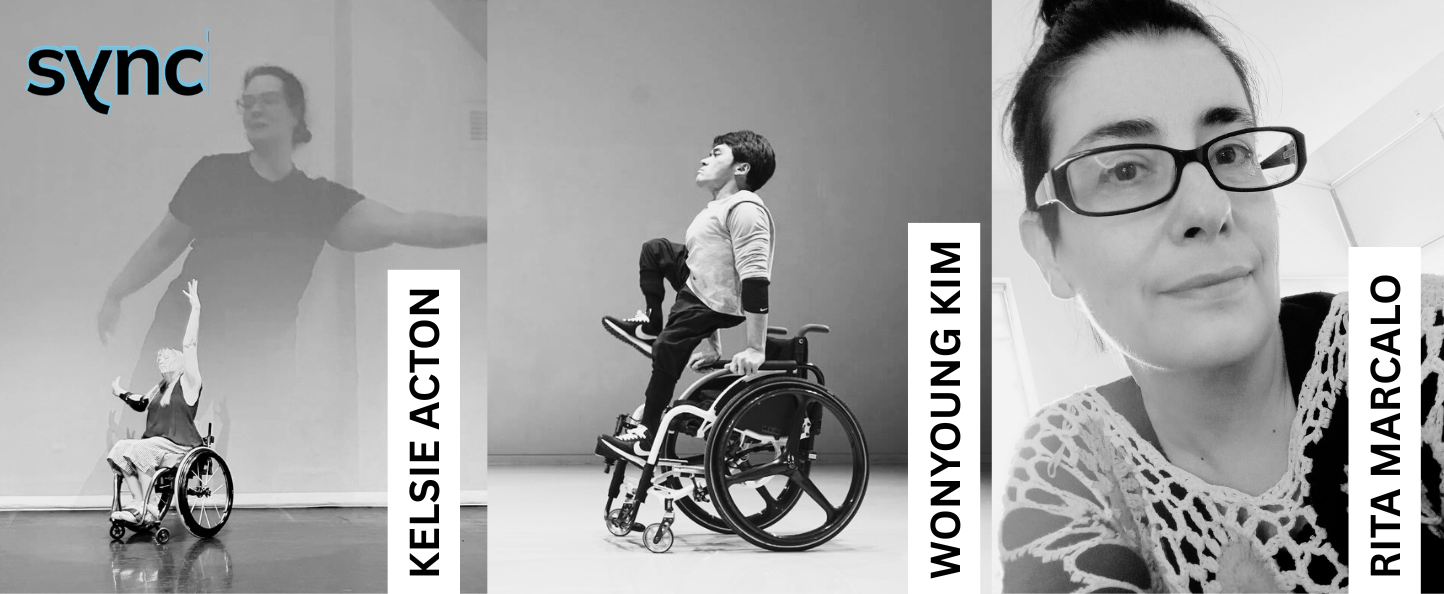
A montage of different performances and repose. Kelsie Acton, Wonyoung Kim and Rita Marcalo in black and white photography. Kelsie and Won dances, Rita looks at the camera.

Kelsie Acton, Wonyoung Kim and Rita Marcalo, in conversation with Sarah Pickthall, 2026

In a recent meet up hosted by Sarah Pickthall (Sync’s co-founder), three dancer choreographers from former Sync programmes in the Canada, South Korea and the UK –  Kelsie Acton, Wonyoung Kim and Rita Marcalo – met to discuss where the programme left them/left off,  and to share what they’ve been up to since.

Sarah set out to name and nurture the ongoing body and mind fatigue that the group was feeling for different reasons. Talking about her own injury, she reflected on the weariness that comes from us being and doing our professional lives with so much impedance in the world generally.

What emerged in conversation wasn’t tidy travails but tangled and touching tales of disabled dance artists honing leadership in uncertain ground, practicing in various ways, and exploring the ecology of the body and making moves in the burning, fragile environments where our lives play out. 

Together they explored the strange and varied ways that leadership lives in movement and dance.  Despite scarcity of funding and minimal support, often living off air and the love of the form, all three of these brilliant humans have forged a path for themselves, finding support in and from others with a few strategic fights along the way. In their stories of self advocacy, there is experience here relevant to us all as we strive to uphold and live our values in our respective societies.


SYNCING

Wonyoung (Won)  shared his earlier life growing up in rural South Korea, his work in the legal profession and the transition that started around the time he first took part in a Sync programme back in 2018 in Seoul. At that time, Won questioned whether to continue to ‘fulfil his role’ as a disability rights lawyer for social change, or should he pursue a dance career? Or both? Could his desire for social change speak through dance, finding ways of being acknowledged beyond the ‘other’? That choice demanded refreshed patience and different sorts of persuasion to his legal training, challenging scepticism and a pervasive lack of physical and attitudinal access to dance spaces. Now Won is almost exclusively a dancer/choreographer/teacher, taking up space without apology and acknowledging that something about the disabled body cannot be explained through all the social theories and laws. 

Rita, originally from Portugal, came to dance already carrying a long history of being managed by medical opinion and assumption. Ballet, said Rita, was initially prescribed as physiotherapy, and the process awakened the dancer within, igniting for her a way forward. When she first encountered an early Sync programme whilst in the UK, she was turning her medical history and her other lived experiences into dance by explicitly reframing her epilepsy as “involuntary dance” and staging the possibility of her own seizures publicly. Through dance, Rita was finding a way of refuting and replacing the medical model’s account of her own body. She has worked with others to do the same through her company Instant Dissidence. 

Rita joined our conversation having battled the blazes and wild fires in France this summer as she travelled from Portugal to her home in Ireland. Her own commitment to positive action against climate catastrophe includes choosing not to use air travel. Choosing trains, Rita reframed the physical discomfort she can experience by rail as a good reminder of the planet’s pain. 

Kelsie joined Sync online from the UK at the start of the pandemic in 2020 as part of Sync Ontario. Kelsie is originally from Canada where she was co-artistic director of Cripsie, in Edmonton, Alberta. Her dual nationality enabled her to secure a place, having taken up residency at BAC as their inclusive practice manager. Sync was the catalyst for changing her thinking and letting her break out of the pre-existing mould: the one that implied that leadership in disability arts culture in Canada was all ‘in the service of’; she was able to realise that there are many different leadership styles and manifestations available to as leaders – nothing is fixed or limited.

CURRENT MOVES

Now a Post Doctoral researcher and lecturer at The Royal Central School of Speech and Drama, Kelsie is moving more fluidly between leadership styles, shaping ideas for others, and pushing the field’s thinking on access itself. She pointed to Aislinn Thomas’s Quiet Parade– a work built specifically for sensory-sensitive audiences — as evidence that “universal design” can quietly flatten real differences in need. She described her current leadership style as being less about finding the ‘one right structure’ and more about building rooms where access is a shared and ongoing responsibility, rather than a checklist of things that folks are required to put in place (and can then tick off as ‘done’.)

Won doesn’t reach for the word “leader” easily but quietly creates new works and now teaches in institutional spaces often ‘feeling like a guest’. Additionally he continues to make an impact through writing, research and performance. His gentle refusal to centre himself and to laud other disabled dancers’ contributions is touching. As he speaks, insistence on the inclusion of the disabled body, not just as audience, but as choreographer and even professor is striking and award winning: of particular note is his work Act on the Prohibition of Discrimination and Relief of Rights in Love and Friendship, in which he filled the stage with a solo dance without his wheelchair. 

Rita has scaled up and is now running an international project spanning Portugal, Ireland, and the UK, gathering dancers around the idea of a “dance revolution” in an open call to rethink how dance is funded, how artists relate to each other, and how the field relates to the environmental crisis. She doesn’t know exactly where the project will land, and she’s treating that not-knowing and exploration as the method, not as a gap in the plan. Leadership, in her current practice, looks like holding space for collective uncertainty instead of resolving it prematurely, and we all basked in this beautiful approach.

She also reminded us of the excitement in encountering and potentially working with dance artists who strive and inspire us to do things in dance and disability that feel ‘perilous and dangerous’ similar to Won, and she shared Diana Niepce with us all as someone who is practicing with fierce intention.

HARSH REALITY

None of this is happening in a settled context, and nobody in the conversation pretended otherwise. Won spoke directly about fear — both the erosion of human rights and ethical norms globally, and his real doubt about what artists can do that can make a difference in the face of that. It wasn’t a rhetorical flourish; it sat alongside everything else that was said as the backdrop the rest of the conversation was happening against, and it echoed in his own account of still having to justify his presence in rooms that he’s more than qualified to lead.

Kelsie’s response to that same instability has been to lower the stakes of what “staying in dance” has to look like. Long-term planning has gotten harder, and large-stage performance has, for now, given way to smaller, remote collaborations. Rather than treating that as decline, she’s trying to hold onto the joy available within the disorder — a deliberately unheroic, sustainable way of staying present in the work.

Rita’s answer has been to go bigger rather than smaller — building a cross-border collective explicitly organised around systemic change, on the theory that if funding structures, environmental relationships, and social models are all under strain at once, the response has to be collaborative and international rather than individual.

What ties all three together isn’t a shared conclusion. It’s a shared refusal to let resilience mean going quiet. We were connected by a deep Sync solidarity, appreciating each other’s values and experiences, and acknowledging the potency of Sync.

Sync’s co-founder, Sarah, closed the conversation with an eye towards carrying these threads — the body, leadership, access, and uncertainty — into future Sync gatherings. Sync gave these artists language and community at a formative moment; what they’ve built since is proof that the work doesn’t stop at the end of a programme — it just changes shape, sometimes gets harder, and, if this conversation is any indication, stays worth doing.

‘

Acting without Permission – Sarah Pickthall

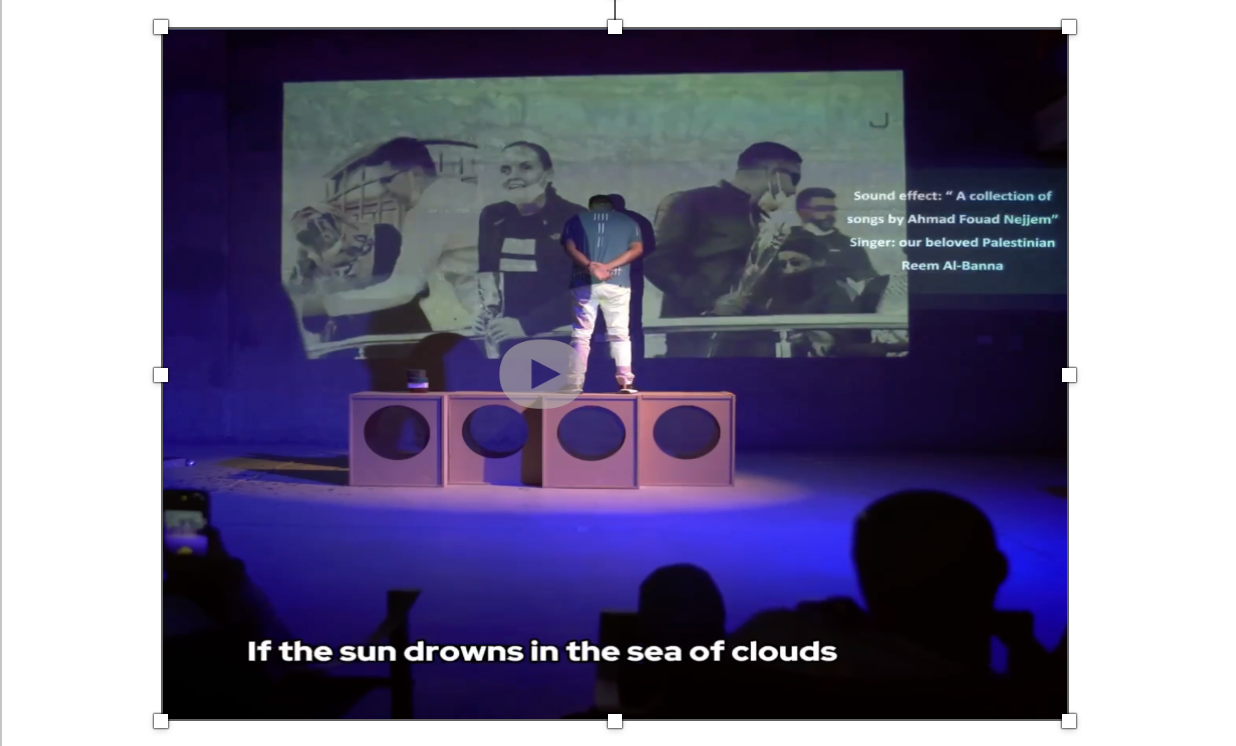
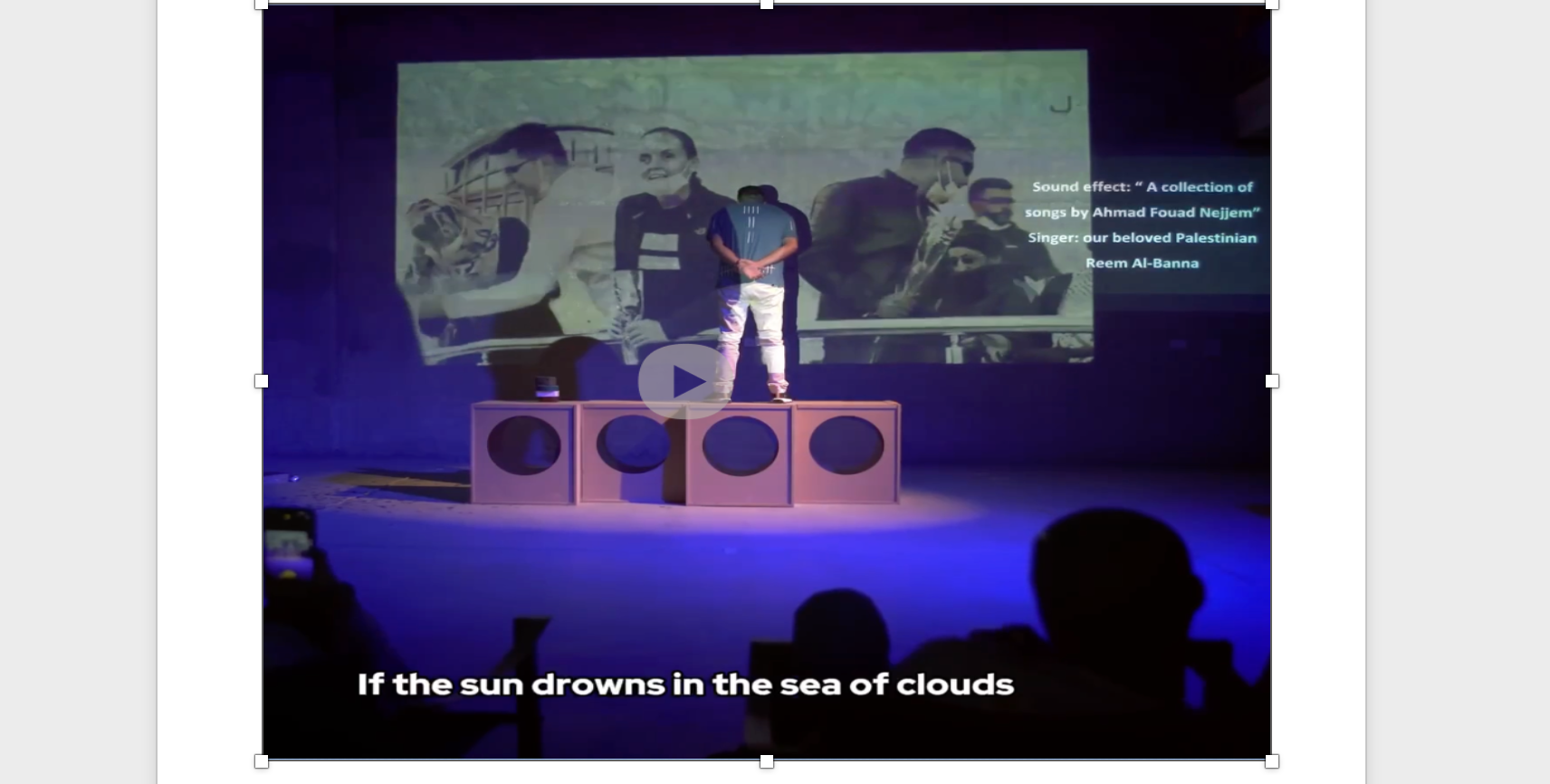
ID: Hamad Samamrah performs in the show, he stands upon boxes, film footage of his fellow protesters as they receive a positive outcome at the end of their Sit-in, the words read If the Sun drowns in a sea of clouds. Sound effect: A collection of songs by Ahmed Fouad Nejjem. Singer: our beloved Palestinian Reem Al-Banna

Last week was a strange one, full of disappointment for self and others but also a week that surfaced a new sense of what disabled-led steadfastness and stealth can feel like in the fight for disability justice in all its manifestations in our respective societies today. Disappointment yes, but source of joy and impetus in so many ways.

The chance for Sync Leadership to join hearts and minds again with Shubbak Festival was compelling. We came on board to share the story of 63 Days of Sit-In – a performance and documentary film by Basta Theatre Collective based in Palestine. The showcase was at Theatro Technis in London, and it felt such an apt and a vital continuation of the work started with British Council investment in Sync Arabi through our leadership programme in partnership with ArttoHeart in person in 2023 in Jordan and the UK.

Deaf, disabled and neurodivergent leadership and community building often have activism as a core construct. It is all too familiar to be left with no choice but to take to socials and the streets to protest at the inequity of life and opportunity, over access to health insurance and care, travel and transport, buildings, education – arts and culture, access – all of it.  We are left out of so many decisions about our lives and leadership, it feels unfathomable at times. As one of the Palestinian ‘fighters’ in the documentary so poignantly shared, if we are included in our society, ‘we complete each other’.

Sync worked alongside Willie Elliott. 16 years ago this month, Willie was a key protagonist in the audio description at the opening of the London 2012 Paralympic Games – an unforgettable spectacle which Jenny Sealey (a Sync Alum) co-directed. It still stands as a testament to the energy and joy felt in the fusion of arts, access and activism! Telling our stories often feels like activism or acting up in some way and there’s power and celebration in that. And laughter too – where would we be without that?

Willie also shaped the live AD for 63 Days of Sit-in, both its performance and the documentary film.  I mentioned disappointment in my opening sentence: when the lead actor, Hamad Samamrah, became ill during rehearsals last week in London and was unable to perform, the impact was felt deeply by us all. 

Despite this the audiences still joined us and were able to connect with this powerful piece of activism through a touch tour of the set and an accessible film screening. It left us feeling closer to Hamad, even in his absence, and to his life’s work, and to the fellow disability rights activists who protested inside the Palestinian Legislative Council during the COVID-19 pandemic. We also bore witness to the incredible allyship of Hussam Ghosheh and Basta Theatre has brought to this important protest in history. We were lucky that Hamad could at least join us for the Saturday Q&A, and it’s fair to say that our lives were changed by his story and contribution and those of his co-conspirators.

It is crucial to tell our stories, and these stories emerging from the region and in Gaza – areas of exponential disablement – are more profound than we ever thought possible. As disabled people we must not shy from talking about what is happening, acting without permission to get these voices heard.

Another story perhaps more widely known is the soon to be screened Being Heumann – a film focusing on the better known life of Judith Heumann whose activism paved the way for others often described as of the ‘Mother’ of the Disability Rights Movement in the US’. The film is to be premiered at the Toronto Film Festival (10th Sept) and it features other Sync alum and associates, namely Alex Bulmer (our Sync Leadership co-facilitator) and Yousef Kadoura, who supported our Sync podcasts and promotional films in Canadian projects over several years. Our very own Ruth Madeley takes the title role as Judy, a UK export on the back of her portrayal of the brilliant Barbara Lisicki in the BBC, 2022 drama ‘When Barbara met Alan’.

But back to our Sit-In week. Alia Alzougbi CEO and Artistic Director @Shubbak in rounding up the Q&A on Friday, spurred us on with 3 crucial pieces of advice: occupy, don’t ask for permission, laugh a lot. Sublime advice for all of us! Let’s find the laughter in amongst the disappointment and challenge, and experience the empowerment solidarity brings.

63 Days of Sit-In was developed with the support of the Disability Under Siege (DUS) Network, University of Birmingham and British Council Palestine through the Jerusalem Creative Spaces programme with the London presentation supported by British Council, Wijhat (an initiative of Al Mawred Al Thaqafy – Culture Resource), SyncLeadership and Dais Hale.

Reflections from Connection – Kristina McMullin

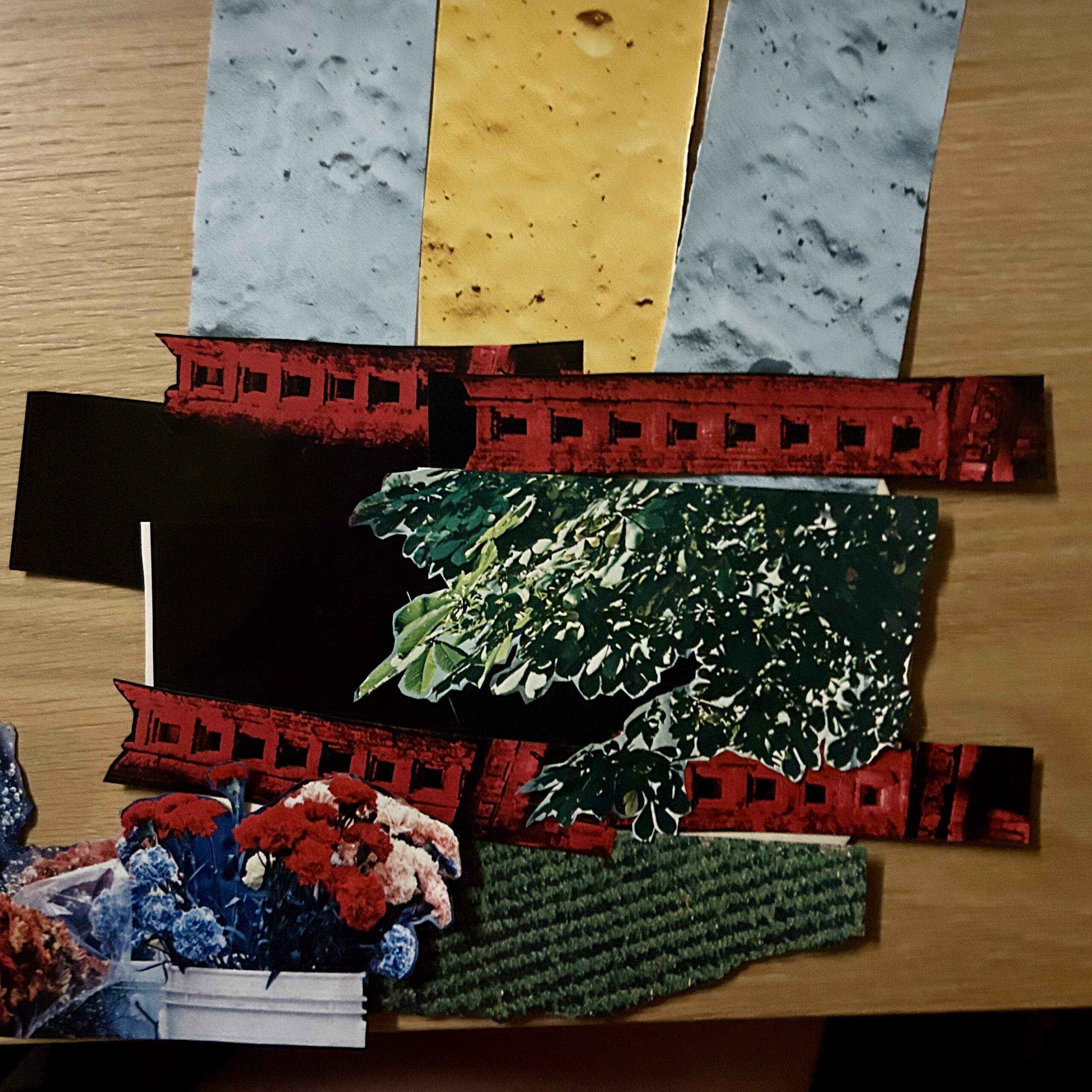
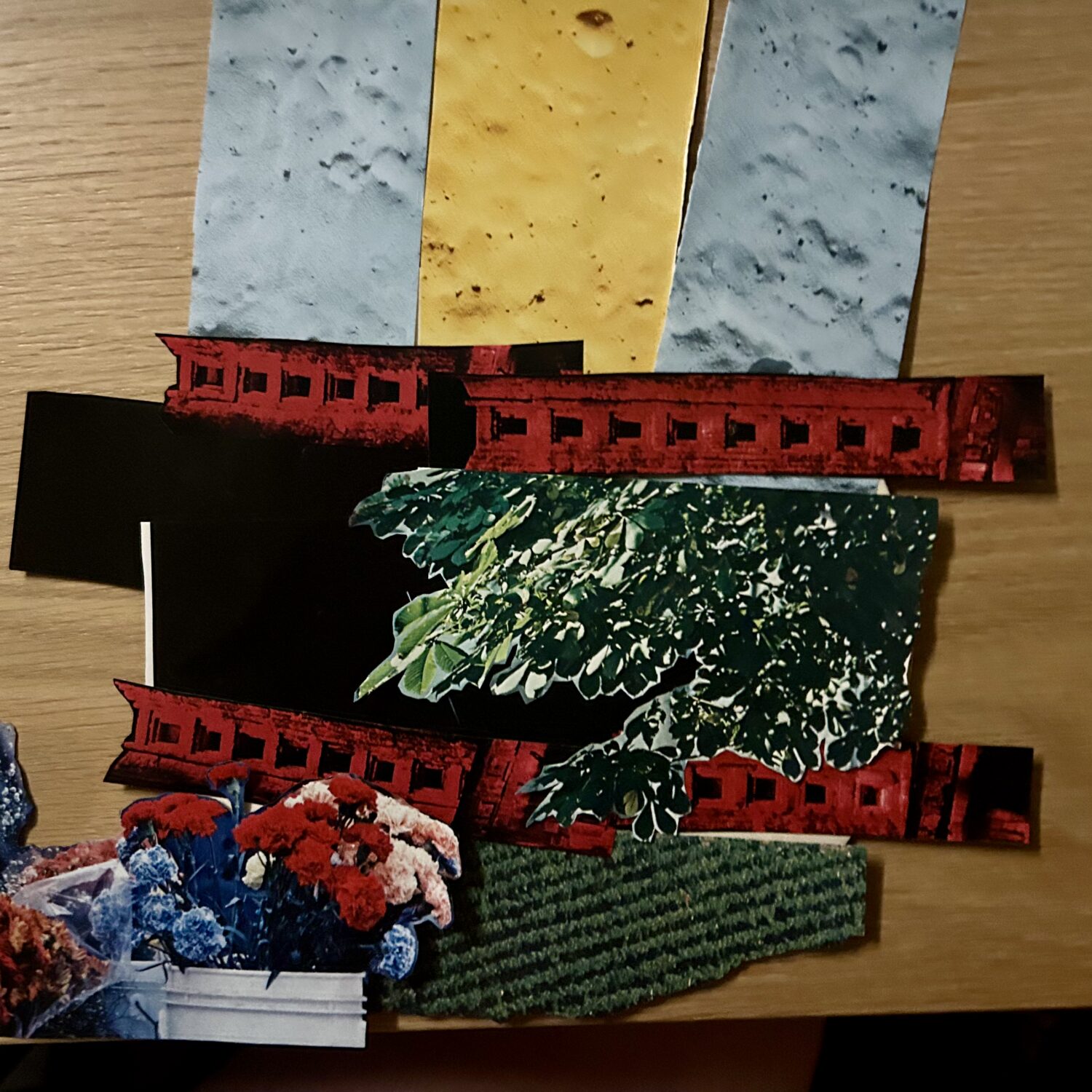
work in progress collage

Work in progress mixed media collage

Kristina McMullin, 2026

When Sarah invited me to join the Sync team a few months ago, I was thrilled!! I participated in Sync in June of 2020. A time, for many of us, myself included, defined by disruption and isolation. The five day intensive was like a buoy in a vast ocean, the cohort that gathered quickly became a safe, nourishing, and encouraging community. The five days, and the lessons I gained from them, guided the next chapter of my professional and personal life.  

Two years later, I joined Sync Twilight as an action learning coach. While I had spent much of the past two years putting into practice what I had learnt during Sync, Twilight coincided with a turbulent season of my life, again the program and the community became a buoy. I had assumed serving as a coach for Twilight would not return the same community I had prior, but, of course, I was wrong. The small group I was in became a tight knit community almost instantly, after a few sessions, we were all sharing things with one another we wouldn’t normally share. That safety emboldened us to take bold next steps in our professional journeys. 

Now, in summer 2026, we are not in the early days of a pandemic, and my home and personal life is devoid of chaos and turbulence, and Sync has found me again. The gift of this position is perspective and curiosity. I have been able to look back at who I was and where I was and how the lessons of Sync have changed me. With this perspective, my curiosity turned outward to the rest of the Sync community. 

When in people’s lives did Sync find them? 

How did Sync integrate with and influence their lives? 

What lessons and learnings have they brought with them?

What more can be done in service? 

How can I learn and grow from this wisdom? 

I have had the opportunity and privilege to speak with a few alumni of Sync, some who I know well, some I’ve crossed paths with, and those who I met for the first time on our zoom call, all who brought a level of generosity to our conversation that has been both a gift and teacher. 

Sync has a funny way of finding people in very specific times in their lives, whether that is while completing a different residency, while busy and not in the best place, and while delving deeper into an arts practice. Wherever one may be, Sync will meet you there, and how you arrive will be welcomed, desired, whole, and enough. 

When it came time to delve into what folks had learned about themselves through Sync, 

Laura, an alumni of Sync Atlantic, called her leadership style symbiotic and patient while Louie, an alumni of Sync Alberta, called theirs bravely authentic, Seeley called hir leadership style adaptable, creative, curious, passionate, patient; naming that Sync’s process allowed hir to look inward to name these traits. 

What these three leadership styles signal, is a generosity to self and community. Community and generosity are central to Disabled leadership, how those materialize in each of us, is a unique art form. 

For each of them, Sync has offered both a community and proof that strong Crip communities can be formed when we centre honesty, intentionality, and accessibility. We carry our communities and the truths we know into our work, our relationships, our futures. 

Like my first introduction to Sync in June 2020, these conversations have been transformational for me. An offering to look inward to guide my path forward. 

Through every conversation I’ve had, a few things remain steadfast: Disabled folks know, intrinsically, how to build and maintain community, Disabled leadership is as multifaceted as our community is, there is purpose and meaning to the things that come into our lives, true magic occurs when we are supported wholly.  

In 2020, my leadership metaphor was a microscope able to zoom in or zoom out, but hazy in the in-between. Six years later, I’m no longer looking for a crisp image, faulting myself for not finding it, I’ve found magic is found in the haziness, found in the journey, and the looking itself. 

Sync can be of service, a place of creation, reflection, wisdom. 

A wisdom we can all grow from. 

This is what Sync is, this is who we are.


‘

Présentation du modèle mycélien d'autodéfense

Pinelitter Gingertail mushrooms

Dans le monde naturel, la vie engendre la décomposition et la décomposition laisse place à plus de vie. Même si nous pouvons penser aux champignons comme étranges, laids ou répugnants, et peut-être comme un présage de mort, ils sont aussi un présage de vie et d'un écosystème sain qui traverse ses cycles éternels. La présence de réseaux mycéliaux et de champignons est un bon signe : cela indique qu'une partie du processus fonctionne, et les autres aussi. 

De la même manière, l'inclusion des personnes sourdes, handicapées, folles et neurodivergentes est également un indicateur d'une société saine — une société qui peut soutenir infrastructurellement une large compréhension de la diversité humaine, des soins communautaires et offrir un niveau de vie élevé à tous ses membres. 

L'automne dernier, j'ai écrit un essai sur mon expérience à Sync Alberta 2024. À l'époque, j'étais aussi à Mînî hrpa (Banff, Canada) pour une résidence d'écrivain au Banff Centre for the Arts and Creativity. Les participants de Sync Alberta ont été encouragés à créer des métaphores pour nos styles de leadership. J'ai choisi les champignons. Plus tard, pour mon essai, j'ai décrit l'expérience de marcher intentionnellement dans les forêts alpines du campus du Banff Centre, certains champignons que j'y ai trouvés, et l'inspiration que j'en ai tirée. Le Modèle Mycélien de l'Autodéfense s'appuie sur ce texte original : comment les champignons « étranges » peuvent être une métaphore de l'échec accepté et de l'entêtement de la culture du handicap. Le modèle mycélien peut être un moyen de nous orienter vers cet état d'esprit alternatif, afin que l'auto-défense constante que nous devons faire en tant que créatifs, conservateurs et leaders sourds et handicapés puisse être durable. 

Le modèle mycélien pour l'auto-défense

  • o Prospérité sur le côté
  • o Basé sur des réseaux
  • o Libération des spores
  • o Cycles de respect

PROSPÉRITÉ SUR LE CÔTÉ

Comme je l'ai écrit dans mon dernier essai pour Sync : « Vous ne voudrez peut-être pas prêter attention au champignon, vous ne saurez même pas qu'il est là. Ça n'a pas d'importance. Que nous lui donnions la permission ou non, les champignons grandiront et se transformeront d'eux-mêmes et se construiront de toute façon un foyer [...] La métaphore du champignon pour la ténacité des personnes handicapées — la volonté de prospérer, malgré cela — est évidente

Cet état d’esprit de prospérité est l'antidote à la volonté professionnelle de plaire aux autres, une qualité que de nombreux professionnels des arts handicapés ont développées en cours de route. Quand on a si peu d'opportunités, vous êtes conscient de la peur de faire fuir celles que vous avez. Alors, vous essayez de faire plaisir : vous acceptez les opportunités symboliques ou minimes, en espérant qu'ils penseront à vous la prochaine fois.

Et si nous prospérions joyeusement dans les marges où nous avons été envoyés, à la place ? Est-ce même possible ? Ne le faisons-nous pas déjà ? En attendant que les galeries, les gouvernements, les sociétés, les entreprises, etc. rattrapent leur retard, faisons ce que nous faisons de mieux et prospérons « sur le côté ». Nous rêvons de communauté, d'acceptation, de reconnaissance — jusqu'à ce que nous y arrivions, si jamais nous y arrivons, où sommes-nous maintenant ? Reconnaissons et créons un sens ici aussi.

Comment pouvez-vous modifier ou moderniser votre espace de travail afin qu'il ne s'adapte pas seulement à vos différences, mais aussi à leur respect ? Par exemple, en tant que personne souffrant de fatigue chronique, j'ai besoin d'un canapé dans mon studio. Depuis la vue sur le canapé, je peux voir des cartes de remerciement, des récompenses et des tableaux préférés qui me rappellent à quel point je suis fier de ce que je fais. Prendre du temps pour se reposer et réfléchir est exactement ce qui donne à mon art et à mon écriture sa voix réfléchie. Je suis sur le côté, allongé sur le canapé, et c'est une bonne chose.

« En attendant que les galeries, les gouvernements, les sociétés, les entreprises, etc. rattrapent leur retard, faisons ce que nous faisons de mieux et prospérons 'sur le côté'.

BASÉ SUR DES RÉSEAUX

Le mycélium (my-sé-li--um) est le nom de la structure racinaire et mycorhizienne (mi-co-rhi-zienne) est le terme pour le réseau : le vaste réseau souterrain composé à la fois de racines fongiques et végétales qui sert de système de communication et d'échange de ressources entre différentes espèces. Suzanne Simmard, professeure d'écologie forestière à l'Université de la Colombie-Britannique, a mené des études de terrain à la fin des années 90 qui ont révélé que les arbres sont connectés aux arbres voisins par des réseaux mycorhiziens. Elle a observé un sapin de Douglas infesté d'insectes utilisant le réseau pour envoyer des avertissements chimiques à un pin ponderosa à proximité, et le ponderosa a ensuite produit des enzymes qui le protégeaient contre les mêmes insectes.

Entourez-vous d'autres champignons. Participez à des rencontres en ligne ou en personne avec d'autres personnes sourdes, handicapées, paralysées, folles, et neurodivergentes. Et, si vous le pouvez, allez à ces rencontres plus souvent qu’à celles pour personnes valides ou neurotypiques. Grandissez là et veillez les uns les autres.

LIBÉRATION DES SPORES

Le but des fleurs et des corps fructiers est de répandre le pollen et les graines, ou dans le cas des champignons, de disperser les spores. Il existe une variété fascinante de façons de faire cela. Prenez les champignons de la famille des phallacées qui émettent des odeurs qui nous sont désagréables — souvent comparées à celles de la viande en décomposition — mais qui sont très attrayantes pour les animaux et les insectes charognards, qui viendront, curieux de l'odeur, et emporteront des spores lorsqu'ils s'enfuient ou s'envolent.

De nombreux types de champignons de bois communs, qui poussent horizontalement sur les flancs des grands feuillus, utilisent des méthodes moins spectaculaires et laissent simplement tomber des milliers de spores sur le sol forestier depuis leurs perchoirs très hauts. Aidés par le vent et la gravité, les minuscules spores s'éparpillent et sont emportées vers d'autres parties de la forêt.

Nous pouvons nous en inspirer, et parsemer notre vie et notre travail de petites « spores » d'auto-défense. Il y a des déclarationss courageuses et héroïques d'auto-défense comme des performances et des protestations, des déclarations et des refus... Bien que ces éléments soient nécessaires, ils sont difficiles à refaire encore et encore. Au lieu de cela, entre ces grands gestes, nous pouvons nous doser et laisser tomber régulièrement de petites « spores » d'auto-défense.

Gardez un lien vers un lecteur d'accès dans votre signature de courriel. Ce geste plus petit normalise les besoins d'accès des artistes et des professionnels.

RESPECT DES CYCLES

Dans l'essai original de 2024, j'ai écrit : « ... Ces petits êtres vont bientôt mourir — les champignons de gingembre ne durent qu'un jour ou deux au maximum. Je prends une photo, tapote mon doigt contre une des capsules, et souris quand elle rebondit doucement sous mon toucher... Les champignons ne sont que le fruit d'un réseau mycélien beaucoup plus vaste que nous ne pouvons pas voir. Ce ne sont que des beautés temporaires, comme des fruits sur un arbre. »

Pour moi, une partie de la beauté d'un champignon réside dans sa transience. Comme le passage du jour et de la nuit, la fleur de printemps éphémère, ou le rouge et les ocres de l'automne : ces choses prennent plus de sens à cause de leur nature éphémèr. Bien que la vie et la mort dramatiques des fleurs et des fruits soient une période essentielle du cycle de croissance, ce sont les racines en dessous qui dureront (il existe des réseaux mycéliaux en Amérique du Nord estimés à plus de deux mille ans).

Dans les arts, une performance ou une exposition est comme le corps fruitier à la surface des efforts de plaidoyer. Les normes de soin, les espaces de travail respectueux et les artistes soutenus constituent le système racinaire mycélien. Nous ne pouvons pas consacrer tous nos efforts aux « fruits » voyants sans avoir de temps ni d'énergie pour les racines ; sans racines saines, il n'y a pas de fruits très longtemps.

Apprenez quand dire « pas maintenant ». Fixez des limites autour du temps et de l'énergie et respectez le cycle de l'art et de vous-même. Il est important de définir ces limites avant le début des projets et non sous pression et en plein milieu de la situation. Fixez des objectifs pour les « fruits » de votre travail parallèlement à des plans pour préserver les racines.

Selon l'Enquête canadienne sur le handicap de 2023, 27 % des Canadiens ont un handicap qui les limite dans leurs activités quotidiennes . C'est environ 1 sur quatre. Une mauvaise représentation et des infrastructures validistes peuvent nous faire sentir seuls au monde, mais — et surtout lorsque nous nous unissons malgré des handicaps — nous sommes en réalité en compagnie de beaucoup d'autres.

Bien que nous puissions commencer comme quelqu'un qui se promène dans une forêt ou une ville sans se rendre compte des champignons qui poussent autour de nous, on peut nous apprendre à les voir et à les trouver. Nous pouvons aussi, de la même manière, trouver nos camarades cuillères, fous et handicapés. Jusqu'à ce que nous atteignions les meilleures représentations et les futurs dont nous rêvons, rendons aujourd'hui durable et porteur de sens. C'est aujourd'hui que nous sommes désignés comme étranges, monstrueux, étrangers, ou comme des échecs aux yeux d'un monde normatif. C'est aujourd'hui que nous pouvons nous montrer sans remords face à nos esprits et corps inhabituels, ainsi qu'aux différentes façons dont nous prospérons et créons avec eux. Aujourd'hui, on peut se demander : que ferait un champignon ?


[1] Statistique Canada, publié le 1er décembre 2023

‘

La rapidité de la confiance : Alex Bulmer en conversation avec Sarah Pickthall

Écoutez le podcast

Cette prise de temps témoigne du respect pour les autres personnes présentes dans la salle. Cela dit que le modèle de leadership ne contrôle pas toujours chaque minute ou ne remplit pas chaque quart d'heure avec un but.

La vitesse de la confiance » selon nos conditions ou prendre notre temps

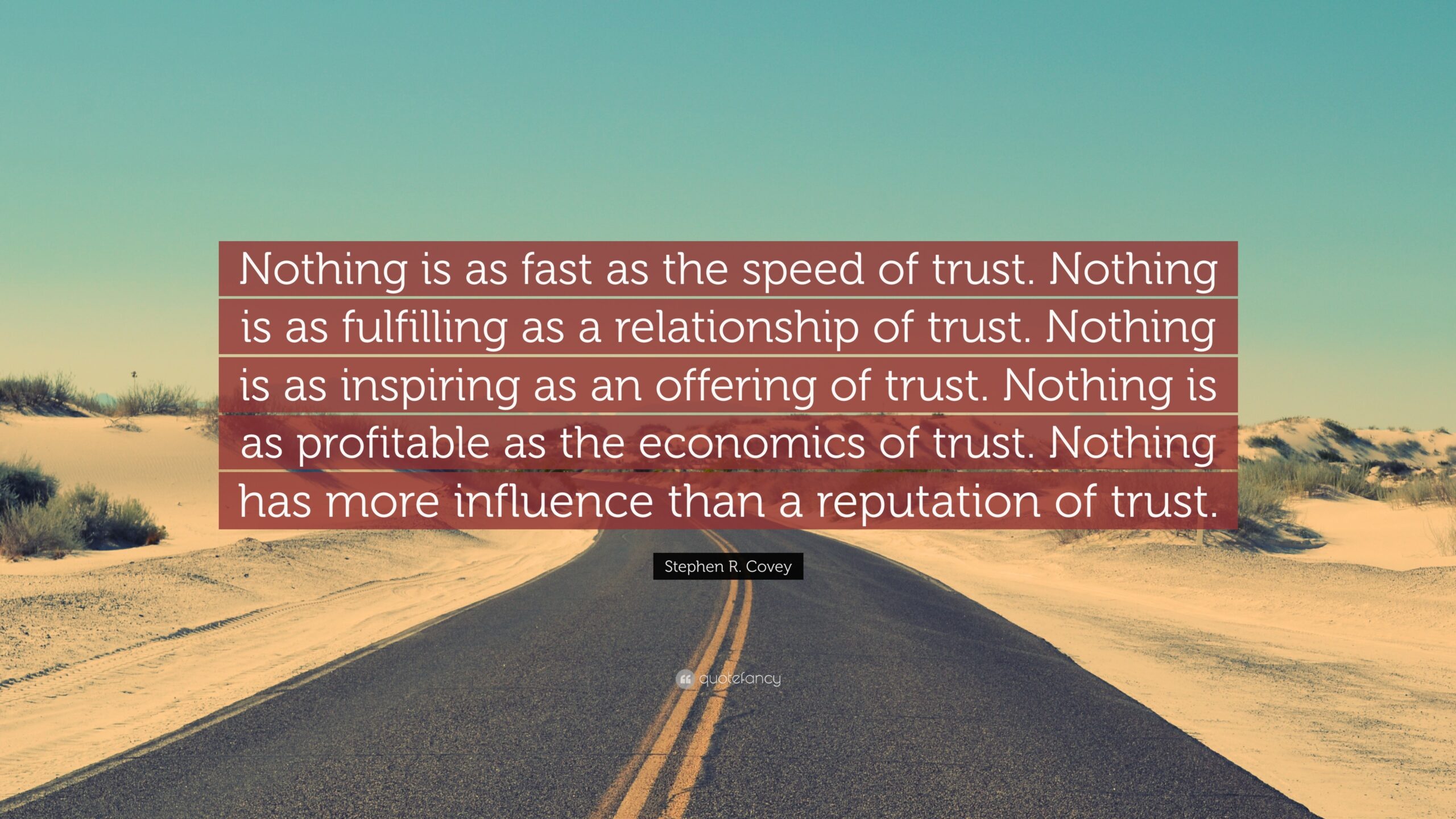
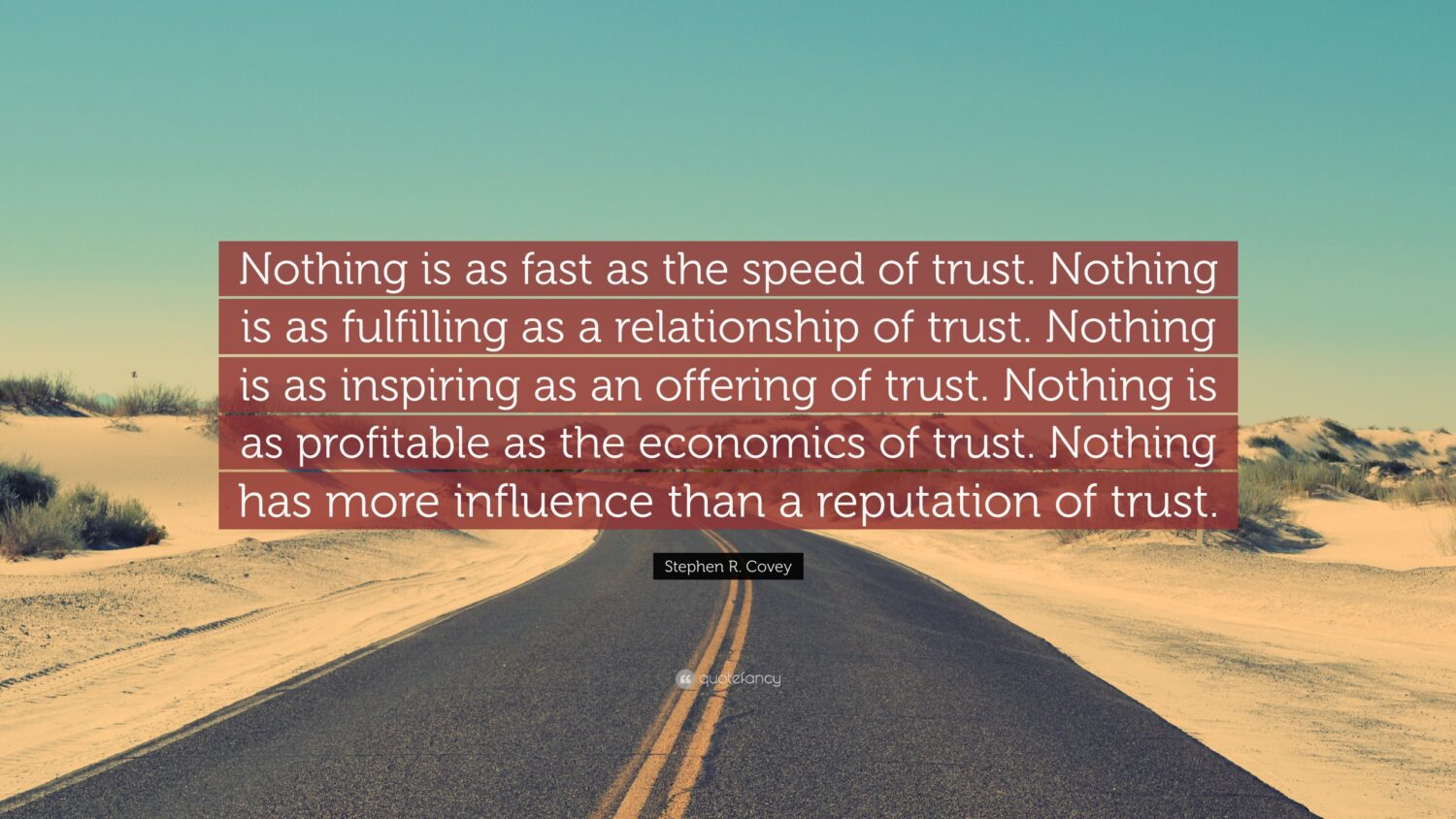
The Speed of Trust is a leadership idea coined, by Stephen Covey, that values trust building but still has more of an eye on productivity – and rapidity – rather than process.

Alex Bulmer est une ancienne élève de Sync et une auteure, metteuse en scène, actrice et dramaturge primée. Elle est entre autres cofondatrice de Fire and Rescue Arts et a été commissaire principale du CoMotionFestival 2022 (un festival international des arts sourds et handicapés produit par le Harbourfront Centre)

En 2020, Alex a participé au premier programme intensif en ligne de Sync en Ontario, Canada, et a partagé avec Sync son article sur la valeur de l'inefficacité. Sa métaphore du leadership – un disque vinyle, choisi parce qu'il tourne en rond et qu'il prend du temps à se révéler. Depuis, elle a beaucoup travaillé sur les programmes Sync au Canada, au Royaume-Uni et en Australie.

En 2025, Alex Bulmer a rencontré Sarah Pickthall de Sync, alors qu'elle répétait pour partir en tournée au Royaume-Uni avec une nouvelle adaptation de Don't Look Now de Daphne du Maurier, afin de façonner les ressources pour le nouveau programme Sync Re-Ignite. Ensemble, elles ont réexaminé la notion de cercle et de rassemblement selon nos conditions en tant que leaders handicapés et qu'une partie essentielle du travail collaboratif, de la conservation et de la co-conservation, consiste à réfléchir à la manière dont nous favorisons et facilitons les conditions qui permettent la confiance de se développer afin que nous puissions apporter notre moi entier et authentique en toute sécurité dans un espace créatif.

Le temps est une notion malléable et complexe ; dans une société « d’une seule taille pour tous » qui privilégie l'efficacité et la productivité, il est facile de se méfier de la lenteur. Alex a toujours instinctivement compris l'importance de prendre le temps de tourner en rond et de composter des idées, en laissant le temps de rassembler. Elle sait que cette lenteur du temps de traitement est d'une importance cruciale pour le processus créatif.

La notion même de « leader » implique pour Alex une figure en tête du peloton, se déplaçant un peu plus vite : « Je pense qu'il m'a fallu beaucoup de temps, et j'apprends encore, pour faire confiance à la vertu de l'inefficacité, à la valeur de la collecte et aux découvertes obtenues en tournant en rond plutôt qu'en allant rapidement d'un point A à un point B. »

Se précipiter vers des résultats peut être tellement contre-productif. L'expérience a appris à Alex à être confiante pour réclamer le temps de réunir un groupe : « Je dirige un projet à Toronto avec 3 écrivains aveugles et nous avons commencé par un repas ensemble. Vous savez que c'était dans la subvention – c'est dans la subvention que nous prendrons deux repas ensemble ! Parce que cela fait absolument partie du processus créatif. Prendre ce repas ensemble, avant de commencer à travailler en groupe, (permet) aux choses de se dérouler et de se déployer.

C'est aussi un élément clé de l'établissement de la confiance, de l'engagement envers les personnes présentes dans la salle et de la prise de temps pour « se déployer » : « Cette prise de temps témoigne du respect pour les autres personnes présentes dans la salle. Cela dit que le modèle de leadership ne contrôle pas toujours chaque minute ou ne remplit pas chaque quart d'heure avec un but. C'est aussi le temps qui permet à chacun de participer à la création de la dynamique, à la création du ton et à l'engagement de la conversation. Pour Alex, la cécité peut créer son propre fuseau horaire : « Je me suis souvent retrouvée à comparer ma façon de participer à un groupe à celle des autres, et je peux en conclure que je ne suis pas « à la hauteur ». L'idée même de suivre immédiatement suggère qu'il y a une sorte de concurrence, ou qu'il y a une façon et que vous devez suivre cette façon.

Alex s'est efforcée de recadrer cette notion de « suivre » en quelque chose qui fonctionne positivement pour elle : plutôt que de suivre la norme de quelqu'un d'autre, elle pense à suivre en termes littéraux : garder le corps physique droit, et en termes de valeurs. « Comment puis-je rester debout dans ces environnements ? Comment puis-je aller à mon propre rythme et établir mes propres valeurs de manière à ce que je me maintienne éveillée ?

Une partie de cela consiste à être consciente de ce qui est sous son contrôle et de ce qui ne l'est pas. « Je ne peux pas contrôler le niveau de romantisme, d'exceptionnalité ou de cases à cocher dans un espace, mais je peux décider comment je vais entrer dans cette pièce, ce que j'apporte dans cet espace... Prendre un moment avant d'entrer dans une pièce, juste pour respirer et s'imaginer dans son propre corps, pour sentir ses pieds sur le sol, ce sont des choses simples mais elles aident en fait - quand les choses tournent mal, il suffit de prendre ce moment, de prendre ce temps, de sentir ses pieds sur le sol, de sentir sa respiration, de sentir ses pieds sur le sol. Lorsque les gens érigent des barrières ou font des suppositions qui vous renversent, Alex suggère de prendre du recul et de vous maintenir debout : « Ne les suivez pas, restez à votre rythme ! »

Le fait d'être la seule personne handicapée sur un projet peut rendre cela plus difficile. « Il peut y avoir tellement de pivots autour de mes besoins. Et cela peut être un avantage, ou cela peut en fait aller dans la direction opposée, par exemple il peut y avoir une supposition de besoins qui n'existent pas. Il y a vraiment une attention particulière sur moi. Alors que si je travaille avec d'autres personnes handicapées, pour moi, c'est là que la navigation et la négociation vraiment belles et brillantes des différents besoins d'accès, des différentes façons de travailler des gens, pour moi, c'est là que la magie existe vraiment.

En ce qui concerne la confiance, Alex reconnaît également l'importance de laisser du temps et de l'espace aux participants pour entrer et sortir de l'activité, ce qui leur permet d'avoir de l'intimité et du temps calme au sein du groupe ainsi qu'un engagement total. Il peut être difficile de ne pas laisser les expériences négatives précédentes avoir un impact sur l'ici et maintenant. « Si vous êtes prêt à être ici mais que vous n'êtes pas prêt à en exposer trop, trop tôt, cela DOIT être normal. » Et lorsque nous permettons la vitesse de la confiance selon nos conditions, en créant un rythme qui se déplace avec notre propre moi et les participants et honore le processus créatif ? Ensuite, nous pouvons changer les hypothèses qui donnent la primauté à la vitesse, et faire de nos méthodes réfléchies de travail nos méthodes les plus typiques. Et cela, dit Alex, profite à tout le monde !

Reflections from the Twilight Zone

Belinda Locke stands next to Kristina McMullin. Belinda wears a seajade dress, she smiles and her dark black curly shoulder length hair frames her face. Kristina has her hair hair pulled back. They both wear lipstick.

Belinda Locke and Kristina McMullin

Belinda Locke stands next to Kristina McMullin. Belinda wears a seajade dress, she smiles and her dark black curly shoulder length hair frames her face. Kristina has her hair hair pulled back. They both wear lipstick.
Belinda Locke and Kristina McMullin – Sync Twilight Facilitators

Meeting in person together in Summer 2023 when Sync was in Toronto, Sync Leaders, Belinda Locke and Kristina McMullin reflected on the Sync Twilight a programme they both had trained in and delivered on in Winter 2022 and Spring 2023 online.

I’m Kristina McMullin (to the right in the picture) and my pronouns are she, her, and I’m a white, cis gender, visibly disabled woman, who works in the arts, largely disability arts, alongside academic research and a few other things here and there.

My passion in life is community building and connection. An introvert by nature, I like being challenged by people and my work and the ultimate challenge is community building because it makes me less of an introvert. And I like being less than an introvert! I like to do projects that feed my soul, and make other people feel seen, heard, and desired in community spaces. My mission statement as a human being, is to disrupt systems while being gentle with humans, to tell the truth in a way that is regenerative, to honor imperfect process and to leave room for joy and laughter. And try to do better, always.

That’s why I came to Sync because there’s an alignment of values there. I had met Sarah and Jo in the summer of 2020. It was on the first fully remote Sync coaching in training leadership, which I did from my home in Toronto, where I felt a true sense of alignment in this desire to create community, create spaces, be a disrupter while remaining true to those principles of care and support Sarah so beautifully demonstrates.

Sync Twilight (which brought Kristina and Belinda together) seemed like an obvious next step. I’ve never worked with anyone really outside of Canada and the UK, and I think that it’s great to build these like hyperlocal communities but that disabled folks are always part of the larger global community.

I’m Belinda Locke, pronouns she and her.  I live in Melbourne, Australia on the land of the Boon Wurrung people of the Kulin Nation. I’m a white, cisgendered woman. I identify as disabled. I’m a theatre maker and Director, and create multidisciplinary work where I collaborate with people from lots of different art forms. In all of the work that I do, I’m looking to create opportunities for other people to share their work alongside my own.  Sometimes I’m curating a festival programmme, or sometimes, like I’m going to be doing next month I’ve got a show opening but I’ve also commissioned other artists to create work on the same theme. I think it’s really important to show different perspectives from people with varied experiences of disability as well as different cultural backgrounds.

I did the Sync leadership programme way back in 2014, and it was so important for me.

I was early on in my career and I was definitely the baby of the group! It really helped to spur me on in a direction where I was able to work with the community in Australia, and Brisbane in particular, to set up a national disability arts festival called Undercover Artist Festival. That was really enriched from my experiences with Sync and from the Sarah Pickthall’s coaching, and the work that I did in person with Jo Verrent.

When I heard about Sync Twilight and this opportunity to co-facilitate a group with you, Kristina, I leapt at the opportunity.

I would say Sync Canada was my first experience of online training.  Having that kind of experience and being so supported with such care and flexibility. I loved it,

Kristina McMullin

I would say Sync Canada was my first experience of online training.  Having that kind of experience and being so supported with such care and flexibility. I loved it, and have always kind of judged other online development courses against Sync because it was so responsive.  It made it possible to tell the truth and be vulnerable.  My biggest goal with Sync and with Sarah, has been like, how do I or how do disability identified folks be vulnerable, while still staying safe?  Sheryl Sandberg and Brene Brown talk so passionately about the value of being vulnerable, but they’re two women who have oodles and oodles of financial privilege, career privilege, able bodied privilege, white privilege: you know, Sheryl Sandberg isn’t becoming the CFO of Facebook by like, disrupting systems!

Yes, it’s a different position to be in, to our experience. And, you know, when I say our experience there are many different experiences within the disability community, but often, I think you’re viewed as vulnerable to some extent, automatically. And so, the decision to harness that and to find strength in vulnerability is a different kind of process.

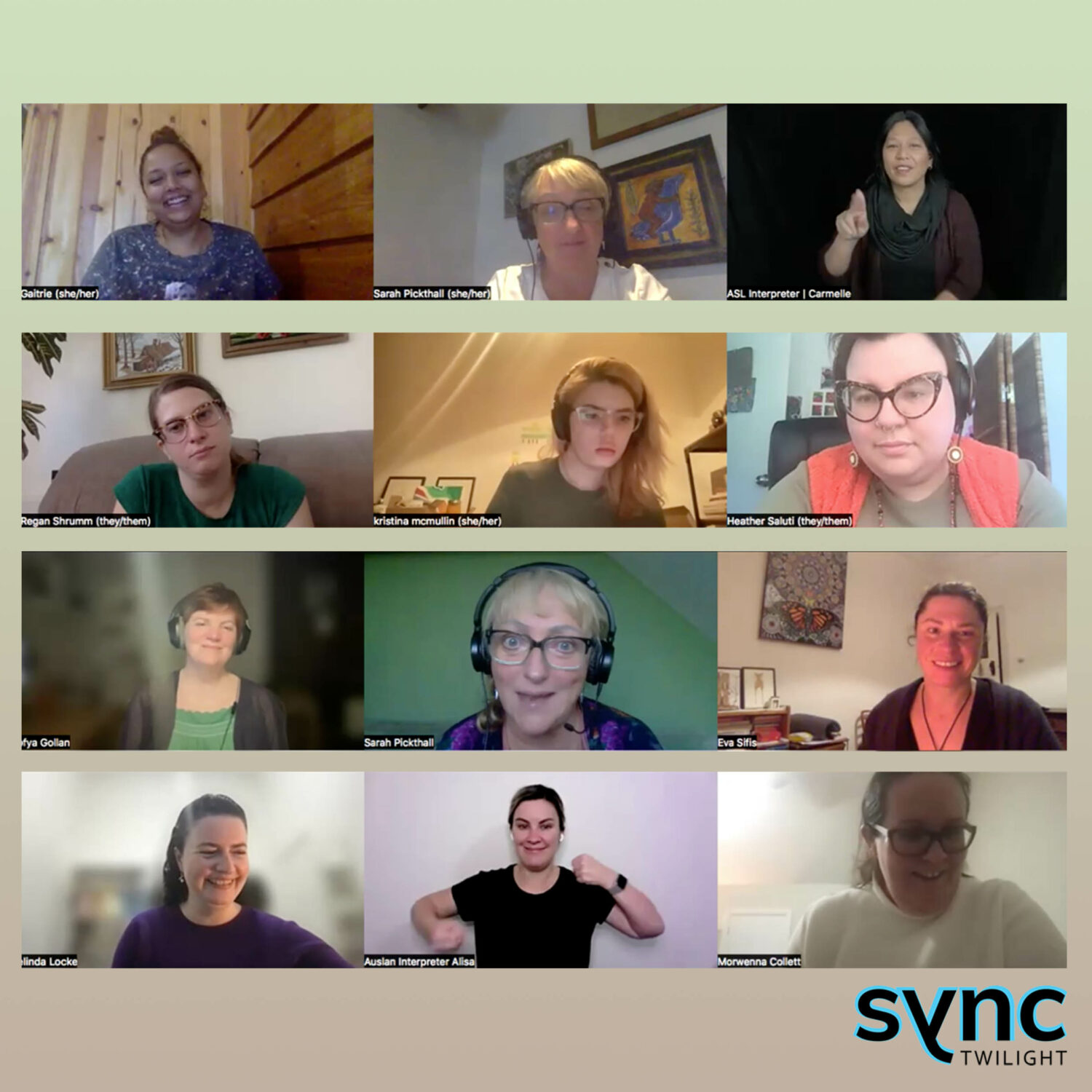
12 people in Zoom: Smiling, thinking, 4 facilitators from Sync Canada and 4 from Sync Australia working alongside ASL and Auslan interpreters with co-founder Sarah Pickthall
Sync Twilight Facilitators – Group Training session 2022

As co-facilitators in Sync Twilight, we both went through this process of facilitating sessions with a small group of people. Disabled folks from Canada and from Australia online. And we did this particular kind of coaching, using action learning. Which, in essence, I would describe as being about one of our peers coming to the meeting with an issue that they’re having in their professional life. Then the rest of the group really probing with questions that are open and not leading, and helping the person themself to find the answer to the issue that they have.  So, I’d love to know, Kristina, what you think you learned from going through the process? What did you like about it? What didn’t you like about it

It’s so interesting. I’m someone who doesn’t like seek out advice, but when I do I don’t want to have to self reflect, I just want you to tell me!  That was kind of like my immediate reception to like coaching! So I learned through Sync that job of the coach is to empower me to make my own decisions.

I have produced a podcast, so I like to think of myself as someone who can ask good questions. But I ask leading questions: I have an overarching goal. So now, how do I train myself into asking these open-ended questions? How do I make people feel the way that Sarah made me feel even if in the moment, it is a little bit frustrating?!  So Sync Twilight was like, a toe in the water and something that I knew was the right next step, to challenge myself so I can be vulnerable, and really build that confidence for this next step of my career.

I think it’s a really generous process to ask open questions that really, you’re not directly inputting experiences that you’ve been through or saying, oh, I’ve been there before. It’slike this whole group is giving their entire focus to that person. And it’s powerful. I saw ideas come to light that maybe the person wouldn’t have come to, on their own sitting mulling over the issue, but with a group of people who are asking things in this really generous kind of way they could find their own answers, and come to perhaps a different answer, but one that’s really fits right for them.  I remember, thinking back to Sync Australia initially, how Jo made it really clear that we were all responsible for ensuring access for the whole group and how that turned a switch on in my brain so I definitely became much more aware of other people’s experience and the barriers from their perspective.

Working at Tangled was my first job in disability arts: I’d never like really lived within the disability community up until then. I just was kind of like, over here, I never identified publicly as disabled and then I came into the world with a disability and realised there’s such a need for this kind of work in the arts. It needs to be public. It needs to be more loving. It needs to be more fun; it needs to be more joyful. But yes, as you and I developed in our practice, we realise that that’s not possible to create access for everyone all the time. What is someone’s access need is another person’s distressing environment. So we can aim to be access centred, and I think that’s what I liked so much about Sync. I think the fact that Sync understands the value of access standards and meets and exceeds them in every single meeting and engagement sets such a good example, and means I can do what I want to do which is build community and challenge myself and support my friends.

So, I think my key takeaway from Sync Twilight is that the knowledge is in us, and can come to light through the effort of others. And you can feel at ease in the process, to chill – that’s what I learnt from you!

So often I can like perform authenticity or I can perform vulnerability. And I think with Sync I don’t feel that pressure. So that feels nice to hear that like that comes across, that true authenticity and vulnerability where it isn’t a performance, and there is inherent value to that. I think my key takeaway is that you can redirect someone deliberately, in a careful way,  full of care, and that redirection doesn’t need to be a critique. It can just be an offering.

One of the most important things about these Sync spaces is their difference in allowing that authenticity. 

Belinda Locke

Yes! One of the most important things about these Sync spaces is their difference in allowing that authenticity.  Right or wrong, a lot of the time in my life I’m kind of keeping up a bit of a façade you know, because the structures and attitudes in the world out there mean that I can’t be how I am in my body in a way that’s comfortable for me and stay within a social standard.  In Sync it allowed me to give myself permission to come along and be like, hey, if I tell people I’m going to need to sit on the floor for a bit or turn my camera off for a bit, its fine. That even there’s no need for explanation, we get it. And isn’t that liberating?

And I love how the structure enabled us to be interchangeable in that kind of role, how we shared the leadership and support. There was I think something really beautiful about being able to use our lived experience in a way that’s not about advice giving and so it wasn’t like having to be in this mentorship role but we were still supporting other people’s growth.

Yeah – I think what I learned the most from Sync Twilight is that like we as human beings can fill multiple roles.  if everyone’s needs are being taken care of and the overarching intention is there, so our skills, our expertise, our interests can be malleable, depending on capacity and needs for that day for us and the desire, capacity and needs of the group. And that’s so liberating!

Sync Arabi – at the raw intersection of disability and mobility justice in the arts  

A picture of Alia Alzougbi and Sarah Pickthall wearing black tops sitting and smiling in bean bags in Sync Arabi training in Amman, January 2023

5 February, 2023  

A picture of Alia Alzougbi and Sarah Pickthall wearing black tops sitting and smiling in bean bags in Sync Arabi training in Amman, January 2023
Alia Alzougbi and Sarah Pickthall at Sync Arabi in Amman, January 2023. Photo credit – Sync Arabi

Alia Alzougbi is a cultural strategist, artist, facilitator and Sync Associate working at the intersection of art and social and environmental justice. Her practise uses the arts to interrogate the fundamental causes of inequality and explore alternative modes of understanding the world and being in it.  Alia is Joint CEO of Shubbak, Europe’s largest festival of contemporary Arab arts and a partner for Sync Arabi alongside Art to Heart in Palestine.

A commercial flight from the UK to Jordan took less than five hours of our lives and, at least this time, we did not require assistance. Sarah and I were traveling in excitable bodies high on adrenaline and, having my so-much-more-than-an-access-support-worker, Shyama Persaud, with us meant that we could relax about worrying over long cues, lifting bags, finding food and drink and so much more that the disabled traveler usually has to contend with.

We had a good moan about the aircraft being so ill-equipped for the pain body (who on earth decided it was a good idea to model aircraft on a sardine tin?) but arriving to the warm welcome of our project manager extraordinaire, Aya Nabulsi, and an accessible hotel put all that behind us. 

Here we were, ready to deliver Sync Arabi — a disabled leadership intensive residential experience born out of the sweet entanglement of Shubbak, Sync Leadership and Art 2 Heart.

The next morning we awoke to the news that delegates from Palestine were caught by a crackdown from the far-right government of Israel. Roads leading in and out of the illegally-enclosed Occupied Territories were impenetrable. My imagination took on a bird’s eye view of taxis carrying our colleagues traversing grey lines of asphalt with potholes dotting those neglected essential arteries of mobility and, within those cars, artists not only disabled by their own societies for the divergence of their bodies from the so-called ‘norm’, but also disabled by a colonial project of land enclosure on a mass scale upheld by a sinister and corrupt world order. 

Six cars carrying five Deaf and Disabled artists and our colleague Suha from Art 2 Heart,
Wind their way through impenetrable roads,
Reversing and tentatively traversing another route,
finding that blocked;
reversing and tentatively traversing another,
and another.

For those of us waiting in Amman, time was suspended. We needed to find a way to ensure the residential course went ahead. Could we deliver it as a hybrid event if they did not make it through? And if they did make it through, how could we best invite rest, ease and recovery? We got to work on scenario planning – if…, then….

Then, one by one, the Palestine colleagues arrived, not-a-little frazzled by their journeys, and yet so graceful in their greetings.

Alia Alzougbi

And then we saw Suha Khuffash. And the warm embraces that ensued were so much more than those of co-conspirators finally meeting in the same physical space after months of virtual planning. Ours were embraces laced with a sad elation that, in spite of the mobility rights of Palestinians remaining unhonoured, there was hope still that they may come through, coupled with a defiance that our non-normative bodies would ultimately coalesce through of the multiple barriers we face. Hope grew in our brittle bones and attriting nerves and muscles. 

Then, one by one, the Palestine colleagues arrived, not-a-little frazzled by their journeys, and yet so graceful in their greetings. Jordan is less than 200km away from Palestine, and yet some of our colleagues’ journeys took 12 hours in comparison to our measly five from the UK which is over 3500km distant. Access becomes a dizzying point of crisis when geo-politics and disability intersect.

——————————————————————————————

In a windowless hall with a bright red and yellow carpet crowned by an art deco chandelier, we gathered with our wheelchairs, note-takers, text-to-speech tech, braille books, sign language interpreters, walking sticks and aids and all manner of support we could fathom to thrive in a world that was neither built by or for us. And so, as in so many gatherings of Deaf, Disabled and Neurodivergent, we did what it takes to ensure that this space would be accessible.

The next five days were a heady immersion in Sync Leadership tools and theory, meditations to lean closer into ourselves and each other, and affirmations to find our collective courage. Sometimes consensus settled in. Other times it was clear how disagreeing well made us so much more than the sum of our parts, because there was so much more than a common cause that bound us. There was real intrigue and a genuine desire to explore how Deaf and Disabled bodies, in all their variety, can be the sites of true societal transformation.  

———————————————————————————————-

And perhaps some of the most radical moments we shared were those of joy and laughter — that in spite of it all, we made it together. Etched in every sinew of my body is that first explosion of laughter when the uncensored Sharihan exclaimed, after an admittedly too-long introduction from Sarah and myself, ‘Uff! I was wondering when you two would shut up already!’

And when Jeries, on the bus journey to our welcome dinner, commented on his delight that there was not the hint of a smell of another man in the cohort;
And when we heard of the surreptitious after-hours blind-led tours of Amman which Rawan had been organising for the group;
And when Safaa and Shaima’s laughter reverberated through an overly-sanitised hotel lobby as they skidded in their wheelchairs in an impromptu race to their coaching sessions;
And when the ever-resourceful Hala rose to the challenge of finding the only fully accessible cafe in Amman for our goodbye shisha;
And when Yara and Diana were reduced to tears of laughter upon finding a common language that traversed Deafness and Blindness on our last night together (and I tell you, the rest of us so wanted to be let in on that language of pleasure activism).

I cannot speak for the others, but I certainly left Sync Arabi giddy with the power of a collective dream.

Alia Alzougbi

There is a rich countercultural spirit that the transnational Deaf, Disabled and Neurdivergent community can offer if only our right to resources were not repeatedly robbed from us. The solution-finding creative intelligence of non-conformity born out of circumstance is a well of wealth our problem-ridden world can only benefit from. The more obstacles that are placed before the realisation of that dream, the more we all lose out, all of us. But let that not be the reason; even if folk had nothing to offer, let us move away from the ever-extractive capitalism-serving constructions of a life worth living, and the lies. The lies that our worth is in our productive capacity, the pace at which we live and work, the number of outputs we are able to spit out. 

On the last day of the residential experience we spoke of courage, and out of that came a call to love from the cohort of eight – to trust, to be generous and to uphold kindness even through fury over injustice. This is where the revolution lives. In a world where ubiquitous ideas around ableism are so easily internalised, where bodies that digress from constructed normality are regarded with suspicion, even repulsion, the call to love is the most radical, revolutionary thing any of us can do. 

——————————————————————————————–

Postscript – At the raw intersection of disability and mobility justice in the fold of environmental catastrophe

12 February 2023

In the early hours of the morning after we returned to the UK, a devastating earthquake struck the region, with Gazintiep as the epicentre, wreaking unimaginable death and destruction in both Turkey and Syria, and with strong tremors felt in Lebanon, Palestine and Jordan. As bodies, dead and alive, continue to be pulled out from underneath the rubble, the realisation comes that disabled bodies were inevitably slower, less likely to survive. 

With the Earth increasingly kicking back at the rapacious invasion of its resources for profit, the body that cannot run or traverse physical obstacles, cannot see where it is going, cannot take an audio cue of incoming threat, is significantly less likely to survive. We become reliant on those who love us to carry us, to run alongside us, to invent all manner of ways to speed up an inevitably slower escape. We are reminded that our very survival is deeply entwined with the health and wellbeing of the Earth, our only home. We are reminded, if nothing else, that for the sake of our disabled loved ones – our elderly parents, our babies and toddlers – we must stand up to the corporate greed driving environmental destruction on a mass scale.

More about Alia:

Alia has worked with national and international organisations, including the National Theatre and the British Council, to create critical encounters in education and the arts towards collective liberation. She has curated a range of interventions and creative disruptions, from local corner shops to world-renowned museums. Alia is a Chevening Scholar, a Clore Fellow, and a Fellow of the Royal Society of Arts, and volunteers as a coach and mentor with those experiencing reduced access to opportunities in the cultural and creative industries. She is a recipient of the Writer’s Guild Olwen Wymark Award for the encouragement of new writing in 2019 and was nominated for a BAFTA Scotland in 2008.

Jodee Mundy : Perdue mais Retrouvée

une paire de jambes portant des chaussettes roses et bleues relevées jusqu'aux genoux. Le motif de la chaussette présente des têtes de mort et des fleurs inspirées du jour mexicain des morts.

In the second SYNC Leadership online program 22 session, the cohort were asked to find a metaphor for their leadership. Choosing the metaphor of a sock, Jodee Mundy thought about how a sock can mean many things.  A lost sock, to find your pair, pull your socks up, to shed your skin and so forth.

Prélude Créée au sein de ma mère Se développant dans son ventre paisible Les mouvements s’agitent, secouent et vibrent toute ma famille malentendante

S-kin Née dans deux mondes Je suis différente de mes parents, Même si je suis l’une d’entre eux J’ai la peau auditive

Réalités alternatives Grandir en enfant entendant d’adultes sourds Naviguant La vue et l’ouïe, Culture sourde Culture auditive Auslan Anglais Capacité Invalidité Exclusion Inclusion Ignorance Privilège Donc binaire mais profonde

Calcul symbiotique Ma famille et moi partageons le même objectif : « Que nous soyons égaux. » J’interprète pour ma mère, Plaidoyer côte à côte pour la justice sociale Pour les droits de l’homme d’autrui

Professionnalisme Mon rôle a évolué à partir de la famille En devenant une alliée professionnelle J’ai interprété et défendu avec plusieurs Pendant des décennies, avons-nous essayé, avons-nous essayé !

Quarante ans Interprétation, plaidoyer, bilinguisme, Expliquer, éduquer, consulter, Diriger, jouer, expliquer Mentorat, rédaction, bénévolat, Collecte de fonds, direction, programmation Accès et inclusion… hmm Par où commencer… ?

Thérapie 40 ans de thérapie, Culpabilité d’être « eux » Chagrin, colère, dépression Le statu quo recule Accès et inclusion

Diagnostic Comme une chaussette Évoluer de l’intérieur Vers l’extérieur Vers l’intérieur à nouveau Il y a trois ans Ma chaussette a révélé une nouvelle peau « Vous avez un cancer de stade quatre » me disent les médecins« C’est incurable », disent-ils.« Je ne sais pas combien de temps il vous reste » « Mieux vaut le prendre au jour le jour »

Adieu Adieu à mon innocence Adieu à ma vie en santé Cette femme est atteinte d’une maladie en phase terminale Avec une fin possible assez proche

Maternité Avec la douleur, la peur, le chagrin Comme mon nouveau train-train quotidien, J’ai passé 2020 en confinement À aimer mon nouveau bébé Avec un corps malade

Peau Et pourtant, malgré mon pronostic Trois ans après Une nouvelle liberté a été trouvée De l’intérieur De l’extérieur Et à nouveau à l’intérieur Je suis enfin dans ma peau

VIP Je suis handicapée moi aussi Comme toute ma famille Finalement ! Ne suis plus une initiée / étrangère Je fais partie du club C’est nouveau pour moi, Pourtant familier Je me sens vulnérable mais forte

Moment de révélation J’ai compris l’accès et l’inclusion Mais bon, Le capacitisme est un niveau supérieur…

Lorsque vous êtes… Lorsque vous êtes payé moins que toute votre équipe Même si vous êtes le leader handicapé Ou lorsque votre patron préfère l’avis de votre médecin généraliste Et choisit de ne pas vous écouter Quand le chimiste compte vos opioïdes mensuels Pour vérifier que vous n’êtes pas accro Lorsque vous devez indiquer votre numéro UR chaque semaine au personnel hospitalier qui vous connaît Les scans mensuels, les revues trimestrielles, La vitesse à laquelle le monde se déplace Les siestes quotidiennes, les promenades haletantes C’est très difficile de suivre Je vais vous dire que… Lorsque vous défendez votre vie au Parlement Dans l’espoir qu’ils financeront votre détresse face au cancer Lorsque vous essayez de vous intégrer Même si vous leur avez donné toute votre valeur Lorsque vous leur parlez d’une augmentation salariale Ils disent « désolé mais c’est comme ça » « Ce n’est pas de notre faute si vous ne pouvez pas suivre » « Nous sommes vraiment désolés de votre diagnostic, Ça doit être vraiment dur ». Quand vous devez vous mordre la langue Cachez vos larmes Gardez la tête haute Et expliquer« Que c’est le meilleur qu’ils obtiendront Et que vous en valez la peine encore et encore »

Conclusion (au moins pour maintenant) Concilier vie de femme et de mère handicapées En tant que leader et artiste handicapé Ma respiration, ma capacité, mon énergie C’est une ligne fine à franchir… Pourtant, plus ces plis de peau sont profonds, plus mes chaussettes sont profondes. Plus je me sens connectée. Je vais continuer à relever mes chaussettes, Créer Mener doucement Ne pas abandonner, Me tenant sur les épaules de ma famille handicapée Toutes nos trois générations Quand les choses se corsent

Jodee Mundy OAM est une artiste interdisciplinaire, directrice de festival, activiste et leader culturel basée à Melbourne. Signataire du patrimoine de la langue des signes australienne, elle a grandi comme la seule personne qui entend dans sa famille entièrement sourde. En novembre 2019, Jodee a reçu un diagnostic de cancer en phase terminale alors qu’elle était enceinte de trente-cinq semaines. Peu de temps après, elle est entrée en confinement pendant près de deux ans. Avec une survie de trois ans, Jodee vit de traitement en traitement en fonction des derniers traitements révolutionnaires contre le cancer. En 2020, Jodee a reçu une médaille de l’Ordre d’Australie pour ses services aux arts de la scène. www.jodeemundy.com

Kirsty Collins: Living with Disability is about Adaption and Innovation

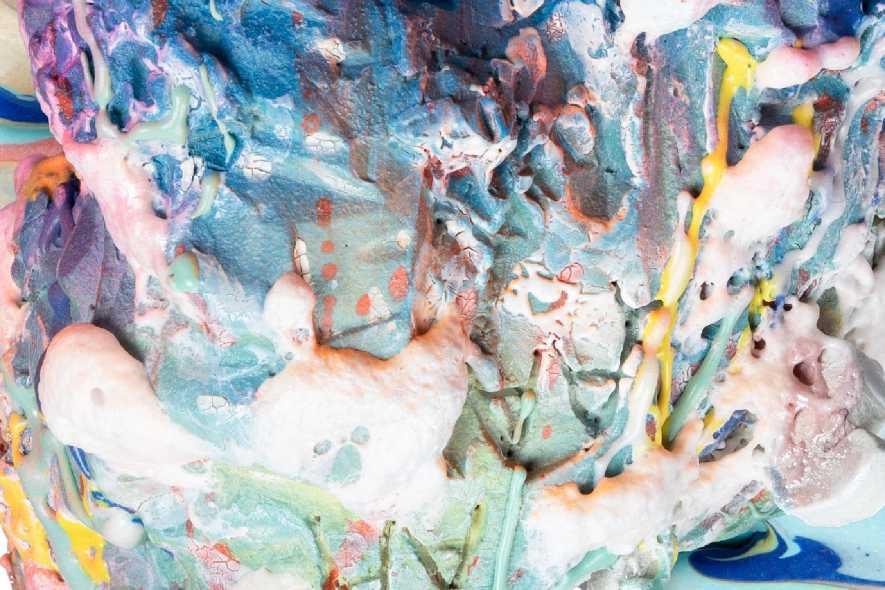
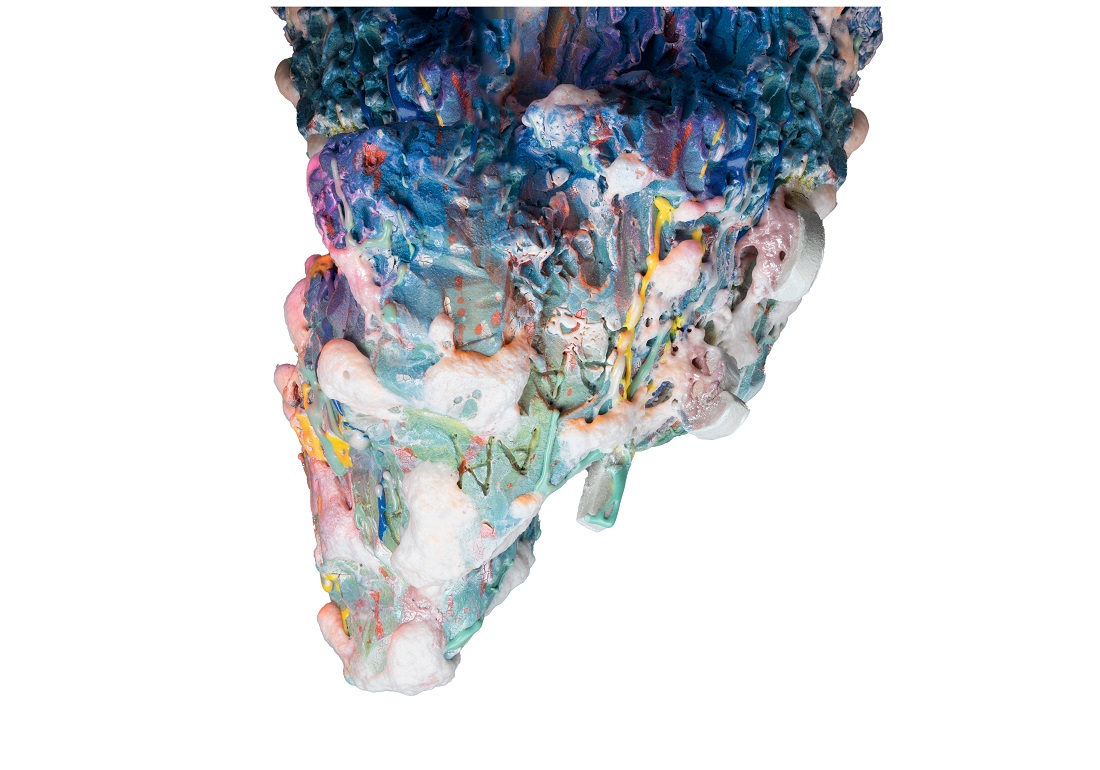
A photo of a colourful up side down ceramic mountain sculpture. The colour from the top of the photo, which is the base of the mountain, is dark blue and graduates down to pinks, purples and pastel blue at the tip. There are also splashes of bright yellow and orange and blobs of dripping white foam.
Kirsty Collins: Upside down mountain

Concevoir un espace créatif pour les personnes avec une déficience sensorielle* et mon capacitisme intériorisé.

Je suis l’une des quelque cinq cents personnes dans le monde diagnostiquées, après une recherche de quatre ans, avec la maladie auto-immune du syndrome de Cogan. Alors que je perdais l’ouïe, plusieurs spécialistes ont rejeté mes symptômes comme maladie mentale. Parce que c’est rare, il y a peu de recherches en cours, donc trouver un soutien médical est difficile. La maladie de Cogan implique une inflammation vasculaire des oreilles, des yeux et du système vestibulaire. Au fil du temps, cela entraîne une surdité, des vertiges et, pour certains, une perte de vision.

La maladie chronique présente une diminution de l’état de normalité de la perfection humaine. Cela prend du temps, mais lorsque nous acceptons notre handicap, nous embrassons la compréhension innée d’être pleinement humain parce qu’il n’y a rien de naturel dans la perfection humaine. Je crois que notre obsession d’imiter la norme via notre capacitisme vient d’une culture qui marchandise tout avec des promesses de santé parfaite, de beauté, de popularité et de bonheur. Personnellement, ce système de croyances, en plus des traumatismes sociaux quotidiens du handicap, me fait inévitablement tomber dans le piège de la honte de la surdité, la honte du TDAH et de la honte des maladies chroniques rares.

Dans le cadre du programme Sync, j’étais ravie de partager un espace artistique en ligne pour les personnes handicapées et de voir l’acceptation radicale des handicaps en action.

Avec la perte auditive et visuelle, l’industrie médicale est notre première et souvent la seule référence pour notre invalidité continue. Bien que nous puissions avoir besoin d’un traitement pour ralentir la perte, il est tout aussi essentiel de développer une acceptation radicale de soi, un but et une communauté. Pour que les personnes handicapées s’épanouissent, nous devons construire la fierté du handicap en conjonction avec nos autres identités de fierté comme le féminisme et trouver nos communautés.

Sans communauté, il n’y a pas de libération.»* La proposition de Lourdes de communauté en action est évidente dans la communauté collaborative de la production de céramique. L’espace partagé au quotidien, l’équipement, les outils, les compétences et les machines sont communs et célébrés.

Avant ma surdité, j’ai été témoin de l’oppression sociale en tant qu’enfant de parents homosexuels qui militaient pour les droits des femmes. Je ne comprenais pas pourquoi mes deux mères ne pouvaient pas se marier ou être inscrites comme proches parents à l’hôpital ou pourquoi elles avaient manqué 45 ans d’anniversaires de mariage. Je les ai entendues se dire qu’un mariage n’avait pas d’importance et que le morceau de papier n’avait pas d’importance ; C’est ainsi que ma famille a intériorisé l’homophobie.

Vers la fin de 2017, un référendum a eu lieu en Australie sur la légalisation du mariage homosexuel. Avant sa mort, ma mère a été dévastée lorsqu’elle a vu les résultats mitigés du référendum 60/40 sur le « oui » dans nos banlieues. Comme ma mère se mourrait de leucémie, nous avons dû obtenir leur autorisation de mariage précipitée par les canaux bureaucratiques. Elles ont passé deux jours à l’hôpital pour les soins palliatifs, et elle était partie. Nous nous sommes considérées chanceuses parce que leur cérémonie de mariage était l’un des meilleurs moments de notre vie.

L’idée que j’ai tirée de cette expérience était comment pouvons-nous faire la différence entre nos désirs et besoins intrinsèques et l’oppression intériorisée si quelque chose a toujours été interdit ? Le fait de voir l’acte du déni autoprotecteur en action était révélateur, car il montrait comment nous intériorisons le sexisme, l’homophobie, le classisme, le racisme, la transphobie et le capacitisme.

Quand mon fils était bébé, il ne pouvait pas dormir plus de deux heures et se cognait la tête à plusieurs reprises. Les pédiatres avaient de faibles attentes et, après cinq ans, il a reçu un diagnostic d’autisme, de trouble du sommeil RL et plus tard de TDAH et de dysgraphie. S’occuper de mon fils neurodiversifié m’a appris que se concentrer sur ses « déficits » à la normativité est toxique et improductif (beaucoup de thérapie ABA est maintenant considérée comme abusive par de nombreux adultes autistes). En regardant mon fils, qui joue maintenant dans un groupe de jazz et étudie l’ingénierie, j’ai appris que les personnes atteintes d’autisme et de TDAH sont de superbes spécialistes et que vivre avec un handicap est une question d’adaptation et d’innovation. living with a disability is about adaption and innovation.

Nous avons l’habitude de dissimuler des handicaps pour paraitre normatives afin de ne pas mettre les autres mal à l’aise, mais cet inconfort nous inclut nous-mêmes. Lorsque nous ne pouvons plus passer pour normatives, notre stigmatisation inconsciente nous pousse à nous retirer pour des raisons de sécurité ou à endurer des « sorties » quotidiennes du handicap. Mais nous pouvons l’utiliser pour développer la fierté du handicap. Seule une infime proportion de personnes handicapées dans le monde s’identifient comme handicapées en raison de la stigmatisation. Et notre biais de confirmation inclut des comportements capacitistes tels que ne pas socialiser avec d’autres personnes handicapées.

Watching my son, who now plays in a jazz band and is studying engineering, I learned that people with Autism and ADHD are superb specialists and living with a disability is about adaption and innovation.

Pour ma part, l’épuisement cumulatif du capacitisme pandémique m’a amenée à me retirer de mes groupes de camarademie après la combinaison du capacitisme médical des maladies rares et des barrières quotidiennes de communication des sourds avec la lecture labiale et les masques. Le capacitisme vient souvent de l’illusion d’un choix personnel. Nous semblons choisir de nous retirer des activités sociales alors qu’en fait, il peut y avoir eu une difficulté à communiquer dans les foules et une vulnérabilité immunosuppressive pendant la Covid.

Mon approche artistique ressemble beaucoup à une expérience scientifique. Alors que je m’entraînais à la céramique pendant ma maladie, je suis tombée passionnément amoureuse des réactions chimiques dans la glaçure céramique. Maintenant, je veux expérimenter, collaborer avec mes expériences et celles d’autres personnes et artistes d’être handicapées sensorielles.

Le programme Sync m’a donné la clarté et la force d’aller de l’avant et d’excellents outils pour comprendre mon processus de prise de décision et le sentiment de dignité pour demander de l’aide. Cela m’a permis de voir grand et de voir ce qui est possible – en utilisant mes connaissances techniques en céramique pour créer un environnement inclusif et collaboratif pour les personnes sourdes et aveugles – en fournissant un lien social grâce à un centre culturel pour la production de céramique et les collaborations en art contemporain comme lieu d’excellence créative pour les personnes handicapées. Je veux montrer aux gens un exemple de ce dont ils pourraient être capables après et pendant la perte d’audition et de vision avec la communauté et l’autonomisation.

Kirsty Collins, 2022

Les déficiences sensorielles font référence à la cécité, à la surdité et au spectre sourds-aveugles

* Lorde, Audre. « Les outils du maître ne démantèleront jamais la maison du maître.» 1984. Sister Outsider: Essays and Speeches. Ed. Berkeley, CA: Crossing Press. 110-114. 2007. Imprimé. (L’un des meilleurs discours jamais écrits !)

(One of the best speeches ever written!)