MelVee X is a spoken word poet, burlesque dancer and visual artist who’s shared her work across Canada.

For the Love of Fractals
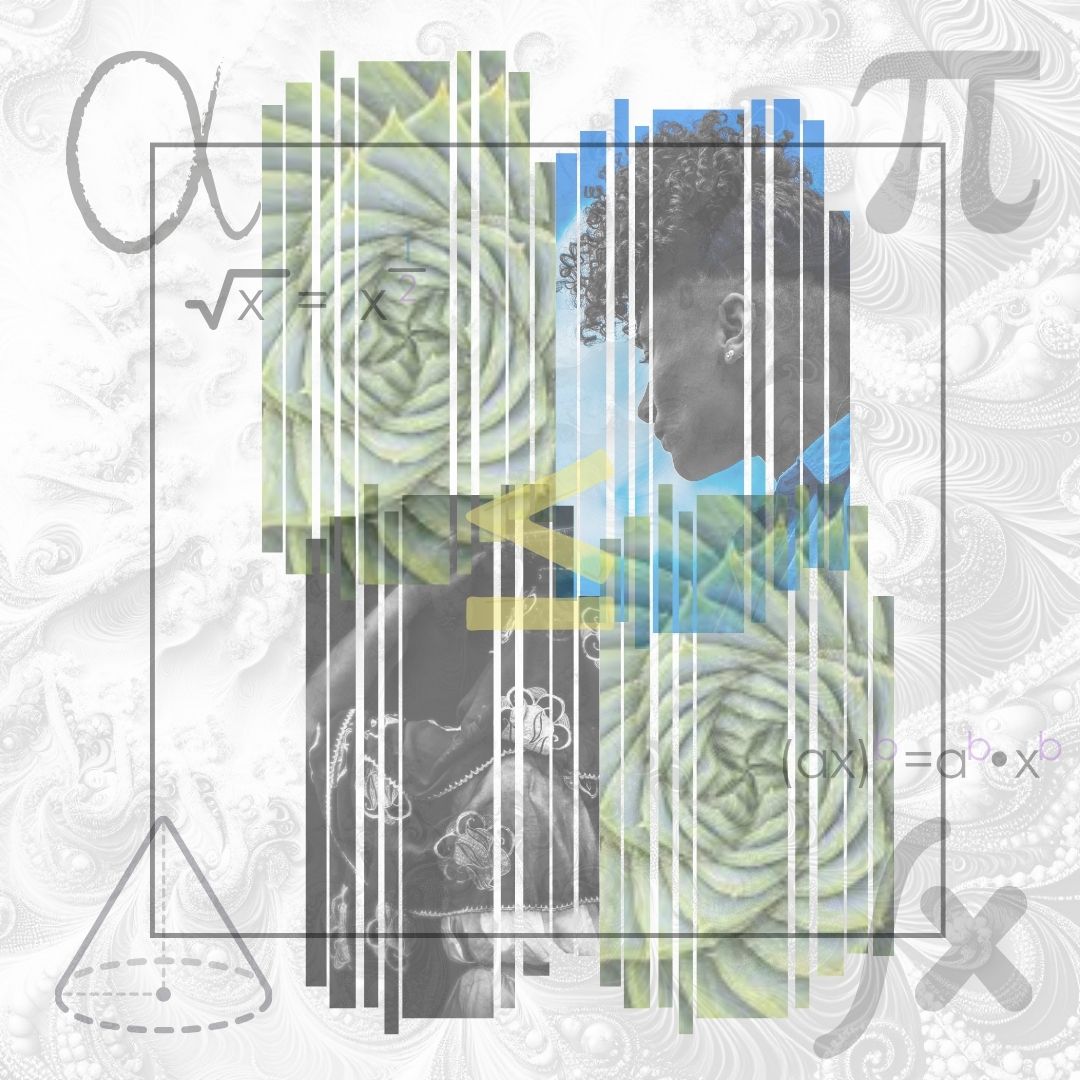
Anyone who knows me well is acquainted with my deep and abiding love of fractals. A fractal, for those who may not know, is a geometric pattern or shape that contains detailed structures at arbitrarily small scales.[1] In other words, a fractal is a repeated pattern. It is a repeated pattern that continues on and on, infinitely. Clouds, cauliflowers, ferns and mountains are all examples of fractals which occur in nature. To me, fractals are an expression and manifestation of the very complexity and beauty of life itself.
[1] Fractal (entry). Retrieved from https://en.wikipedia.org/wiki/Fractal Various authors.
But fractals are not only a phenomenon found in mathematics or in nature. As humans, we too are fractals. We are a genetic, biological, social and cultural pattern that has been repeated throughout time and space. We are the continuation of our ancestors, who are the continuation of their ancestors, who were the continuation of their ancestors stretching all the way back to mitochondrial eve (the first genetic ancestor of modern homo sapiens sapiens). We do not require an advanced understanding of genetics or mathematics to understand this point – how many of us have been told by someone in our family that we are exactly like so and so? And undoubtedly, that relative would have been told they were exactly like so and so and on and on it goes. Others recognize the ways we carry our predecessors’ quirks, habits and charms.
Peering Over the Glass Cliff
When we were first asked in the Sync leadership intensive to reflect on our leadership style and a metaphor which reflects that unique style, I was initially stumped and honestly, put off. My relationship to leadership is a complex and fraught one. As a mixed race Black neurodivergent queer working class woman, I am often thrust into leadership positions that I did not ask to be in and often do not want. There are two primary reasons for this. First, due to the complex and interrelated nature of my various identities, I see the world in unique ways and therefore see gaps in service and opportunities. Second, there is a documented phenomenon called the “glass cliff,” which refers to the tendency of organizations and companies to hire and promote marginalized people during times of crisis or duress.[1] Of course, this sets marginalized people up for inevitable failure in leadership positions and further contributes to the oppressive narrative that marginalized groups aren’t effective leaders and is used to justify not hiring or promoting us to leadership roles in the future.
[1] Glass Cliff: Definition, Research, Examples, Vs. Glass Ceiling. By Julia Kagan (2022). Retrieved from https://www.investopedia.com/
I’ve personally peered over that glass cliff many, many times in both my personal and professional life and have been at the helm of many a sinking ship. I’ve attempted to save or breathe life into a project or organization, only for that flicker of life to become a brilliant fire after I’ve already been discarded for not being a “good fit” or not “doing my job.” It was almost as though there was a parallel breath of fresh air once I was removed from those leadership positions, as though I was simply a placeholder for when the real leader, someone white and or male, would rightfully take their place once the dust of turbulence had settled.
I’m leery of leadership as a result of these experiences. Yet, there is no way to avoid leadership when you’re a multidisciplinary neurodivergent Black disabled artist. I am often in spaces and positions where advocating for myself and others like me is simply part of the process. As artistic spaces were often founded or maintained without the input and leadership of people like myself, it is a necessary component of my practice to either advocate for myself and others like me in these spaces or create spaces that are suited to my unique vision and experiences.
Leadership as a Fractal
As a mixed race Black neurodivergent queer working class woman, I am often thrust into leadership positions that I did not ask to be in and often do not want.
MelVee X
However, my fraught relationship to leadership was directly challenged by the Sync intensive and was part of the reason I applied. In order to work through these problematic experiences of leadership in my past, I needed to directly confront them. In one of our early sessions, we were asked to find items that reflected our leadership journey as part of our “homework.” Admittedly, I didn’t do the homework and was scrambling to find items which matched the description during our break. I dug around in my fidget/craft bin and found a wooden model, a fidget and a kaleidoscope. As I was talking through my admittedly rushed choices and looking through the kaleidoscope at the other items, my leadership metaphor shone clearly through.
Leadership, or my style of leadership anyway, is a fractal. The multiplicity of my intersecting identities and unique life experiences are patterned after one another and reflect each other and directly inform my approach to leadership. When we first look through a kaleidoscope, the image which emerges seems distorted and fragmented; a magnificent blur of colour and lines. But instead, I think of the fractal, kaleidoscopic image as a sort of Indra’s net. In Mahayana Buddhism, Indra’s net is a treasured metaphor to illuminate the interrelated nature of all beings. In Buddhist lore, each eye (or point) of Indra’s net is a luminous jewel which perfectly reflects every other jewel, infinitely. Whatever affects one jewel, affects them all.[1] Extending this metaphor further, to be an effective leader means we are able to reflect the different faces and identities of those communities we serve back to themselves and one another. Instead of this enduring, toxic idea that an intersectional, interdisciplinary approach to leadership and social justice ends up fracturing movements and sowing division, the fractal approach to leadership embraces the multifaceted realities of our conflicting and intersecting identities.
[1] Indra’s Jewel Net. By Barbara O’Brien (2018). Retrieved from https://www.learnreligions.com/indras-jewel-net-449827
Reflections from the Helm of a Sinking Ship
I reflect now of the precarious and fragmented moment we are all living in, geopolitically and socioeconomically, and I believe it is precisely my many moons as a captain at the helm of sinking ships which has taught me wisdom which is crucial for the times we now find ourselves in – you cannot stay aboard a sinking ship. No matter how much we want to believe that we can save others on a sinking vessel, the cruel truth is that we cannot. But I do not share this to encourage despair or hopelessness, my intention is quite the opposite.
The multiplicity of my intersecting identities and unique life experiences are patterned after one another and reflect each other and directly inform my approach to leadership.
MelVee X
What we can do, above all else, is save ourselves. We can leave the sinking ship in order to preserve our own lives and our own dignity. In choosing to save ourselves, we inevitably become a beacon to others. They too will see they can ditch the sinking ship. If we all stay aboard and drown, we rob ourselves of the opportunity to begin again on the shore.
All of those fractal, kaleidoscopic identities I hold illuminate the way for others to find their own path, to leave the sinking ship of oppression, injustice and inequity behind them. When we become a light, we become a light unto ourselves and to others. All of our fates are intertwined and our leadership styles now, more than ever, need to reflect the multiplicity and beauty of all these identities. Leaders worth their salt know we do not lead one issue lives and our leadership styles must reflect this beautifully complex reality too.
References
- Fractal (entry). Retrieved from https://en.wikipedia.org/wiki/Fractal Various authors.
- Glass Cliff: Definition, Research, Examples, Vs. Glass Ceiling. By Julia Kagan (2022). Retrieved from https://www.investopedia.com/
- Indra’s Jewel Net. By Barbara O’Brien (2018). Retrieved from https://www.learnreligions.com/indras-jewel-net-449827
Other Leaders
-
Salima Punjani
My work is soft and sweet and tender. I would say it is strategically…
-

Dawn-joy Leong
I will always remember SYNC for providing me with the Clement Space — a…
-

Shivanya Ra
As creators, changemakers, and “crippers” of spaces and language, it is imperative to treat…